Share


One strategic objective from Pioneer’s Board of Directors is to build diversity, equity and inclusion into our co-op’s storytelling. This post, part of our yearlong Bookshelf series, shares books our staff members are reading. We hope these recommendations provide interested Utility Pioneers with stories to offer new perspectives, deepen cultural understandings and spark conversations.
At Pioneer, we believe in the value of diverse storytellers. We also love books. Seriously. For some of us, it’s an obsession.
By reading books from a variety of storytellers, we gain new perspectives, deepen our understanding of different cultures and spark conversations. During National Hispanic Heritage Month, we asked our team of utility storytellers to share books they enjoyed featuring the history and modern-day experiences of Hispanic storytellers.
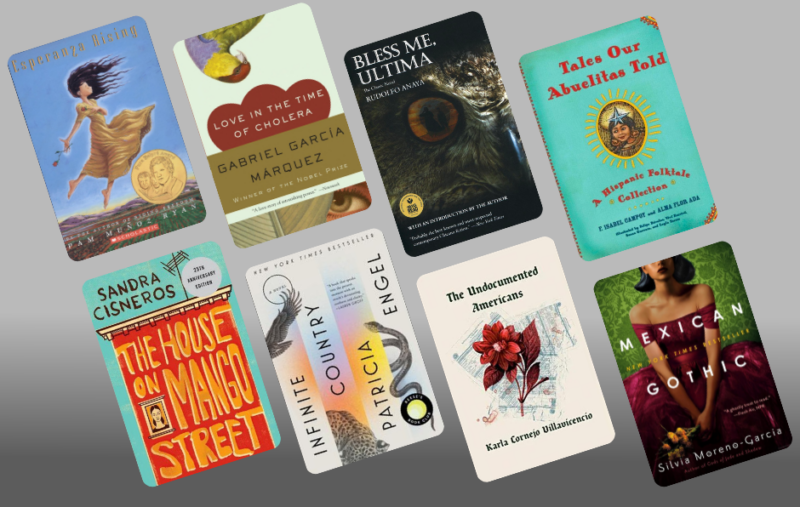
Recommended by Misty, Alyssa
Set in the Great Depression, this novel follows the story of Esperanza, a young Mexican girl who lives a privileged life on a ranch. When tragedy strikes, she and her mother flee to a labor camp in California, leaving behind their old life. As they face the challenges of a new reality filled with hardship and labor, Esperanza learns about resilience, compassion and the true meaning of family and community.
Recommended by Ashley
This captivating anthology weaves together a vibrant tapestry of Hispanic folktales passed down through generations. Each story celebrates the wisdom, values and traditions of Latin American cultures. Through enchanting prose, the book offers mythical creatures, brave heroes and timeless lessons honoring the oral storytelling legacy of abuelitas (grandmothers).
Recommended by Katie, Alyssa, Sydney, Megan
In this enchanting love story set in a fictional Caribbean town, the author weaves a tale of unrequited love, passion and devotion. The novel spans decades, focusing on the intertwined lives of Florentino Ariza and Fermina Daza. Despite Fermina’s marriage to another man, Florentino remains steadfast in his love for her, and their paths eventually converge again, exploring the complexities of love and its endurance over time. The author, a Columbian native, was awarded the Nobel Prize in Literature in 1982, just before publishing this book.
Recommended by Misty
A coming-of-age novel presented in a series of vignettes, the story revolves around a young Latina girl named Esperanza Cordero, who grows up in a poor neighborhood in Chicago. The book explores her dreams, desires and struggles as she navigates her identity, the constraints of her environment and her yearning for a better life outside of Mango Street.
Recommended by Sydney, Megan
We’re not all horror fans, but this was recommended by Powell’s, Portland’s indie bookstore. The gothic horror novel follows a socialite in 1950s Mexico City, sent to the remote Mexican countryside to check on her cousin’s well-being after receiving a disturbing letter. As she delves deeper into the mysteries of the gloomy mansion and its inhabitants, she uncovers a dark history intertwined with family secrets and rituals. While the book is set entirely in Mexico, it explores themes of eugenics and prejudiced actions based on a perceived racial and cultural superiority. Suffice it to say, we’ll pause before eating mushrooms again.
Recommended by Katie, Alyssa
Antonio Márez’s life in 1940s New Mexico is transformed when he befriends Ultima, a curandera (healer) who reveals the depths of his Mexican-American heritage. Guided by Ultima, Antonio grapples with cultural clashes, family expectations and his own spiritual growth. The novel intricately weaves themes of identity, tradition and morality.
Recommended by Megan
This novel follows the experiences of a Colombian family separated by immigration and differing aspirations. Talia, the eldest daughter, escapes from a juvenile detention center in the United States to reunite with her deported father. The narrative shifts between the family’s past in Colombia and their present struggles, exploring themes of identity, migration and the yearning for connection. Bleak at times but with a bright thread of love and myth powering through the narrative.
Recommended by Megan
Through a blend of personal narrative and investigative journalism, this biography offers a vivid portrayal of the lives of undocumented immigrants in the United States. The author’s frustration and desperation leaps off the page, providing an intimate and powerful look into the challenges, triumphs and contributions of immigrants and first-generation Hispanic Americans navigating a society that often disregards their presence and struggles.
We’d love to know if you’ve read these stories, too, and if you have recommendations! Please share what you’re reading as a comment below.
We used ChatGPT to generate some of the book summaries, then asked our staff who’ve read the books to review the story notes and ensure accuracy. Thinking about how AI can help you tell stories more efficiently? Learn what your peers think.