Share


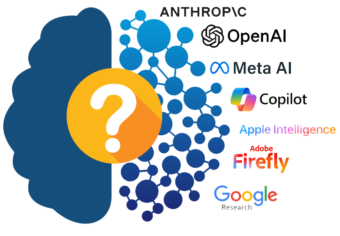 Artificial intelligence is no longer a fad. Open AI, Anthropic, Gemini, Perplexity, Adobe Firefly, Microsoft CoPilot and many other AI tools are changing the landscape of utility communications. Staying ahead of the curve isn’t just an advantage. It’s a requirement. Are you ready?
AI agents debuted in late 2024, moving what’s possible from casual conversations to action. Once you’ve written a prompt asking for specific actions based on set rules, an AI agent can take control of your screen and complete simple tasks like shopping, filling out forms, etc.
At the same time, text-to-video generators and custom avatars make it easier than ever before to tell personalized stories to consumers. Seamless AI integrations in office software are streamlining writing tasks without the need to switch applications. Staff may not even realize they are using AI.
The tools and language models may evolve, but four core ways to harness AI remain constant for Utility Pioneers:
“Think of AI as an eager intern,” says Pioneer Utility Resources VP of Marketing Andy Johns. “You have to explain what you need clearly and expect mistakes. But the more you work with an artificial assistant, the better it will be at the job.”
When planning how to use AI for your storytelling this year, pay special attention to sources, data security and how new video tools could bolster your storytelling.
One challenge for communicators is where AI pulls information. There’s a lot of false information online.
GPT stands for generative pretraining transformer, an AI model which responds to questions based on training and processing of large amount of data, often called learning language models.
Anthropic’s Claude and Open AI’s ChatGPT chatbots both offer ways to ask questions about a specific set of documents, though there are limits to how much information you can feed the models.
While AI might cite a source, human review is essential. Perplexity.ai is an AI assistant paired with real-time search functions. The tool includes footnotes which lend authority to results, but sometimes the source material does not match Perplexity answers.
Want an easy example? Ask Perplexity who you are.
Building your own knowledge base sounds great, but what about utility data privacy concerns? Grammar and writing help does not trigger security concerns, but any projects tied to consumer data could. Public GPTs can use any of the data you feed them, a risk some utilities are working to avoid.
Dairyland Power Cooperative, a Wisconsin-based generation and transmission co-op, developed VoltWrite, a GPT fully hosted on the co-op’s secure cloud-based infrastructure. The system is available for any of the G&T’s utility members to use for load analysis, analyzing meter data, evaluating member communications, team brainstorming and more. The web-based resource pairs existing AI language models with data security.
While not every utility can build their own securely hosted GPT, third-party vendors license GPT-4 from OpenAI and offer network-bound AI assistance and security.
As your utility considers using AI for consumer support and how AI can help transform consumer data into actionable insights, look for partners who can keep your data secure.
Seeing is believing. Mostly.
Two closely related features in Claude and ChatGPT, Artifacts and Canvas, make it easier than ever to create reports and both generate and see code for a project. AI-powered tools like napkin.ai and beautiful.ai turn text into visuals for presentations or websites. And then there’s AI-generated video and avatars.
Video content has become increasingly important in digital communication strategies, and a slew of new AI tools promise to make video production more accessible and efficient than ever before. As the quality of video generation improves, it’s easier to create videos educating members on energy efficiency, safety topics or to explain complex infrastructure projects.
Add to this mix the ability to create custom avatars—video versions of known community members which you can give scripts to read—and utilities have even more ways to personalize and streamline video content. Utilities could use this technology to:
Here are the big AI text-to-video players to watch:
 AI tools offer exciting possibilities, but it’s crucial to use them thoughtfully. The goal should be to enhance communication efforts, not replace human interactions. Authenticity remains key in building trust with our communities.
We’ll dive into artificial intelligence tools and trends at StoryConnect. Hope to see you there!
Can’t wait until StoryConnect to learn more?
 We’ve got links to helpful tools, sample policies and past AI coverage at pioneer.coop/aitools. As a special bonus, we’re partnering with NWPPA to offer a webinar on AI trends and tools on Thursday, Feb. 6. It’s free for NWPPA members, and we’ll share a video of the session with all of our members afterwards. Get event details and register at nwppa.org.