Share

Whether we’re writing, networking, making a presentation or just socializing with friends, connecting with other humans in real ways is vital. Ginger Johnson, who spoke at NRECA’s Connect conference, shares her ideas on why those connections matter, what they look like for different people and how marketing and communication professionals can learn to make those connections everywhere.
Connect with Ginger at https://gingerjohnson.com.
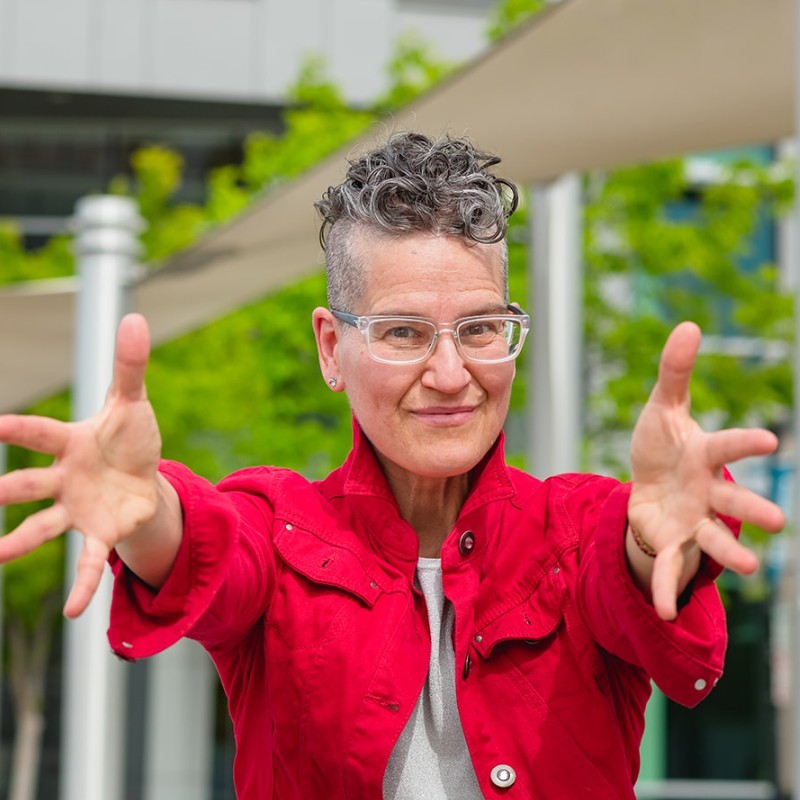
Ginger Johnson
Transcripts have been lightly edited for clarity and readability.
Intro: A production of Pioneer Utility Resources. StoryConnect, helping communicators discover ideas to shape their stories and connect with their customers.
Andy Johns: How important is the human connection to your business, and how can you make sure that you’re writing a communication [that] makes that connection? That’s what we’ll be talking about on this episode of StoryConnect: The Podcast. My name is Andy Johns, your host with Pioneer, and I’m joined on this episode by Ginger Johnson, who is a speaker and author. You may recognize her name from the Connect Conference, NRECA and Touchstone’s Connect Conference in Jacksonville. She was a speaker there, and now she’s a guest on The StoryConnect Podcast. Thank you, Ginger, for joining.
Ginger Johnson: Absolutely. Nothing better I’d rather be doing, Andy.
Andy Johns: There you go. I’m looking forward to this conversation. It’s going to be a fun one. And if you saw Ginger speak in Jacksonville at the conference there, you know that she enjoys having fun when it comes to topics like this.
Ginger Johnson: Absolutely. Fun connects us.
Andy Johns: Well, and the conference was called Connect. This is a StoryConnect podcast. There’s a whole lot of connecting going on, so. That’s been a big part of your work. Just go ahead and give us an overview. Why, you know, connecting is something you’ve devoted a big piece of your life to. What’s the overview about kind of weaving that into all of your work?
Ginger Johnson: Certainly. When we think about the best moments in our life, Andy, when we think about the ones that are the toughest, when we think about everything in between those two ranges, we often go first to how we are connected to the moments, to the people, to ourselves, to the atmosphere, to all the X’s, Y’s and Z’s. So the human connection is fundamentally fascinating. It’s like, there’s “fun” in fundamental. There’s meaningful. There is life to be lived in connection. And when I was rethinking my own business, which I’ve been my own business person for over 20 years now, when I was rethinking and shifting a direction from actually a marketing agency that I used to run, to what was next, I did some groundhoging. They pop up and like the groundhogs, prairie dog, you know, they pop up out of their den like, what’s going on? And that discovery that I let myself do, lend itself to human connection. And I knew instantly as soon as I thought about it Andy, I’m like, oh yeah, human connection. That’s where I want to dedicate my life. That’s what I want to teach. That’s what I help other people.
Ginger Johnson: And I immediately had two other thoughts. Number one, okay, what am I going to share? What am I going to teach? What is needed right now? And number two –.
Andy Johns: What are you going to say?
Ginger Johnson: Yeah. What is the purpose in doing so? We don’t we don’t need another voice in the forest, Andy. What we need is for meaning. And in that connection, I find a lot of personal meaning. I find a lot of professional meaning. I don’t think you can separate those two. It’s like marketing and communications. They’re different things, but they are intrinsically entwined. Business and personal, they’re the same microcosm. There’s different elements of it. So the connection is very personally meaningful to me, and I think that we are the best teachers in the world have a real dedication and a purpose and a vision to what they’re teaching. So that, I mean, you and I have both probably had tremendous teachers, and we’ve probably also had teachers who needed to do something else. Like, and I’m not a teacher, I get that. So I wanted to do something that really fired me up, really electrified me each day. And connection has absolutely been that jam.
Andy Johns: So you speak to a lot of business groups. I know, you know, looking at your website, watching some of the videos, there’s a lot of squishy words in there. You know, words like “belonging” and “trust” and “connection” and words that I think a lot of times, there’s a certain type of person in the business world that may not put the value on things like that, that they would on things with a dollar sign.
Ginger Johnson: I love that you just went into this puddle, Andy.
Andy Johns: We’re just diving in. We’re diving in. And it actually made me think Brené Brown’s got a section in one of her books where the example she talks about is a 1950s Air Force manual. Where in that, there are all kinds of words about belonging, about loneliness, about caring for your fellow airmen. But somehow between the 1950s Air Force handbook and the, you know, 2020s Air Force handbook, all of that got stripped out of there. But it’s kind of making a comeback. So when you speak to groups like this, when you speak to that, you know, prototypical hard edge CEO or CFO, how do you talk about the connection between connection and belonging, and how that translates over to the business world?
Ginger Johnson: Certainly. I really appreciate you bringing this up. First of all, words are powerful. We need to always remember we’re in the marketing business. We’re in the communications business. What is that? That is inherently connection. If we want to reach people, connecting is communication is marketing. One Venn diagram I love is those three pieces: connecting marketing, communication. Well, of course, in that sweet spot, you’re going to get boom. So to your question of what some people call fluffy or soft or squishy. First of all, that makes my skin crawl. We are all deeply craving meaningful connection. We want to have a sense of belonging with ourselves, with other people, with the communities we choose to engage with. Air Force, NRECA, Touchstone. The local barista. It doesn’t matter. So for people who might be thinking, “Oh, that’s kind of squishy,” to use your word, like you need to rethink that. And I’m going to trot out the need on that because when we do, we remember that nothing is possible without connection. Period. End of sentence. We’re done. If that’s the case, I don’t think that’s hyperbole. I know it’s not hyperbole because everything we do in life that has meaning has some sort of connection, whether it’s with ourselves, with our atmosphere, with our pets, our geography, our coworkers, our work.
Ginger Johnson: There is always a connection. There’s always an A to B. Sometimes there’s a C, and then sometimes it’s that family circle cartoon where it goes everywhere.
Andy Johns: Right.
Ginger Johnson: So please, please, please, if you’re listening or watching this, and you think that there are some fluffy, squishy, soft words, well, you’re going to call them whatever you call them. I don’t think that words have texture. Words have meaning. So what does that mean? Soft skills? Like get rid of that, please. Those are the hardest skills, for the record. Call them interpersonal instead. Just like, you know this Andy, marketing is not PR. Marketing is not communications. Marketing is this umbrella that we start with and that overarches all those different things that fall from the support of the umbrella. When we think of connection, what are the elements of connection? I even talk about the elements of connection in my book, The Connectivity Canon. And I talk to it in rooms like Touchstone’s Connect and like the workshops that we had pre-conference. So thank you for asking that question. There’s no such thing as texture to words. Choose the word that fits the purpose and the transformation, the change, the growth you’re seeking, and don’t worry about what anybody else calls them.
Andy Johns: I think we set a record there. That’s the earliest in a podcast I’ve ever made a guest’s skin crawl. So it’s like two minutes, fifteen seconds in, we’ve already got skin crawling, so.
Ginger Johnson: Is that a goal of yours?
Andy Johns: It hasn’t been before.
Ginger Johnson: Crawling skin is bad.
Andy Johns: Right. So when we talk about connection, it’s different for everybody. You know, I’m an Enneagram seven, flaming extrovert. I connect with people different even than the people who live in my house, who are much more introverted. And, you know, that connection means so many different things to so many people. So how do you even go about defining connection, and what can it mean for different people?
Ginger Johnson: Certainly. We get to decide how we want to be connected in this life. It is absolutely 100% on us. It is both our opportunity and our responsibility to get clear on how we wish to connect with ourselves first, our team and our community. And you can define team and community how you want. I see it as a ripple model, Andy, and I use this often in workshops, retreats and so forth. Let’s teach to that because it does start with the nucleus of us, our heartbeat, who we want to be and our purpose. From there we decide, how do we want to connect? Well, there is no one definition. There is no one inherent answer. I define connection as human to human. There’s all kinds of modalities we can do that with. At the early part of the pandemic, people said, “Oh, well, online isn’t the same.” Well, of course it’s not the same. It’s different. And aren’t we lucky that we have this? The Jetsons were right. In-person is not the same as online. Of course, it’s not because there’s different facets to each. It’s like any two things we want to compare instead of comparing them and contrasting them, Andy, I think it’s more important to look at where the “and” is. Where is the “and” because the “and” is the connector. So you talked about your Enneagram. That’s a model, the Myers-Briggs, any kind of personality test you want, I think they’re interesting, but I would issue a caution because all of a sudden we decide that that’s who we are without consideration, that we live in the gray.
Andy Johns: Sure.
Ginger Johnson: And I just recently reread about the Enneagram. Like it was an “or.” It was, you’re either this or you’re that. Well, that’s not who people are. That’s not who you are, Andy. That’s not who I am. There are different times when we are different people. It doesn’t mean that we’re not being true to ourselves, or we’re posing as somebody else. Different parts of us come out in different places and situations, and that should be great. I would encourage nobody to lean on their vert status. So what? “Vert” literally means to turn. I’m a huge word nerd, so I’m looking this stuff. I’m like, “What does this really mean,” before I’m laying it down. Identify however you want to identify. Completely valid. It’s your choice. What I encourage people to do is not think of that as a hard line. Think of that as an elastic that’s going to change and grow with us. I have a lot of speaker friends, for example, other professional speakers like me who say, “Well, I’m really an introvert.” I’m like, “Well, I love you. I don’t care, and that’s not the point here.” The point is that we’ve chosen to do what we’re doing based on who we want to be. And if this is an outlet, a modality, a way forward in our life, then we’re hitting it just like marketing and communications.
Ginger Johnson: The whole point is to support somebody. It’s to educate. It’s that 70-20-10 rule. Andy 70% of communications and marketing needs to be effectively education. Flat out give. 20% is the chit chat. How’s your cat? Hey, we got a great new tower. It’s a beautiful day. I’m having a margarita with my friend, Andy, whatever it is. And then 10% is the okay if you’re a member, here’s what we really want to make sure that you understand, and please contact us. It’s that call to action for that connection to be active in a mutual way. So all connection has different facets. Everybody is their own unique connecting body. So I would wrap this up with considering giving you the idea like what do you want your ROC to be? What is the return on connection that you want for yourself? And therefore how do you plan to be yourself, grow yourself and therefore give and develop that symbiosis of your life? This is a really big question. How do we connect with ourselves? It’s a huge question. And at the same time, it’s liberating. Once we decide we’re going to talk about this, whether it’s internal dialog or talking to ourselves, taking a walk around the block or with a good friend, whatever that is, then we can start to actually relax physiologically and think like, “Oh, okay, so who do I want to be?” That will guide everything else.
Andy Johns: And you said something when we were talking right before the call. I asked about DEI and inclusion and that side. And you talked about the difference between inclusion and belonging. And if you don’t mind, I wish we would have had the recorder running at the time, but tell me a little bit about how you define those differences between inclusion, which is a big kind of buzzword right now. But you say it’s not enough. Belonging is what we really need.
Ginger Johnson: Yes. Yes. And thank you for bringing this in. I am often asked, “Ginger, do you speak on DEI?” And my response is always, “Well, inherently connection is all of that. It’s access. It’s all of the initials that you want to tack on to that whatever you’re using in your acronym to be.” And here’s why. When we think about the kind of culture. Again, any definition of culture you want: your family, your friends, your work, your members, whatever that is. If we want to develop a healthy, positive, connected culture, we really need to focus on belonging, Andy. Because inclusion isn’t inherently going to create belonging. If we think of inclusion as checking a box, okay, I’ve included Andy in this. I needed a male, a blah, blah, blah, blah, blah. It’s like profiling. That doesn’t mean you feel like you belong. However, if my intention is to help you feel like you belong. Having real, meaningful conversations, it shifts everything leading up to that. Because then when you feel like you belong, you are included. So it’s that, if and only if, if you focus on the culture of belonging, your communications, your marketing, your everything, your your pizza on Fridays, if you focus on helping people really feel like they belong, then you will include. If you only focus on, “Oh, this is, I’ve got,” you know, I don’t know about you, but I have some friends of lots of makes and models, as I call it, and intentionally so. Because I want to see the world from their perspective, because there’s so much I don’t know from my own. That’s true for all of us. And it’s super helpful. I don’t want to check the box. That’s patronizing. That’s quota. It’s not effective.
Ginger Johnson: I have some tremendously wonderful, deeply meaningful friends who happen to be black. Like, I don’t care that they’re black because of that. But I care about how we can be really good friends and colleagues and share perspective. So if I can learn from them like, “Lawrence, how do you see this world? Tell me how to think. And tell me how I create belonging, so it’s not just from a female Anglo perspective.” I genuinely crave to know that. So focusing on belonging will get you way farther for a much longer time. It’s also, interestingly enough, speaking, in the energy field and the electricity field, it will last longer inherently because it is genuine. If there’s something that we love not fueled by passion and fueled by purpose, there’s a difference. If you feel it by purpose, like, oh yes, I genuinely want my Sunflower Cooperative in wherever Sunflower Cooperative is to have people who feel like they belong. We attract more of the people who are a fit for the culture. That is not exclusivity. That’s wise inclusivity. Anybody want to learn more about that? I highly recommend Priya Parker’s book, “The Art of Gathering.” She absolutely nails it. And then I go back to that over and over again. There needs to be an elastic border around certain things that. The belonging, if the single message somebody takes from our time together with this podcast, say Andy, is that I’m going to focus on “How do I build belonging?” I mean that’s a whole other workshop and talk. But if we focus on belonging instead of just inclusion, we will be better, different, more successful, more fruitful. We’ll build better cultures that last longer.
Andy Johns: Oh yeah. Like each one of your answers, we could do a whole 45 minutes on each one of them. So, I’ve seen the stats out there, and I think they’re probably defining belonging a little differently probably than you are. But the stats are out there about how much, you know, if you can make a customer or a member or a client feel like they are a part of something, like they belong to your organization, then ultimately, you know, if you want to think about it, purely dollar and cents, you know, that is a more valuable customer to you. They’re going to spend more money with you if they think they’re part of it. And that kind of transitions us into the next piece I wanted to talk about is we’ve talked a lot about interpersonal connections. But just because, you know, if you’re a communicator at a broadband provider or an electric cooperative, electric utility, there are still ways to make sure that your utility or your organization, whatever it is, can still have a human connection with folks.
Ginger Johnson: Oh, absolutely.
Andy Johns: Even though it’s an organization, not a human. There still steps to do that. It just takes some intentionality to make sure that happens.
Ginger Johnson: That’s true with everything in life and business, correct?
Andy Johns: I wouldn’t argue with that, probably because I said it first. So, of course, I’m not going to argue with it. Yeah. Go ahead.
Ginger Johnson: Intention needs to be the bedrock. Absolutely, unquestioningly, end of sentence, period, done. So when we are intentional about something, we have set our mind, heart, our guts, the trifecta, the head, heart, guts, as I call it, on what is our purpose? When I was at Connect and the whole time leading up talking with Josh McGee, and everybody within the microcosm and the organism that is NRECA, there is this deep desire to serve. That’s a purpose. I rail against the machine of passion because passion can fizzle out. Passion is like a gas tank. There’s only so much in there. And are you putting in the right place? And will it explode or will it run the machine? If we focus on purpose, there’s so many different ways that we think about it, that we fuel it. Going back to that creativity, if we have a purpose, I’ll be damned if something’s going to stand in my way to make me fulfill and work towards that vision, that purpose. That’s exactly when we think about this community. What happens when a town of 20,000 has a storm that wipes out all the power lines? You mobilize. Like there’s no question. There’s no, well, should we? I’m not feeling real passionate about this today. You know, what is the communication that needs to happen there? We get in motion because we have a purpose. We are serving community. That is powerful, truly, no pun intended, Andy, When we have that purpose and that intentionality with that purpose, then we can do anything. I mean, look, we’ve put people on other planets. We can see things that there’s no way that we could see with the naked eye. When we think about the vastness of the capabilities that we have developed, to not set intention to serve communications, marketing, anything, it’s time for you to find something else. Really, like have a purpose.
Andy Johns: Yeah. Yeah. I know. One of the books we came up with a couple of years ago was “How to Stay Human in a Digital World.”
Ginger Johnson: Yeah.
Andy Johns: We talk about how, you know, social media, your website may tell people what you do, but your social media tells people who you are and kind of how you’re going to interact with folks. What are some tips that you have kind of generally or broadly speaking, if they’re communicators out there who, whether it’s social media or press releases or magazine articles. You know, I’ve got to write a story, trying to activate people to help with, you know, the transformer shortage and contact their senator about this.
Ginger Johnson: Sure.
Andy Johns: Or, you know, a squirrel, you know, chewed through this line, and now we have to write about this outage. Or we’re building a broadband network into this new area. What are some of the ways that broadly and generally you think folks can can put some of that human connection into their corporate communication?
Ginger Johnson: Love this question. Number one, frame your mind that it’s a “get to, want to.” It’s something I write about in The Canon. It’s something I teach with groups. Being in that connector’s mindset of “get to, want to,” that’s everything. So instead of “have to” and “should,” which nobody likes to be “should on,” and “have to” feels forced. When we shift to “get to,” I get to write about this. Okay, how can I do it? We put that positive objective and willing, which is the connector’s mindset, into motion, and we reframe it differently. Instead of feeling like a chore, it’s an opportunity to serve. Yeah, there’s probably a time constriction, or a time guideline, or guardrails, as I call them. Well, of course, that’s true with everything. So do we always like the parameters that we’re given in something in a case like that? It’s not about liking it. It’s about being constant to purpose, about having that intention. If my intention is to be a communicator within a cooperative that serves, say, 100,000 members, then my intention is that I’m going to do my level best to give them what they both need and what they want. Those are different things at different times. Different modalities. The other thing I would say is that, all media is social if it’s done right. That term is another skin crawler for me because I think that it’s the wrong word, just like social distancing. That was a killer. I wish we would have said “physical distancing” from the get go because as soon as we say something like that, we think we can’t be in social contact. Well, of course we can. We’re in physical distance, but what’s the literal outcome that we want? What’s the transformation we still want? I still want to be able to see my friend Andy and have coffee.
Ginger Johnson: Well, we can do that standing out in my driveway. So we’re still being social. So any kind of communication has a social component to it because it is not just a monologue. If it’s a monologue, then it’s not social. So how do you, how will you set yourself up to the “get to, want to?” How will you think about being social and conversational even when it’s an annual report? Even when it’s something that feels kind of dry? I don’t know a single person, Andy, who doesn’t love some good humor, even in dry stuff. Even in job descriptions, there’s ways to make it not as a comedy, but respectfully add some spice and flavor. We have what, 80,000 some words in the American language? I’m sure there’s more than that. We can get creative, have fun with it because people are going to speak up whether they like it or not, right? But the point is, when we are creative, when we keep it simple, when we have fun, when we start just like I talked about on the Connect stage, then we at least get in motion. And that’s what we need to do. Don’t get paralyzed by being perfect. Perfect is not the right pursuit. I think that’s an imperfect concept. Focus on participation. What can I do knowing that I’m always going to improve, knowing I can always be better. And let’s get in motion. So “get to, want to.” Think of all your avenues for communication as a social avenue. And then, get in motion. Keep it simple. Have fun.
Andy Johns: And again, there’s a lot of different ways to go from that. I’m going to limit it. Two questions left. We talked about interpersonal communication. You know, one-on-one. We talked about corporate communication. We talked about written communication. Having seen you in action during your presentation, I know that you do a very good job, even among people who do this for a living, you do a very good job of connecting with the audience. You know, there’s a lot of interaction that the folks who were really into it. So for the folks that have public speaking or kind of that aspect of their job, whether it’s leading a meeting or giving a presentation in front of a group, what are some of the ways that you can make those connections? Because even though it’s face-to-face, sometimes it’s one face amongst, you know, a few hundred out there, and you do a good job making those connections. What are some of the tips?
Ginger Johnson: Certainly some of the practices I would share is, number one, any time you’re in front of somebody, and it’s your turn, speak to connect. Be as real as possible. A few things I do backstage that people don’t see, of course, because it’s backstage is, first, I don’t get nervous. I trained myself a long time ago not to get nervous. That would really bode negatively for my profession anyway. At the same time, I love it. It’s like, it’s my environment, clearly. And I prepare myself. And a couple of things I do, because I have a lot of natural energy and then I keep myself healthy, is I do jumping jacks and push ups. Like that’s my prep. So I’d ask you, when you’re going to be connecting with somebody, and it’s a quote, speaking role or moment, then think about how are you preparing yourself? There is no credibility in saying, “Oh, I got this. I don’t need to practice.” And for the record, I used to say that, and that’s total BS because that disrespects your audience. If you don’t prepare, you set yourself up for who knows what. Rabbit trails, going silent, going blank, whatever it is. To prepare, however you prepare, is necessary to deliver the best. When I was on that Connect stage, like I take my job very seriously. I love my work. I take it very seriously. Everybody’s relying on me. I better be ready to deliver. It doesn’t matter the size of crowd or the audience.
Ginger Johnson: Another thing to do is know what you’re going to share, and it’s always a “with” never a “to.” When you speak, you speak “with” or “for.” It’s not a “to.” That’s a that’s a directive. That’s a finger point. When it’s a “with,” like that’s why when you saw me, like the whole room is the conversation. And frankly, Andy, like as a professional speaker, first of all, I always work on my craft. This is my craft. This is my profession. I want to get better and better at it. The whole room is part of the possible conversations. I’m very nimble. There are components of my work and for somebody who is speaking, give yourself some components or some moments in your work where you are responsive. That would be a big practice. Doesn’t mean that you riff. It doesn’t mean you crack a joke. It’s going to be however you’re going to do it. But remember when I picked up the phone, the phone was ringing at that front table at the keynote, phone was ringing at the front table right during my presentation. And I walked up, I said, “I’ll answer that.” And the gentleman was completely game. And he said, “Go ahead, it’s my wife.” And we had this moment. Nobody in the room expected it. I’ve actually done it before, but I’ve practiced it because I didn’t want it to go bad. And it wasn’t just some flippant, “I’m irritated that your phone is ringing.” I’m thinking, “Ah, this is a moment where I’m nimble, and I go through my own mental Rolodex of what can we do with this moment?” And it was magic. I think the whole room was like, “Did she just answer that person’s phone?”
Andy Johns: Is this real? Is that a plant? Yeah.
Ginger Johnson: Yeah, it was unplanned. I’ve had some different moments with phones. So, set yourself up. Be willing to have some spontaneity within the guardrails of what you’re planning to give and make sure that you do have a very distinct give. You will recall on that stage and anybody who’s listening who is there, I gave the connecting is simple, and I went through three points. It was (1) start (2) simplify and (3) have fun. Connecting is not complicated. That’s different. Complicated is difficult. It can feel complex, meaning there’s many layers. But power distribution may be complicated, and it is. At the same time, communication and marketing is not. It isn’t. It isn’t. It’s one brain to another brain. How do we do that? Let’s pause. Are we starting, first of all, are we paralyzing ourselves? And we’re keeping it simple, how can de-jargon this? How can I make this a conversation? And am I having fun? So those are some of the practices. Clearly, we could go a lot longer, but set yourself up, do some practice. Figure out what that is for you. Everybody in the speaking world does it differently. And it doesn’t matter if you’re a professional speaker, and you get paid to do it like I do, or if you’re somebody who’s standing in front of your church or your board or your neighbor or your child, whatever it is. Being prepared will help keep you calm physiologically. It will help you stay on track. It also helps us stay focused on the purpose of the moment. It keeps tempers down, and it keeps hearts open.
Andy Johns: If there are any CEOs or CFOs listening in, what Ginger meant, I’m pretty sure, was that communications and marketing is very complicated. It takes very smart people, very smart, well paid people to do it. So don’t want anybody to hear that the wrong way. And just take that one little snippet out. “She said, it’s not complicated.” Last thing I had for you, Ginger, what advice do you have for somebody who has maybe listened to this and is realizing, you know, yeah, I’m not as connected as I should be. Or maybe I got out of some habits over the last few years when it was a little more isolated. And whether they’re looking to connect and make those human connections at work or relationships or wherever, are there a couple of pieces of advice you might give those folks as we wrap up here?
Ginger Johnson: Certainly, I’ll give two. Number one. Get clear on who you want to be. And how do you do that? You envision yourself. You literally close your eyes. You imagine a month in the future, a year in the future, ten years in the future. How do you want to feel about the life you’re living? This is big work. This is important work, and it’s totally doable work. It does not have to be a huge chasm. It can be a step by step. If you want to be a good person, figure out what that is to you, and be that person consciously. Intentionally. So that’s the first thing. I do this a lot for myself.
Andy Johns: A lot of people listen to this while they’re driving, so don’t don’t close your eyes and envision that right now. But maybe once you get stopped and safely pulled over. Yeah, important step.
Ginger Johnson: Absolutely. Yeah. Yeah. Like. Yeah. Pause. Give yourself a minute and a half at the end of the day or 17 minutes or whatever on a walk. Whatever it is. Meditation doesn’t mean your eyes are closed. It means you’re thinking. And the second thing is, look at your relationships. All of them. Family, work, coworkers, neighbors, and objectively choose to put the energy into the ones you really want to flourish first. I would go back to that ripple model I brought up earlier, the self team community. You can put yourself in the center, and then I do what I call my 3 a.m.’ers. Who’s a 3 a.m.’er in the center with you? Who would you fly across the world to help at 3 a.m., picking them up at Amsterdam Airport? I mean, what is the farthest you will go for somebody, those 3 a.m.’ers. There’s usually not very many, and rightly so. And then you go out. Who are the other people I care about that I can have a cogent conversation with who know more than less. And then the third ripple out is almost what I would, the people who, I wouldn’t call them incidental Andy, but they’re our neighbors. They are our high school classmates. They are college mates. They are people in other, you know, they’re people in this association. We don’t know them well, but we can say hi. Or we know them, or we don’t. But we are familiar in some way. Get clear on your relationships because every relationship is an investment, just like marketing and communications is. We want there to be some useful impact. Our relationships are the same way. Most of us go through our life not thinking about the intentionality of our relationships. And then we wonder before that big ash nap or dirt nap, like, where are all my friends? Well, it takes intention. So put that intention forward. Figure out who you want to be, invest in your own self so that you have the relationships that help you flourish so that you can be the best darn marketer, communicator, member of this community, and therefore serve to your best ability as well.
Andy Johns: A lot to like. A lot to learn from all that good stuff all the way around. Thank you, Ginger, for sharing all that with with me, and then with the folks who are listening. Thanks for that.
Ginger Johnson: Absolutely. It’s truly a pleasure to serve. I’m looking forward to seeing y’all again. And I appreciate the invite very much, Andy. Thank you.
Andy Johns: Her name is Ginger Johnson. To find out more of her articles or to find her book, “The Connectivity Canon,” you can go to GingerJohnson.com, and be sure to look her up there as well. You may see her on the speaking circuit at some of the different conferences as well. I’m your host, Andy Johns with Pioneer. And until we talk again, keep telling your story.
Outro: StoryConnect is produced by Pioneer Utility Resources, a communications cooperative that is built to share your story. StoryConnect is engineered by Lucas Smith of Lucky Sound Studio.