Share

You’ve got data, but are you using it strategically to strengthen your stories? Hear how Brianna Wall leverages analytics and existing data to be strategic with her communications plan and storytelling.
Learn more about Oklahoma Electric Cooperative at https://okcoop.org.
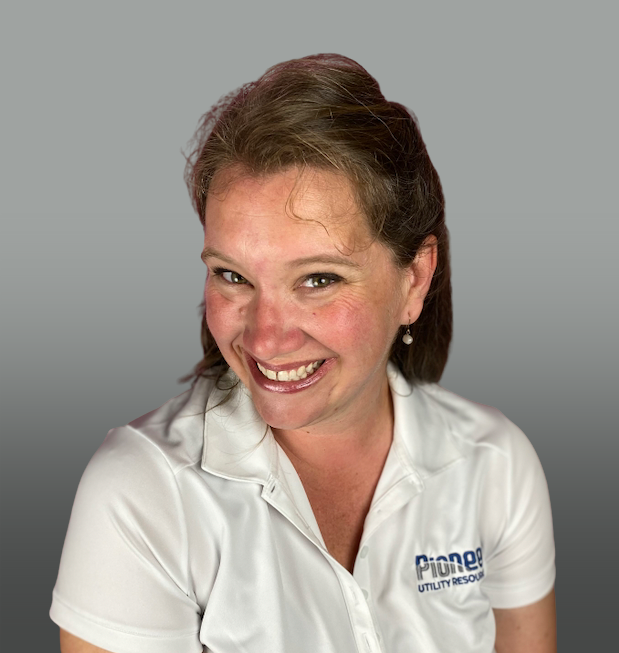
Brianna Wall
Transcripts have been lightly edited for clarity and readability.
Intro: A production of Pioneer Utility Resources. StoryConnect helping communicators discover ideas to shape their stories and connect with their customers.
Megan McKoy-Noe: How can data support strategic storytelling? That’s what we’ll be talking about on this episode of The StoryConnect Podcast. Hi, I’m Megan McKoy-Noe, one of the storytellers at Pioneer Utility Resources and your host today. I am joined by Brianna Wall, manager of marketing and member relations at Oklahoma Electric Cooperative. Brianna, thank you so much for joining us.
Brianna Wall: Thank you for having me. I’m excited to be on Pioneer’s podcast.
Megan McKoy-Noe: The StoryConnect Podcast is the best because we share ideas, right? Which is what cooperation is all about. Before we dive into the data, though, tell us a little bit about your co-op.
Brianna Wall: So I am at Oklahoma Electric Cooperative in Norman, Oklahoma, and we have about 60,000 meters, and we serve about seven counties in central Oklahoma. So our membership is very diverse. We serve some very urban areas, some members who have some very high expectations with their co-op, their communications. And then we have a broadband subsidiary, OEC Fiber, and we serve broadband to about 33,000 subscribers throughout our service area. So we’re very busy.
Megan McKoy-Noe: I was going to say I could see why data is kind of an important piece of the puzzle for y’all to have in your communication planning. Now you presented at NRECA’s Connect Conference on how to leverage analytics to be more strategic with your communications plan. Brianna, can you just tell me why analytics matter in storytelling?
Brianna Wall: Sure. So can I start by giving you the two examples that I used? Because they’re a little different, and you can get something different from each of them. So the first example was using data to inform our strategic communications plan. And what that means is we had kind of the direction we wanted to go in our communications for the year, but what we were trying to identify through the data was the topics, the themes that we were going to communicate to our members. So rather than communicating a little bit about all of our programing, all of our products, our services every month, just a little bit on every channel, we decided let’s take each month and focus on something different. That’s still beneficial. It’s still part of the cooperative difference. It’s a benefit to members. And so what we use the data for in that case was to identify what those themes would be. So January is a focus on renewables, and February is a focus on being local because our members seem to love anything we publish about how we’re local, how our employees are your neighbors, your little league coaches, that kind of thing. And then we were able to align all of our communications across social media, our newsletter, our earned media, our podcast, our blog posts, all of that had a central theme each month. So that was one thing that we used data for specifically.
Megan McKoy-Noe: Well, and for that, I love the idea of themes, and it makes so much sense to coordinate across channels. But what specific data did you use to find out that your members wanted to hear those topics, that those topics resonated with them?
Brianna Wall: Sure. We leaned heavily on our email marketing software, and we use MailChimp. So we’ve used MailChimp for gosh, probably 6 or 7 years by now. And so we started because surveys were telling us 6 or 7 years ago, we want to be emailed. Our members were telling us, we want to be emailed. Like keep sending us the print, but we want to be emailed. So we said, okay. So we just started emailing a digital version of our magazine and just collecting data. We weren’t really doing anything with it back then, but we use that. Click data, each article within our newsletter has its own URL so that we can track exactly what they’re reading. A lot of newsletters, I’ve noticed, will link to the pdf of a newsletter which works too. That gets the job done, but we were wanting to know exactly what they were reading. So we break down each article into its own URL, so we can track that. And then social media insights. We use a lot of social media insights, survey data. We try to collect a lot of data whenever we can. So whether that’s at our annual meeting or any of our member events, we just try to collect all the data we can. And at the time, we were trying to identify those themes, we would ask specifically about those at our member events. So just asking, “Hey, what do you want to read more of? Yeah, what do you want to see from us?” Yeah.
Megan McKoy-Noe: What do you care about? Please tell us.
Brianna Wall: Right.
Megan McKoy-Noe: We don’t want to waste your time. That makes sense. So that was the first example that you wanted to share. What’s the second case for using analytics?
Brianna Wall: So the second example was we used data to kind of guide our community spending. And I know a lot of co-ops have community dollars. So for advertising or for community support, we have budget dollars for that. And I wanted to use the data to make sure those dollars were reaching all of our members or impacting all of our members somehow. So whether they were hearing an ad on the radio for us or whether we were sponsoring their school’s baseball team, whatever the case is, we wanted to be intentional about making sure those dollars are spread out all across our service area.
Megan McKoy-Noe: Okay, that makes sense. For those examples, what kind of data were you gathering? Was it just to make sure that key audiences were all reached? I mean, how did you –?
Brianna Wall: So what we did, I started by getting a report that showed all of the communities our meters are in and how many meters are in each of those communities. And then I compared that to our budgets. So, for example, in Norman, where we’re headquartered, about 24% of our meters are located in Norman. So in my mind it makes sense for 24% of each of those budgets to go to Norman. And our next largest community is a little community called Blanchard, Oklahoma, and they have about 13% of our meters. So alott 13% of each of those budgets to Blanchard, and so on down the list. So that there’s there’s an equal – oh, go ahead.
Megan McKoy-Noe: No, I appreciate making sure that, you know, even if you’re based in one community, not all of your members are there. So making sure that there’s an even distribution of member money and investment. It makes sense as a steward of the cooperative to do that. But is it hard to say this is it. This is, you know, 13% of our budget, and we can’t do anything more here, even if you hear about a really cool opportunity.
Brianna Wall: No. So we use it more of as a guide because, for example, I have an Excel document, and we track, and I disperse among the communities. It starts with an intake form. So anyone who’s requesting dollars, they fill out an intake form on our website. And it takes it into our organizational system, which we use Asana. I know there’s some other co-ops out there that use Asana, and we just have several automated rules set up. So it kind of directs the ask to different places or different people. And when we decide when they submit the form, they have to select which communities this sponsorship would impact. So we have a list on our form, and they can’t submit it without selecting at least one community. And a lot of the times these dollars are going to multiple communities. It’s just that that nonprofit may be headquartered in a certain city, but it impacts several. So we collect that data on the front end so that we know how to disperse it on the back end. And this was really powered by – our budget is a pretty substantial budget. It’s not as large as our operations or our purchasing budget, but it’s pretty substantial for what it is. And we’ve discovered that senior managers and board members especially, it’s harder for them to conceptualize what we’re doing with the budget because it’s so gray. It’s not a matter of, we set this many poles and built, you know, this many miles of line to this many houses. And this dollar amount is how it affects our bottom line. It’s not that black and white. So I just wanted a way that if we’re ever approached by an employee who says, you know, or a board member or a community member that says, I don’t see a lot of OEC’s support in my community, I can go back to this and say, “Here’s how many meters we have.” I can go into as much detail as they want to show them exactly our thought behind it, as well as how we supported them.
Megan McKoy-Noe: So instead of when – because I know both telcos and electric co-ops, we get asked for a lot of money because we share concern for community, is one of our founding principles. Our cooperative does as well. And we always have requests come in for, you know, golf tournaments and events with the Chamber and United Way and all of that. I love the idea of being intentional to share and a good steward of that community money. I’m wondering, I’m going to make sure we add in a link to that form just so folks can see it. I think it’s a great idea.
Brianna Wall: Yes.
Megan McKoy-Noe: But also, do you have any kind of a report that you do every year? Because I’ve seen a growing number of cooperatives start reporting on what they’re doing in the community. And that’s a really important form of storytelling as well. Jackson EMC in Georgia is a good example. They have a whole report just on Operation Roundup, and the people benefiting from that. But I’m wondering, have you all done something like that at Oklahoma Electric Cooperative?
Brianna Wall: Yes. So our marketing and member relations team, we actually have the opportunity every year to present to our board what exactly we’ve been up to and how we are impacting. Because again, it’s so hard, or it used to be really hard, before email came along and all this technology to provide data that told any kind of a story for communications. And especially in a state like Oklahoma where the electric retail market is regulated. So unless you have a giant house with a giant load, you don’t really have a choice in your provider. And a lot of boards respond to that with, “Why do we need marketing then?” So having this data is hugely helpful. So yes, we present it to our board in a way that shows what they are giving us to work with, how we are using that to impact their communities in a positive way.
Megan McKoy-Noe: Okay. Have you ever made that kind of information, not on a granular level, I’m sure, but on a broader level available to your membership as well, like at the annual meeting or at other events?
Brianna Wall: We have not. Now we will – I’m exploring some different ideas within our annual report later this year. So this is really, we’re still within the first 12 or 13 months of actually incorporating this practice. So we’re adding to it. We’re trying to enhance it, and we keep finding ways to make it better and more automated, which is huge. So yes, I’m excited to use the data after we have a full year to really look at it and see the impact we have in our communities. Yes, I plan on promoting that, but it is used –
Megan McKoy-Noe: I plan on listening later.
Brianna Wall: To your point, it is used just as a guide because it’s not anything we’ve had before. Used to when people would submit requests, sure, we’ll give you, how much money do you want? And now it’s just with a little bit of intention, I think we’ll be able to tell a story with it. It won’t be perfect. So on the example that you’ll link to, there’s a heat map that tells me where I am within the percentages. So for example, we’re about 33-35% of the way through the year.
Brianna Wall: So ideally, I should look at this heat map and all of those numbers, I should be about 33-35, 40% of the way through those budgets. Does that make sense?
Megan McKoy-Noe: It does.
Brianna Wall: So I can tell, gosh, we’ve already spent 75% of Norman’s allotment, and it’s only May. Or we spent 420% in one of our tiny communities because we’re the only means of financial support for the tiny little school that’s there. So in that case, I don’t mind because it’s a small community. And again, we’re one of the only ones who can financially support them at that level. So we’re happy to. But yeah, it’s strictly a guide. But it has been really helpful in trying to determine, okay, we might need to slow down spending in one area. We might need to outreach to others because we’ve only spent 7% of what they get for the year. So now we need to make connections in that community. We need to build relationships and try to find ways to support them financially.
Megan McKoy-Noe: I love that idea, and I’m really excited about touching base with you in a year or so to see how this is evolving. Because you’re right, we’ve had access to data for a while, but a lot of folks are just too busy, and they haven’t had a chance to think about how to use it to strengthen their storytelling. So I love the example of using data to help make sure your community investments are being shared and used in a responsible way. I think that makes so much sense.
Brianna Wall: I was just going to add and use what data you have. So if there are co-ops out there that aren’t really in the email marketing software, they don’t have Constant Contact or MailChimp. Use what data you do have. So do you have jot forms embedded in your website? Website analytics, they’re great to have. Social media, probably everyone has social media by now, and there’s always insights there if you’re willing to dig. But you don’t have to launch a new program or hire somebody new to start a new project. You can start with the data that you have and just start playing around with it, sorting it. I mean, we all have access to a ton of member data: usage data, especially billing data, all kinds of information that we can use to help them spend less money.
Megan McKoy-Noe: Yeah. And that is the goal because we’re co-ops.
Brianna Wall: Yes, exactly.
Megan McKoy-Noe: That’s what we do. Yeah. All right. Well, Brianna, thank you so much for sharing your story with utility pioneers. She’s Brianna Wall at Oklahoma Electric Cooperative. And I’m your host, Megan McKoy-Noe, at Pioneer Utility Resources. And until we talk again, keep telling your story.
Outro: StoryConnect is produced by Pioneer Utility Resources, a communications cooperative that is built to share your story. StoryConnect is engineered by Lucas Smith of Lucky Sound Studio.