Share

Wells Rural Electric Cooperative is taking a multichannel approach to motivate members to take action on hydropower regulatory issues.
Special: Recorded live at the NWPPA NIC
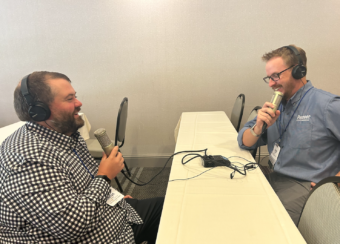
Garrett Hylton
Transcripts have been lightly edited for clarity and readability.
Intro: A production of Pioneer Utility Resources. StoryConnect, helping communicators discover ideas to shape their stories and connect with their customers.
Andy Johns: How can you motivate members to take action? That’s what we’ll be talking about on this episode of StoryConnect: The Podcast. My name is Andy Johns, your host with Pioneer, and I’m joined on this episode by Garrett Hylton from Wells Rural Electric Company. Garrett is the marketing and communications analyst. Thanks for joining me.
Garrett Hylton: Yeah, absolutely. Thanks for having me, Andy.
Andy Johns: This is the second time you’ve been on, so that’s cool. Appreciate you being on twice. What we always say is on the first time you’re a guest of the podcast, and the second time you’re a friend of the podcast, so we appreciate it.
Garrett Hylton: Nice. I’ll take that title.
Andy Johns: There you go.
Garrett Hylton: How many times do I have to come on before I can be a guest host?
Andy Johns: Um, nobody’s ever hit that before, but we could probably make that happen.
Garrett Hylton: I don’t think anybody wants that.
Andy Johns: Fair enough. What are we going to be talking about today is a letter writing campaign that you guys have going over at Wells, or WREC, I guess, is as you say it. It’s not the first one y’all have done, but we’ll kind of get into it. So just kind of give us a lay of the land. What’s the issue at hand? And I guess let’s start there. So what’s the issue that you guys are working on?
Garrett Hylton: Yeah. And I guess too, I would like to just say, I don’t know that I would consider us necessarily experts on this topic. I don’t know if there is a playbook that’s universal, but hopefully I can serve two purposes. Hopefully somebody will be able to listen to what I’m saying and find something that’s helpful for their situations. And hopefully an actual expert somewhere in this country will listen to this podcast and say, “Man, we’re really good in relation to what these guys are doing.” So hopefully I can accomplish those two things. Currently, we are trying to get our members to communicate with our federal representatives in the state of Nevada about protecting their access to hydropower, specifically to kind of combat some processes that we feel like will attempt to lead to the removal of four of the Lower Snake River dams. So it’s a constant battle for Pacific Northwest Co-ops.
Andy Johns: Yeah, y’all aren’t the only ones kind of in that spot.
Garrett Hylton: No, certainly not. It’s a regional – the history behind these, the lawsuits surrounding the dams, is 20 plus years old now. I think that, you know, when you talk about removal, it’s actually an attempt to kind of settle that legislation and appease some of the interests on the other side. But certainly we’re all familiar with that, that argument. It’s something that we are constantly combating, and I think it will be familiar to a lot of different people.
Andy Johns: Sure. And that’s a plus and a minus for you, I’d imagine. It’s something that folks have been hearing about for 20 years. But it’s also complicated enough to where, you know, keeping folks either engaged or activating folks who aren’t engaged has got to be a little bit of a challenge. So kind of a double-edged sword for you. That is something they probably heard about, but they probably don’t understand anything close to the details of it.
Garrett Hylton: Yeah, yeah. Incredibly complicated topic when you really get into the nuance and the arguments on both sides. You know, this is something that I think I’ll probably mention in the future, but I think your greatest weapon in any sort of campaign like this is the truth. And so one of the things that I always encourage is, you know, people who sort of are trying to understand the whole issue, the entirety of the issue, I actually think that’s a good thing. Because I think being able to provide context to certain arguments and things is very helpful. And so I will say that the key to our success and all of these campaigns – this one we’re right in the middle of, and so it’s sort of in the midst. But the truth is, your best friend, and I think that that’s been the thing that has helped us through all of that.
Andy Johns: Yeah. So what’s your ask? What do you think is the best way that as the co-op, as you’re working on it, what are you trying to get folks to do, and what have you all determined is the best way to kind of swing things in your direction there?
Garrett Hylton: Yeah. So we’re part of a lot of regional groups, whether it’s you know, the Northwest Requirements Utilities, NWPPA, where we’re both at right now for a conference.
Andy Johns: Should have said that. Yes. We’re recording this episode live at the NWPPA NIC conference here in Santa Rosa, California.
Garrett Hylton: Yeah.
Andy Johns: Yeah. You’re auditioning for that guest host role by remembering to identify where we are. Good work.
Garrett Hylton: Just trying to help the friend of the pod. Just trying to be your friendly neighbor. But yeah. So, you know, we participate in these groups, typically northwest regional things don’t necessarily overflow into something like this for us. We’re northeastern Nevada, very edge of the Columbia River basin, not typically thought of, high desert is not typically associated with the Pacific Northwest. But in this situation, our state is incredibly purple. We just voted out an incumbent Democrat governor, but we do have two Democrat senators currently sitting. One of them is in, what’s been identified as a fairly vulnerable seat. And I think that sort of what the motivation from Northwest River Partners and some of these other groups was, regardless of what happens in Oregon and Washington, those Senate seats are probably going to be blue no matter what. The two seats in Nevada, obviously, the current administration would really like to hold on to those and keep those blue, and there is some question about that. And so their hope was that maybe we could get a little bit more traction in being able to communicate some of those messages, those hydro messages, to them and get some help that way.
Andy Johns: This would be a chance, no matter who’s in those seats, but just when it’s a vulnerable seat you figure you got, that’s when you may have a little more influence a little bit there. They’re more likely to listen kind of in a spot like that?
Garrett Hylton: Yeah. That’s exactly, I think that’s exactly the logic behind that. You know, in, you know, you and I joke off pod, but, you know, we like to say in Nevada that we’re the last sort of remnant of the true West. And in the true Western spirit, where hopefully it’s a little bit more about, you know, individuality and that sort of freedom. And so that purple description fits Nevada pretty well in total. Definitely. Certainly not in parts, but that’s sort of our nature.
Andy Johns: Sure. So and I think anybody who’s ever watched the election night coverage knows that there are a couple of states that keep us all staying up late at night to see which way is going to go, and y’all are always right there. But so, you know, this is a good time to get the word out there.
Garrett Hylton: Yeah.
Andy Johns: What’s – letter writing, going to the offices, attending rallies. I mean, what kind of things are you asking folks to do to activate them, to get the word out?
Garrett Hylton: So ultimately the ask is that our members send a letter to our federal representatives thanking them for their participation and consideration of the issue and just asking them to protect their access to hydropower moving forward. And it’s a simple thing, but it’s, you know, I think that any communicator could kind of say that that sort of ask is a really difficult one. And actually getting that action to be done. You know, I always think back to like going over some usability testing things on websites and always being amazed at like how much the exit rate goes up per click. It seems like a very simple thing, but it’s hard to get people to engage in that sort of issue.
Andy Johns: We’re all distracted. We’re all doing other stuff. And so yeah, throwing one more thing on there.
Garrett Hylton: Yeah. So we’ve tried to make it as easy as we could. We’ve worked with Northwest River Partners in a group that they’re working with to build a form that members can go in. It takes about two minutes. There’s a populated message in it. It automatically goes to their representatives based on their zip code. We’re sending out QR codes, things like that. We also have blank letters that members can just sign at our rallies, and to try to make it as easy and simple as possible. Last time I checked, I got a report yesterday. I think we’re up to like 150 letters after a couple of weeks. And so I think that’s, and it’s actually closer to 200 with the letters that we have that we have to physically mail.
Andy Johns: Sure.
Garrett Hylton: So it’s off to a good start. You know, I guess I can, I can kind of get into the structure and some of the focus of what we do to try to get these things to be successful.
Andy Johns: Yeah. But before we hop right there, this is not the first time y’all have done something like this. You’ve got at least, you know, some previous campaign to base it off of, right?
Garrett Hylton: Yeah. And so, the ask is bigger here, but we are basing this campaign off of a prior experience that was successful. About 4 or 5 years ago, Nevada faced an initiative on the ballot to deregulate the energy industry. And so that would have potentially removed our access to the federal hydro system. And in our communities, we serve four towns in northeastern Nevada and right on the border into Utah and several rural areas. I believe three of them are, you know, low or at risk communities income wise. And it could have been catastrophic. A lot of gaming and mining interests that support jobs in our communities. And so it was essential that we tried to protect that. And so we did have a very successful campaign. I can’t take sole credit for that, like just what WREC did. Although I do think that our districts represented the largest turnaround in the state. This was an initiative that passed the first time on the ballot by something like 70 to 30, and then failed the next time by a similar amount. Our districts were roughly 92 against 8% for. I think our county was like 85-15. We have a fairly prominent political voice in our state named James Ralston. I think Democrats will be familiar with him. He termed this the largest choke job in Nevada political history. The failing of that initiative.
Andy Johns: Yeah. So and, you know, getting some folks to understand. There’s a headline on the story, and that’s what they’re going to see. But then there’s a nuance you talked about. Whatever the campaign is, that’s a key part of it, is getting people to read kind of past that headline and understand some of the nuance and understand how it impacts them and ultimately get them to take action. So what, you were talking about the structure, what kind of stuff are you all doing this time around to get folks to understand the issue and then take action?
Garrett Hylton: Yeah. So I actually think it’s even simpler than that. The basis that I would start with is, the key to, I think, any of these campaigns is a focus on brand awareness. Now, I think anybody who says that they have a strong brand, which I think we do, is lying to themselves if they think that is solely, you know, a product of their good work. Because so many things can happen in this industry that can make that difficult, and that’s not always in our control. And so we’ve been fortunate that to build a strong brand awareness. The last time I was on, we were specifically talking about some of our community outreach and our member rallies.
Andy Johns: Right.
Garrett Hylton: And I think it all starts with things like that. I think we’ve been fortunate to build a brand that people trust and that people rely on, you know, focusing on those messages of your neighborhood co-op, that these are your people, that, you know, it’s a co-op run by your neighbors that you elect. We’re not selling you power. We’re purchasing power for all of us, and that we’re acting in your best interests. And so trying to build that brand, I feel like has really helped us.
Andy Johns: And let’s stick right there for just a minute, because I’m really glad you said that. And we’ve worked with folks who don’t, who bring us in, and they haven’t really done communications – and I’m doing air quotes around that. They haven’t really done communications or branding until there’s a crisis. And at that point we tell them, you know, we do what we can, but it’s kind of too late. That, you know, you need that steady drumbeat, keeping folks engaged, letting them know who you are, so that all of a sudden, the first time they ever hear you say anything, you’re not asking for them to do something. Like you’re saying, to get that communications out there, to get the brand out there, whether it’s magazines, social media, you know, the different outlets, the events, like you’re talking about, where they know you. They know who you are. They know what you stand for. Then it’s, you know, a friend or somebody that they know asking them for help rather than just some stranger asking them to take a couple of minutes to write a letter.
Garrett Hylton: Yeah, I think that, you know, in a lot of cases, these campaigns kind of either succeed or fail before they ever start based on –
Andy Johns: Oh, that’s good.
Garrett Hylton: What you just said. Yeah. I mean, and again, I don’t want to speak like this is an easy thing or that, you know, if you don’t have that strong brand awareness that that’s the responsibility of a communicator, because I don’t think that that’s the truth. But I do think that as a communicator or as a marketing team, operating in all ways with your brand and what you want your brand to represent at the heart of it is really going to pay dividends in areas that you may not even see. You know, for a traditional business, obviously you’re competing for business. We’re not always competing for business, but you’re competing for trust. You’re competing for credibility. And those things are every bit as valuable when it comes to something like this. And I think that that’s something that we’ve really, really tried to emphasize in our communications planning and in our group meetings. I do think that’s something that starts at management and comes on down. We have a lot of people that care deeply about our logo and our cooperative, and want to see it be successful, and I think that that’s important.
Andy Johns: Good for you all to get to that spot. Like you said, that’s not easy. So going back to this campaign, you’re starting off in a good spot there with the brand recognition. But then getting into the rest of the structure. I think you mentioned earlier, what are some of the next steps?
Garrett Hylton: Yeah. So we’ve basically looked at our previous model and taken the blueprint that we used there per se to input it into practice here. And so I think, you know, the first thing is kind of dumb luck. We had been in the middle, you know, like ongoing education I think is an important thing for all co-ops. You know, we can’t explain the nuance of some of the issues around the dams and hydro, but we want our members to be very aware of where their power comes from and the benefits of hydroelectricity. So we do spend a fair amount of time, whether it’s graphically, photo or whatever, educating ongoing on hydro. We call it ongoing education just to try to build an awareness for a few key terms so that when something comes up, they do it. We happen to just be right in the middle of a fairly large push about our distribution system, transmission system and then power source that had started all the way back in March. And then this came on to our radar in kind of July. And so it was a nice way to segue and transition into this. And so that’s kind of where things started.
Garrett Hylton: And then, you know, a few key critical components, is one, it has to be easy. Whatever the ask is going to be, the ask needs to be clear, and the process needs to be simple. If you’re going to have success, you need to have those two things lined up as much as you can. And this is definitely going to be more challenging than somebody already going to vote, just voting no. And so it definitely has a different set. But we’ve tried to make that process as easy as possible. We spent a fair amount of time crafting that letter. Members can go type their own, but having something there that they could just hit send on, making sure that that process would be fast and not require a lot of work. Making sure we had QR codes in place, that we had a spot on our website in place. And then we also, for the folks that don’t do email or don’t do electronic, that they had a way to come into our office and just sign a letter and then leave, and then we would handle the rest of that process, so they didn’t have to go through the rest of getting it mailed. So that was the first part is keeping that simple, being clear on the ask. And then –
Andy Johns: And the main call to action on all of that was driving them to that web page.
Garrett Hylton: Yeah.
Andy Johns: Aside from the folks that had the option to do it in-person. But on any of the communication, whatever channel it’s driving them there, and then that page lays it out a little bit, and then gives them the opportunity to submit the, I guess it’s an email, right there.
Garrett Hylton: Yeah. And then, you know, we try to look at, from there, we try to look at like what is the best way to get the most number of people. And actually let me stop. I’m getting ahead of myself. Aside from the ask, the messaging I think is critical. Especially when it comes to political stuff, we obviously live in a very politically charged environment. Hopefully that’s the kindest way that that can be put, but being able to skirt the line, if not really, we look at ourselves as a nonpartisan organization. We’re trying to do the best for our members, regardless of which party that is.
Andy Johns: Yeah, you have to.
Garrett Hylton: But you’ve got to be incredibly careful about how you make that look, so it doesn’t necessarily seem like you’re coming from one party or the other. And then I think the other thing, too, is understanding your members in what resonates. And so, like when Northwest River Partners is communicating in western Nevada, the message is more focused on carbon emissions and the environmental benefits of hydropower. Not that that doesn’t matter in our service territory, but the much larger driving factor is the economics and the reliability. And so our messages are more focused on the cost implications and the reliability implications if those dams were to be removed. And so –
Andy Johns: You’ve got to know your audience.
Garrett Hylton: Yeah, absolutely. And I mean, we saw it in practice. We were getting letters signed at a rally the other week. And for a lot of them, they didn’t need to hear any more than this was going to increase the cost of your bill. And they’re like, where do I sign?
Andy Johns: Where do I sign? Yeah, exactly. Okay, and then the next phase of it then after that, what’s the next step?
Garrett Hylton: Understanding demographics. And, you know, I hate to say it’s quantity over quality. So I hope that it’s both.
Andy Johns: Sure.
Garrett Hylton: But we want to make sure that we’re getting this in front of as many members as we can get it in front off.
Andy Johns: But if you had to pick one, you’d pick quantity.
Garrett Hylton: Yeah, it’s got to be quantity. And so it’s kind of an all hands on deck. We do community, we call them community rallies. They’ve sort of replaced what would be an annual meeting for most co-ops. You can listen to a previous podcast if you’d like to hear more about those.
Andy Johns: You’re good. You’re good.
Garrett Hylton: Just again. Hey man, if you ever need if you ever need a guy,. But they’ve been the main talking point at those. We usually have a giveaway of some kind. This year we were doing t-shirts for each school, for each high school, that we were doing. And so as they come past our table to get food, as they come into our table to get their shirt, this was the topic that we were trying to talk about with as many members as we could talk about, to get them in-person. I think that’s always more effective. We know that younger members tend to be more on social media, and our Facebook. Also heavily are following on Facebook tends to be heavily female and under the age of about 44-45 or whatever. And so we definitely are starting to hit that just now on social media to try to pull them in with a link to that site. We’ve put it in Pioneer to try to get the older demographic of of members there.
Andy Johns: In the Ruralite magazine?
Garrett Hylton: I’m sorry. Yeah, the Ruralite magazine that Pioneer produces. There you go. And then we also have advertised in some local newspapers. And then one thing that we have found successful, and I know there’s varying, you know, penetration figures and analytics behind this, but we have found that if we have a really important issue that a direct mailer 8.5×11, not a bill stuffer, an actual direct mailer, is a really effective way to get people’s attention.
Andy Johns: Yep. It’s still out there. It’s still an important channel.
Garrett Hylton: Yeah.
Andy Johns: And I mean, something like this, anything really, but especially something like this, you’ve got to be multichannel. You’ve got to be at a lot of different places.
Garrett Hylton: Yeah, absolutely. And that’s kind of our tactic. You know, you have to be okay with knowing that you’re going to walk into a post office and see a lot of these in the garbage.
Andy Johns: It hurts your feelings sometimes, though.
Garrett Hylton: I mean, yeah, you can sad face for just a second. But there are going to be people that read it especially, you know, where it’s not in a letter. It’s an actual 8.5×11 cardstock designed by the good folks at Pioneer.
Andy Johns: There you go.
Garrett Hylton: We have a letter from our CEO on one side with a QR code, and then some graphics and things on the other side that talk about hydro as a base load, renewable form of generation, things like that.
Andy Johns: And that card in the mail kind of on the digital version that you’re talking about those clicks.
Garrett Hylton: Yeah.
Andy Johns: You know, they don’t – it sounds so silly – but you send the card so they don’t have to open an envelope.
Garrett Hylton: Yep.
Andy Johns: So it’s one less step they have to do to get there. It’s just right there in front of them.
Garrett Hylton: Yep. See, scan, quick form, hit send. Done.
Andy Johns: Done.
Garrett Hylton: And so that was really important to us. And so we’ve kind of taken that approach. And we’ll do social media throughout the fall. Our rallies will be over here in a couple of weeks.
Andy Johns: Sure.
Garrett Hylton: We’ll continue on social media. We’ll continue in Pioneer. But then there’s a second kind of aspect to this that we’re also trying to roll out right now. And we learned it. It kind of goes along with brand awareness. But credibility is tremendously important obviously. Especially if you’re asking somebody to take an action on a political matter, it needs to be credible. We have found that as a not-for-profit cooperative, we have a much larger voice than we even realize with certain people.
Andy Johns: Interesting.
Garrett Hylton: And in 2018, when we were doing that, we were actually talking to a lot of members that were not co-op members. We were in the investor-owned utilities territory talking about the issue and how we felt about it. And we got a lot of feedback that, “Hey, if you guys say this is a bad idea, then we believe that.” You know, a lot of folks that understand our structure and things are like, if you say it’s bad. And we at that point, we were saying if we thought this was beneficial, if we thought deregulation was a way to save money, we would be on the other side. It’s not about, you know, lining our pockets or anything like that. It’s about what’s best for our members.
Andy Johns: Right.
Garrett Hylton: We just so happen to think this is terrible for our members. And so we’re on the other side. So that had a lot of resonance. But the other thing that really helped, like I said, gaming, mining, agriculture are huge in our area. If you can co-brand your message with other organizations that will be credible to people. So you know, like the mining association, for example, would be one. Maybe a group of cattlemen’s association, gaming commissions, things like – gaming commission, probably not. But gaming ownership groups, things like that.
Andy Johns: Sure.
Garrett Hylton: It’s really important. And so, you know, like one of the first steps we did, we went to all of our city councils, got them to pass resolutions and sign a letter from the city of Well, city of Carlin, so forth, saying, we agree that we want these dams protected. And then now we’re in the process of going in and identifying other groups that hopefully will share our opinion on this and also lend their logos. You know, in our previous campaign, everything that we had in a newspaper or publicly was not just our logo. Like our general philosophy was, we’re going to avoid it just being a WREC statement as much as we possibly can.
Andy Johns: Smart.
Garrett Hylton: Yeah. So we would make sure that all those logos were on there. And so that, you know, if the main employer in this community is this organization, that hopefully seeing that organization sign-off is going to make that all the more credible. So I think that partnering with other groups, doing the legwork to try to get those groups on your side and share the implications with them is going to pay huge dividends in the long run. And that’s a key part of what we’re doing and kind of what we’re going through now.
Andy Johns: Yeah. To wrap up here, kind of the last question I had for you, if we’re getting into the late part of the year, which means, you know, legislatures are going to be starting again at the beginning of the year. You know, there’s some hot topics out there right now. If there’s somebody else out there who’s listening, who says, you know, we really need to activate some folks, maybe they’re starting in a good spot like y’all. Maybe they aren’t. What advice would you have for folks like that, who are sitting in the shoes where you were maybe in 2018 before you’d done that first one? But somebody who’s sitting there thinking, “Hey, I got to activate some folks. I got to reach out and get some folks to take action.” You know, what advice would you have for them?
Garrett Hylton: That’s actually, I’m glad you asked that question, because I didn’t mention this, and I think it’s really important. I think the first thing that you have to start with is a conversation with your management team, or even your board, to set crystal clear expectations for how important this matter is to your co-op and what your ask is going to be, and setting those expectations about what you really want to get out of this and how much it matters. Like how much real estate, how much bandwidth, are you willing to provide to this issue? And being really honest about where that’s at. And then the second part, and this was the thing –
Andy Johns: Just getting everybody aligned before you start. That’s really smart.
Garrett Hylton: Yeah. And then that was the second part is like, you know, making sure that you find those advocates within your company that can really help your cause. You know, like, we have a wonderful employee that is bilingual and speaks a couple of languages and has done a really good job communicating with some of the Spanish speakers in our service territory. I think probably every co-op has people like that, or folks that you don’t even realize. They may not even work in communications or marketing that believe in these things. And so taking the time one, to make sure that your employees understand. It really doesn’t matter whether they’re fully engaged with this or not. If they work for your company, obviously, they’re going to get asked about it somewhere. So making sure that they at least understand the talking points. So we definitely have talking points available. We’ve posted them on our SharePoint site before all of our rallies. We did a quick, you know, 30 minute presentation with the employees that were attending with our board members to go over those talking points. And they don’t have to understand it at the same depth that, you know, like the legislative affairs people or maybe the communicator does. But if you give them a broad understanding, they can always forward people that have those more in-depth questions to those that are immersed in it on a day to day level.
Andy Johns: Your first audience is almost always your employees. So I like getting them on board.
Garrett Hylton: It should be. And that was a mistake that I made sometimes early in my career. Not intentionally, but I feel like there were times when maybe I just assumed that other employees knew exactly what we were talking about. And then I realized that, you know, it’s important to make sure that that’s the case and spend time. And you will find some of your best help if you just, you know, give your coworkers an opportunity to weigh in and do that. So that’s where to start with. And then, yeah, if you have legislative affairs people, if you have a statewide maybe. Definitely, definitely. Now, we are not using the statewide on this. It’s an issue that’s not specific to every co-op in our state.
Andy Johns: Right. Just because of geography.
Garrett Hylton: Yep, yep. And so we are doing most of it. But you know we have been able to have meetings with our federal representatives. We were lucky, and we’re able to host one of our senators on a trip that she did through rural Nevada. That led to a call to the undersecretary, you know, a couple of days later. So we’re sticking with it. We’re continuing forward and not losing sight. But that part’s been good.
Andy Johns: Excellent. And that’s good advice all the way around. So many different aspects of it. So much to keep in mind as you’re doing that going forward. Thanks for sharing those insights with us.
Garrett Hylton: Yeah. No. Absolutely. And you know, I honestly, if other people have done these kinds of things, I would love for them to chime in, you know, and provide feedback on what they’ve done that works, what doesn’t work. Because I think this is a hotspot for a lot of co-ops. We’re kind of stumbling and learning as we go and have fortunately been successful. But like, would love to hear what other co-ops do about these kinds of topics.
Andy Johns: This might be worth a whole series as we’re getting into legislative season so. Well, Garrett, thanks so much for joining me.
Garrett Hylton: Absolutely. Thanks for having me, Andy.
Andy Johns: He is Garrett Hylton. He is with Wells Rural Electric Company in Nevada. He’s been working on making sure I say “Nevada” correctly for a couple of days here. I think I did all right.
Garrett Hylton: Doing great.
Andy Johns: I’m your host. Andy Johns. Until we talk again, keep telling your story.
Outro: StoryConnect is produced by Pioneer Utility Resources, a communications cooperative that is built to share your story. StoryConnect is engineered by Lucas Smith of Lucky Sound Studio.