Share

For the second year in a row, price was not the No. 1 concern for respondents in Innovative Systems’ annual broadband survey. What is it that matters most? This episode also includes notes on bundling, social media platform usage, streaming options and communication preferences.
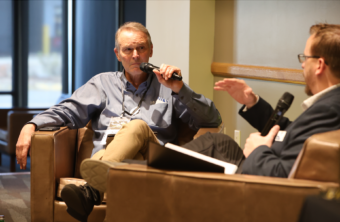
Special: Recorded LIVE at StoryConnect 2024!
Scott Meyer
Transcripts have been lightly edited for clarity and readability.
Andy Johns: Hi StoryConnect listeners. This is Andy, and I am here just to let you know about a couple of audio problems we had with these episodes. If you’ve been to StoryConnect before, you know that we have a ton of fun recording live episodes there in the conference center, and we did that once again this year in Hood River. Unfortunately, in this episode you’re about to listen to, some of the audio is not quite as good as it is when we’re recording otherwise. I think it’s an important episode, and we did learn a few things from last time we recorded live, but it’s still not perfect. So, I just wanted to give you a heads up on that. If this is your first time listening, normally, we’re pretty proud of the pristine quality we’re able to deliver. But this one is a little bit rough, so I wanted to give you a heads up. We think it’s an important episode, and I hope you enjoy.
Intro: A production of Pioneer Utility Resources. StoryConnect, helping communicators discover ideas to shape their stories and connect with their customers.
Andy Johns: What is the most important thing to rural internet consumers? That’s what we’ll be talking about on this episode of StoryConnect: The Podcast. My name is Andy Johns, your host with Pioneer, and I’m joined on this episode by Scott Meyer, who is the marketing director for Innovative Systems. And Scott, thanks for joining me.
Scott Meyer: My pleasure as always.
Andy Johns: So Scott’s episodes are always some of the most popular episodes of the year. I think you had 2 or 3 years in a row you made our top five for the year. This past year, you slipped down to number six, so I need you to step it up when we record today a little bit, I guess, for that.
Scott Meyer: Oh man.
Andy Johns: But Scott’s group, the Innovative Systems, has just published a 2024 Rural Broadband Streaming and Social Media study. And, Scott, I guess before we get too far into it, just tell us a little bit why? Because the reason I like to have you on is because this survey is targeted so perfectly for the folks in this room. Tell us just a little bit of the basics. Who are you studying in this study?
Scott Meyer: Sure. Great question. So for nine years, we’ve been studying rural zip codes only. Historically, the urban and the metropolitan markets get most of the traction when it comes to research like this. But we decided a long time ago, hey, these are our customers. We want to know what their customers are thinking about, how they use these services that you provide for them. So, we do, 800, about 800 to 805 respondents. That’s what we had this year. I can’t remember the exact number. And our research firm says it’s a plus or minus 3% margin of error. So it’s fairly well validated and reasonably accurate.
Andy Johns: Excellent. Wonderful. I want to get into it. I did, even though it’s highlighted in big font here, i missed it somehow. I do need to say this live podcast today that we’re recording in front of a live studio audience. Here at the StoryConnect Conference in Hood River, Oregon. These are sponsored by Meridian Cooperative, and we are thankful to have them on as a sponsor. So the interesting thing to me, Scott, the kind of top line, this is the second year in a row – you’ve said you’ve been doing it nine years – and for the first, what, seven [years] price was the king when it came to what people, you know, the concern that people had about rural broadband. But the last two years, that has not been their chief concern.
Scott Meyer: That is correct, Andy. And let me frame that up. So we ask a question, rate how you feel about something on a 1 to 10 scale, with one being your least satisfied and ten being your most satisfied. So we take those people who rate seven or below as people that aren’t quite as satisfied. And for year after year after year, and you’ve probably all done this yourselves. When you give somebody a chance to complain about something, usually their number one complaint is going to be price. Well, for the last two years, this question came back with the number one complaint with broadband, the least happiest ones, was the consistency of speed and the quality of what they’re getting for their service. And price was number two. So really, I think that’s telling because we are in a situation where now this broadband is becoming something that is so essential that it trumps out price as far as importance.
Andy Johns: And I think we could draw some direct lines to what’s been going on in the world the last couple of years with Covid and all that. So many remote workers. I mean, I’m sure that’s a lot of what’s contributing to that reliability being the most important thing to them.
Scott Meyer: Agreed.
Andy Johns: Yep. Another piece of the survey that came out is bundles. And I think that’s interesting. You know, bundles is something that were really in vogue, you know, ten years ago when you bundle your phone and your television and your broadband all together. It’s not talked about as much anymore, but I think it’s important from a competitive standpoint as well because people still like bundles.
Scott Meyer: That is correct. And, you know, there’s been this move to unbundle for quite some time. That’s really, as you said, has been kind of the trend. But one of the situations that we ask is those who have video, 60% of the people that have a video product, also have the same company as their internet provider. And so the situation comes up with a lot of you, and some of you, may be going into new territories, maybe you got money for whatever reason, but you’re going in with a broadband only play. What we have found, and we have customers that have actually told me this personally, is that they did not get the kind of take rate that they expected because the competitor they were going up against had both. And so to try and pry them off of one service and take another service and have two bills is not necessarily attractive for them. And they keep what they have.
Andy Johns: Got it. Speaking about video, let’s jump into that for just a minute because it’s kind of muddy. There are, I think you said, there are more and more streaming providers getting into the game. And we’re clearly in some kind of a transition away from linear video to streaming platforms, but it’s still a little muddy as to what exactly is happening right at this moment.
Scott Meyer: It is. People get kind of confused, you know, especially how – I mean, some people don’t care how they get it. They just want to watch it. And so it’s causing our data to become a little bit, I don’t know, cluttered because, for example, we have about 200 video operators that use our products in North America. And of those 200, I think 110 of them are either in the process of or have already converted their full lineups to streaming. So a lot of times people don’t necessarily make that connection between streaming and IPTV, analog cable, so on and so forth. So, to your point, the waters have become a bit muddied in that respect.
Andy Johns: One of the new pieces on the study this year is y’all were looking at social media. That was something that y’all had not gotten into before. What were the takeaways? It sounds like based on the study, no matter what other platforms are getting a little bit of traction or maybe a lot of traction, Facebook is still the the 800 pound gorilla in the room, it sounds like.
Scott Meyer: That’s true. So the question, I’ll just give you the question that was asked, and we had 801 respondents. The question was “Which of the following social media platforms/sites do you or others in your household use/visit, if any? Check all that apply.” So 80% checked off Facebook, 72% YouTube, 48% Instagram. And I’m not surprised by this. Some may, but the number four is TikTok, which could conceivably be illegal sometime soon. But it’s really the fastest growing social platform, at least starting from not a whole lot within the last couple of years, moving into that number four position.
Andy Johns: And what percentage, what were the percentages on those? You said that Facebook was 80%.
Scott Meyer: 80, 72% YouTube, 48% Instagram, and 40% TikTok, followed by Snapchat, Pinterest, and then they just kind of go down the line.
Andy Johns: And did you have it, I don’t want to put you on the spot, did you have a little bit of the demographic breakdown on that too? Is it like we would think with, you know, the younger TikTok skews a little younger? Or what are you seeing there?
Scott Meyer: Yes, actually. And just kind of take a quick time out. I do have a copy of the executive summary for anybody out here that would like it. So we’ll get my email, and I do have cards here so you can approach me. I can give you one of my cards. You can just send me an email, and I’ll send you a free copy of that. It’s about 18-20 pages. So I do have the breakdowns on that. But I can’t really, I can’t speak to that. The younger like 18 to 34s are definitely more skewed towards Instagram and TikTok and YouTube. In fact actually YouTube, that younger demographic that’s the strongest platform that people are going to.
Andy Johns: Interesting. Last thing, last area I want to go to here. One of the things you guys asked about is communication preferences with their broadband provider. and that was interesting to me. I don’t know if that’s one y’all had asked before, but how were folks saying they want to be contacted and want to be communicated with from their? Or what was the exact phrasing of that question?
Scott Meyer: Well, we’ve done it two years now. So the question was, “If your internet provider announces a new product service or new information about existing products and services, how do you prefer to be notified?” And there was 800 respondents. So this could fall into the electric co-op category as well, easily because you have other things that you offer to your customers besides electricity as we well know. But number one is a separate email with single purpose information, 45%. Number two is text messaging at 38%. And then it’s followed down the line by eBill, digital newsletter, hard copy newsletter, followed by telephone call. And believe it or not, overall – now this does skew down demographically a little bit when you break it out – but social media is in the second to last place. Now when you move it into the demographics, social media from 18 to 34 year olds, 23% would prefer to receive social media, but still separate email, text messaging is the preferred method of notification of new products and services.
Andy Johns: Interesting. So, you know, not necessarily all communication, but that in particular, I think, is an important nuance there. So well are there any other takeaways? Let’s wrap up with that. Anything else we didn’t didn’t cover before we wrap up here that you would like to share with folks? Any other takeaways from the study?
Scott Meyer: Well, I really would encourage you to take this information if you want, and use it to help make your strategic planning, because it really does give you a snapshot. And we’ve been doing this for nine years, and the data has been very consistent, and we feel that it’s quite validated. And use it and take advantage of what your customers are doing based on this study, because this will help you to maybe be better marketers, deliver messaging in a little more of appropriate fashion to what your customers prefer.
Andy Johns: Outstanding. Well, thanks so much, Scott, for joining me. That has been Scott Meyer, the marketing director for Innovative Systems. This is our audience here at StoryConnect. I’m your host, Andy Johns. And until we talk again, keep telling your story.
Outro: StoryConnect is produced by Pioneer Utility Resources, a communications cooperative that is built to share your story. StoryConnect is engineered by Lucas Smith of Lucky Sound Studio.