Share

Want more people to apply for lineworker jobs? Show your story to high school seniors! Learn how Community Electric Co-op’s “Day in the Life of a Lineworker” student experience raises awareness of utility career paths and lineworker scholarships every spring.
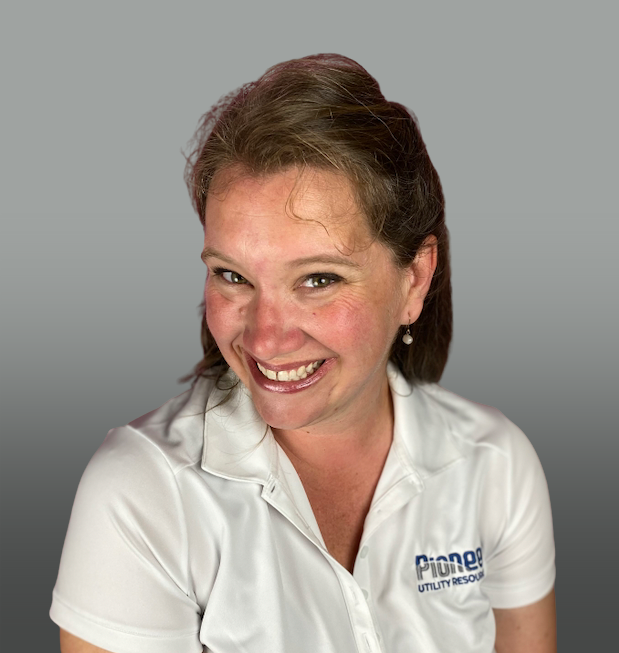
Jessica Parr
Transcripts have been lightly edited for clarity and readability.
Intro: A production of Pioneer Utility Resources. StoryConnect, helping communicators discover ideas to shape their stories and connect with their customers.
Megan McKoy-Noe: Line Life: how to give students a 40 foot view, or 20 foot based on your safety regulations, of utility careers. That’s what we’ll be talking about on this episode of The StoryConnect Podcast. Hi, I’m your host, Megan McKoy-Noe, one of the storytellers at Pioneer Utility Resources, and I am joined by Jessica Parr. She is the manager of communications at Community Electric Cooperative in Virginia. Jessica, thank you so much for joining us today.
Jessica Parr: Hi, thank you so much for having me.
Megan McKoy-Noe: Oh, this is exciting. I love learning from you. So let’s just start off by telling folks a little bit about Community Electric Cooperative and the communities that you serve.
Jessica Parr: Excellent. Yes. So Community Electric Cooperative is in the Tidewater area. We have about 12,000 meters that we service and about 40 employees. And our service territory covers Suffolk, Southampton and Isle of Wight.
Megan McKoy-Noe: Wow, which leads me to wonder about the origin of what we’re talking about today, which is your day in the life of a line worker, high school student experience. You’re bringing the kids that live on your lines and live in nearby communities to your utility. Talk to us about this program.
Jessica Parr: The biggest aim or goal for this event is really to help people understand one, the importance and significance of line workers and the astronomical role that they play in communities, and more in particular our community. But also that this is a career opportunity. So you don’t necessarily have to go to a four year college. And yeah, we just explore all of the opportunities about going to line worker school. And if you get to line worker school, we even explain to them that you can realize that you don’t want to be a lineman coming out of line worker school and even having that degree, will open the door to other opportunities. So, it’s just a great avenue, a great communication and a great networking thing that we do. And it’s so fun.
Megan McKoy-Noe: Well, so I saw pictures of this event, and you’ve told us how you get the word out about it. Take me to the day and what kind of activities y’all do. Because I started this out by saying you’re giving a students a 40 foot, or I think technically it might be more like a 20 foot, view. Getting them a couple feet up on a utility pole. I saw pictures of that. But what else do you do with these students? To show them what life is like when they work on the line?
Jessica Parr: Yeah. So every year it looks a little bit different because every year we’re learning from what the students need to get a better grasp on it. But we’re also trying to incorporate as technology changes. So, last year, we had some hands on activities where we would change out light bulbs. We would climb the poles, and we did bucket truck rides.
Megan McKoy-Noe: Okay.
Jessica Parr: And so after getting feedback from the students, we realized that they really wanted to get in and get their hands a little bit more dirty to say.
Megan McKoy-Noe: Of course.
Jessica Parr: And so we set up, like, cross arm change out stations and, like, gave them the nuts and bolts and the rubber gloves. And, I mean, we really were like, we hear you, and we will provide this for you. So this year, we had a phenomenal opportunity to have more of our linemen on site. And so it was really like an all hands on deck. We had about 20 students that came from home schooling groups, public schools. We even had a student come all the way from Gloucester, which is about an hour and a half drive from us. So, yes, super proud of him for making that effort.
Jessica Parr: And yeah. So kids come from everywhere. And, we also had the opportunity to have ODEC on site. And ODEC is our G&T out of Richmond, and so they had about ten people there, or from there, that were on site as well. And so we really had this beautiful melting pot of community electric employees, students from the entire Tidewater area expanding all the way out to Gloucester. And then we also had our G&T, and so we had this cross bridge of information where students could learn from the G&T. The G&T was learning from the distribution co-op. So this year’s day looked very different than years in the past. and everyone was able to climb poles, do bucket truck rides, but not only just going up, but they were using the rubber gloves, and they had activities and tasks to do once they got up to the lines. We have demo lines on site that we allow them to fiddle with. And then, everyone was able to change out like a light bulb station. And then they had a cross arm change out station as well, so.
Megan McKoy-Noe: And Jessica, what else do you have on site as your stations?
Jessica Parr: Yeah. So one of the really cool things that we also have in our rotation with the hands on stations, as well as the climbing and the bucket trucks, we bring in a live line trailer. And we yeah, I know, and so we hook up a generator to it. So we will demonstrate, like a live demo, of what it sounds like, looks like, smells like for power to be disrupted. And so we use anything from wet branches to hot dogs.
Megan McKoy-Noe: I was gonna ask if hot dogs were involved, because with safety demonstrations, they almost always are.
Jessica Parr: What better than seeing a hot dog split in half with live electricity?
Megan McKoy-Noe: I like the wet branches, though. I think that’s really cool too.
Jessica Parr: Yeah, and so they’ll use the wet branches to make it arc so that you can see the electricity. We talk about step potential. So if a car hits a pole or if a pole falls for any reason, we dig into that and like, hopping or sliding and shuffling and all of that. And then we use our subsidiary, so Community Electric has a subsidiary called Recore. Their core business is to provide standby power anywhere from residential, whole home residential generators, all the way up to critical infrastructure, commercial grade microgrids. So we do everything. But we pull one of our residential generators and hook it up to the live line trailer. So this baby is cranking with energy, and the students love it because. Then they get to learn when you hear, you know, what does it mean when you hear that loud pop, right? And how can I safely approach – because a lot of these students come from farm life, too. And so their tractors might hit a line and drag it down, or a car might hit a pole, and it falls onto their property. And so we discuss all of that safety with this one trailer station. So yeah, it’s really, really cool.
Megan McKoy-Noe: So it’s like a safety demonstration, but really geared toward careers and what you should listen and look out for and what you can expect with a powerful career. I like it.
Jessica Parr: Yes, yes. And relating it directly to their current life. Like the what’s in it for me?
Megan McKoy-Noe: Not becoming a hot dog. That’s what’s in it for you.
Jessica Parr: Yeah. Don’t be a hot dog. One of the other really cool things that I just absolutely love that our linemen do is when the students are there, any student that really expresses interest past this event and says, like, “Hey, I think I really want to apply to line worker school.” They connect with them, and we set up ride along days. And so that they can come back and have more of an intimate day of knowing what our guys do actually out in the field. And then so from there, we also connect them with a line worker school and help with the application process. And then we also have grants and everything that we can talk with them about and scholarships that we do. So it’s a big day. It’s full of a ton of information. A lot goes on, but this year was our biggest year to date that we have ever had. And I believe four of the students have already applied, four out of the twenty have already applied to line worker school, so.
Megan McKoy-Noe: Oh, I love that. So you mentioned kind of looking for folks that really enjoy this, the students that are highly engaged and that tell you, “Hey, I want to do more.” How do you identify them? Do you give them a form they can fill out or send back to you after the experience, if they want to learn more about ride alongs? Or is it just kind of word of mouth? They just say, “Oh, that’s just really cool. How can I do more?”
Jessica Parr: Yeah. So it’s a more about word of mouth. And we will have like a one-on-one communication with them. Either myself or one of our journeyman linemen will reach out to them and have that communication and get them scheduled to do a ride along. So yeah, it’s nothing. It’s not super formal because, I mean, they’re teenagers. They don’t want to fill out forms. They don’t want to do registration. You know, like.
Megan McKoy-Noe: I loved filling out forms when I was a teenager Jessica. I don’t know. Now I’m curious because we are trying to drive more awareness of line careers for both young men, but young women as well. Have you had women come through the program?
Jessica Parr: Yes, we actually had two this year. We had two females this year. So we also run a youth program through Community Electric. And this program comes with $1,000 scholarship, but it also, if they attend three separate events and create social media posts on each event, then we will also give them a $500 donation to a nonprofit in our service area of their choice.
Megan McKoy-Noe: So we’ve talked about some of the hands on elements of the day in the life of a line worker, and then you’ve got 20 guys and women in the future, who are there helping you out, showing the kids how to do things. You’ve got them doing activities at the top of the bucket. You’ve got them working in your training grounds, which I hope utilities have access to that. I know we had one at my co-op, and it was really handy. But even if not, you can always set things up in the ground level for kids to work through. You also mentioned that you took them on a tour. You had someone from ONE take them on a tour of your facility, which is nice. You had video footage that you were getting of the event. Did you have any sit down sessions about what a co-op is, or anything inside your office, to kind of give them a good foundation for why they would want a career with a cooperative?
Jessica Parr: Yes. So we kick off every day in the life of a lineman with what we call the class room session. oh my gosh, I’ve totally – epic fail. I’m so sorry. So we also have someone from Southside Community College who does the line worker school. We get them to come on site and be a part of the conversation, and they provide resources and information and available to answer any questions about housing and costs and grants and scholarships and budget, all of that stuff. So that person is there every single time. And, so back to the classroom. I’m sorry, just like light bulbs went off.
Megan McKoy-Noe: No, no. And that’s why I was asking because I want to make sure, you just got – and I should let folks know – this just finished for you, what, two weeks ago?
Jessica Parr: Yeah.
Megan McKoy-Noe: So you’re still kind of deep breaths.
Jessica Parr: We always do it the last Tuesday of February.
Megan McKoy-Noe: Okay.
Jessica Parr: Yeah. So it just happened.
Megan McKoy-Noe: It’s still very recent for you. I heard about it, and I was like, “Jessica, we have to talk about this.” But, yeah, I’m just trying to make sure if somebody wants to do this themselves, what should they do? So I’m hearing that they should find a cross department team of folks to volunteer, to show off your space, make sure that you’ve got a lot of line workers involved and bought into the program, and then find a local representative from wherever your line program is in your community or in your region to come and talk to the students about, you know, if you do go straight to this college or this program instead of going to college, this is what you need to know. These are the resources available to you.
Jessica Parr: Yeah, we just really cover all the bases of it’s not just being a lineman. It’s the entire industry opportunity and doing the 40 foot view.
Megan McKoy-Noe: I’m curious now we’ve talked about the value of this. 20 students attended in 2024. Do you have students apply to come? Or is it open to whoever wants to attend?
Jessica Parr: So we just have a registration form online that I typically open up in the fall so that people can plan accordingly and work with their teachers and their exam schedules. Because I know that, you know, you’re coming out of school. So that form opens up on our website in the fall sometime. I wish I had an exact date for you, I’m sorry.
Megan McKoy-Noe: No, no, I was just curious. So it’s just a registration form. You get it out several months in advance, and you work with all of your partners at the schools. You talked about this being just one of several things that you do with the youth in your community, your youth program. We’re going to have to talk to you about another time, because that just that’s very exciting to me. But looking at 2025, what changes are you already considering that you want to make? And are you doing anything else, really, to focus on co-op careers in the community right now?
Jessica Parr: Wow. Okay. So for 2025, we’ve only had one debriefing meeting on this event for coming out of that. So we have another one that we’re going to do to debrief from this event. But one of the things that came up was to have more stations and more time. And, adding more time, i think what we’re going to do is also include lunch, because who doesn’t love food?
Megan McKoy-Noe: Well, and I should have asked, how long is the program?
Jessica Parr: Yeah. So in the past we’ve done it. We’ve crammed all of this from 8:30 until 11:30, 11:45. So we try to get them back to school before lunch. We have found that it is a lot of information in a very short amount of time. So, I’m hopeful that next year we can go past lunch. If not turning, turn it into a full day of activities. It also depends on the size of the group. So usually around 20 students, that’s 25 is our max that we can do in a session. We’ve just found that there aren’t enough resources to take on more than that in one day. But, i don’t know, I think more time, more food.
Megan McKoy-Noe: Time and food. Things you can never have too much of. Well, for utilities that can’t, they don’t have the buy-in to have a full day of this, i will say that when I was at my co-op at our annual meeting, we had a line worker booth, like an a line worker experience, right where we had a bucket truck with the back cut out – or bucket with the back cut out for photos. We put up one of the training cross beams in the background, and we had our line workers there getting pictures with folks. But also we had stations while people were waiting to get their pictures because you wouldn’t think it, but everybody loves to get their pictures with line workers. It’s a whole thing. But we had stations where folks could put on the rubber gloves and try to unscrew different nuts and bolts and then put them back on again and seeing how challenging it could be, but fun too. So there’s a lot of things like that that you can do. And we had posters up with pictures and stories of the guys catching trouble after storms, you know. So there’s a lot of ways that you can kind of showcase line workers to your community and then build up to an event like a day in the life of a line worker.
Jessica Parr: Yes. And that’s where we started, really and truly. I know, pre-covid, when we were having these massive annual meetings, we had stations like that. And, even when we started off doing this, we started with groups of eight or maybe ten. And you don’t need a whole co-op buy-in. You don’t need all hands on deck when you have 8 or 10 students. So maybe I would suggest start small, even if you can just get four, get four kids out there. Get two linemen, maybe an apprentice and a journeyman lineman. I understand that, like, time is money, and to shut down operations for a whole day is a massive expense, no matter what size the co-op. Because even if you don’t spend a ton on food, it’s still, you know, someone’s new construction that isn’t getting connected or like, there’s something that is a cost. And so, yeah, I would say just like start small. It doesn’t have to be super big. And, if anybody is near us and wants to come experience our day, they are more than welcome. And if you’re not near and you want to fly in, there’s a phenomenal hotel down the street that you can stay at. So, yeah, it’s a good time. It really is a good time. I highly recommend it. Not only just from a change of pace for any comms person or community relations, but also for the linemen. They really enjoy it. It’s great for the students to get out of school, a change of pace for them, to learn about a hands on activity or a career that they could possibly not know that they like. And also just that community investment. Like that is so huge, and not to mention it’s one of the seven principles. So like, I mean, I highly recommend it. Yeah.
Megan McKoy-Noe: Well, I loved hearing about it, jessica. Thank you so much for sharing your story with utility pioneers, and hopefully inspiring some folks to look up when thinking about ways that they can talk about co-op careers and get folks excited. She is Jessica Parr from Community Electric Cooperative, and I’m your host, Megan McKoy-Noe at Pioneer Utility Resources. And until we talk again, keep telling your story.
Outro: StoryConnect is produced by Pioneer Utility Resources, a communications cooperative that is built to share your story. StoryConnect is engineered by Lucas Smith of Lucky Sound Studio.