Share

Storytelling is a HUGE component of broadband marketing. But how can you make a technical subject engaging and memorable for your community? Kelly Burns, marketing manager at CTC in Minnesota, tells us how Bigfoot, its own Gig A. Byte monster, Taste of Technology events and Broadband in a Box keep people interested and engaged in broadband services.
Kelly Burns
Transcripts are lightly edited for clarity and readability.
Intro: A production of Pioneer Utility Resources. StoryConnect, helping communicators discover ideas to shape their stories and connect with their customers
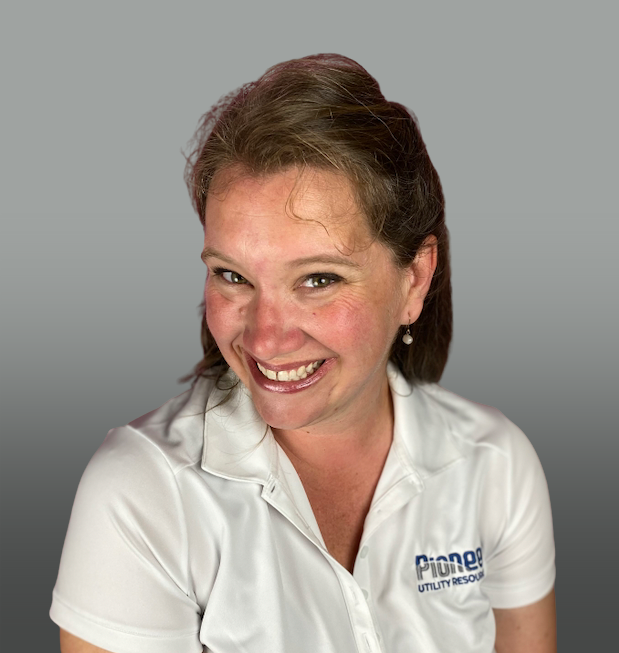
Megan McKoy-Noe: Broadband and Bigfoot: How to Build Engagement into Your Service Strategy. That’s what we’ll be talking about on this episode of The StoryConnect Podcast. Hi, I’m your host, Megan McKoy-Noe, one of the storytellers at Pioneer Utility Resources, and I am joined by Kelly Burns, the marketing manager at CTC in Minnesota. Kelly, thank you so much for joining us today.
Kelly Burns: Thank you for having me.
Megan McKoy-Noe: Now we are asking utility pioneers across the nation for tips on how to increase broadband subscriptions and build loyalty, both in their community and with their staff. Which brings me naturally to Bigfoot. Now, when we were together at StoryConnect, you were wearing an amazing shirt, maybe my favorite shirt of all time. It had your name on the front. It was styled as a name tag sticker. I think it had your title on there, and on the back was this message, “Broadband doesn’t have to be scary.” And then there was a large silhouette of Bigfoot. Kelly, tell me about this shirt and why it was created.
Kelly Burns: Yeah. So we have been attending the NRECA, which is the electrics’ conference every year.
Megan McKoy-Noe: The National Rural Electric Cooperative Association’s conference. Okay.
Kelly Burns: Yes. So this is at usually at the beginning of March. And being on the telecom side, we’re kind of a little fish in a big pond. And so we wanted to bring awareness to the fact that CTC partners with electric cooperatives quite frequently, and we just wanted to somehow draw people in so we could have a conversation about how we could help them with their broadband needs. And so when we were going through kind of our creative process, we’re like, “Well, what’s going to attract people?” And then we’re like, “What about Bigfoot?” Like, it doesn’t have to be scary Bigfoot. You know, he’s scary, but I mean, it’s just kind of a fun concept. So we went with it, and we created the t-shirt. I think mine was Yeti tracking manager or something. And we handed out Jack Link’s beef sticks in the –
Megan McKoy-Noe: Of course you did.
Kelly Burns: And it was great. Yeah, it was super fun. And we had a good time with it and definitely visually pleasing. So that is always helpful.
Megan McKoy-Noe: Yes. And I feel like this campaign has legs. Y’all could use it in the future too. But it’s a really good point. Now you partner with a lot of folks on broadband. I know you partner with Arrowhead and have for many years. How many folks do y’all partner with?
Kelly Burns: You know, we have a couple tribal entities that we partner with. We’ve got about, I want to say three electric partners right now. So, you know, that’s always a growing area of ours. And 1 or 2 tribes that we’re working with as well. So it’s great getting to know all of them, and we have such a great relationship between us. And it’s just it’s very collaborative, which is, you know, what is exactly what you need and open conversation and communication. And it’s worked out really well for both parties.
Megan McKoy-Noe: And see, and I love having you here, because I do think that y’all have really shown a lot of folks how successful a partnership can be. You don’t have to do this all by yourself, right? You can work with people either, right, you know, in your same community or in neighboring communities and work together cooperatively to help connect your community. So wonderful story there about what you all have done. But I want to get back to Bigfoot. I know the shirt that I get excited because it’s very elusive. No, I love that. I love the and appreciate the way that y’all don’t take yourself too seriously, right? You have fun. And I think that sure is evidence of that. And you are really good at building up awareness of broadband service and keeping folks engaged and excited about it. So what else do you do to really keep your staff and the community informed and excited about broadband service?
Kelly Burns: Well, I think some of the most fun or interactive things that we do are we have Taste of Technology events. So we hold 3 to 4 throughout the summer, and it’s really an opportunity to meet the community, meet our current members, but also anyone who’s looking to add service, you know, we want them to come and meet us as well. We have a pretty large staff that attend those, and we’re there to answer questions. We’re doing this summer a seminar on elder fraud. We’ve talked about, you know, our apps and complete Wi-Fi and things like that in the past. And so it’s, you know, we have a little bit of education, but we also have a big meal, which we’ve focused again on meat because people love meat packs, and you can’t go wrong with that.
Megan McKoy-Noe: And I should say you’re not –
Kelly Burns: [inaudible] meat and greet.
Megan McKoy-Noe: Love your meat and greets. We’ve talked about this before, but I should say you have a meal at these Taste of Technology events. But then you also give away frozen meat. Yes. Yep. So it’s two different ways that you’re feeding – well I guess three different ways that you’re feeding them because they get a meal, they might get frozen meat, and you’re feeding them education at the same time.
Kelly Burns: Exactly. That’s even better.
Megan McKoy-Noe: I know, I know, I love that. Why do you, well, first off, how many people attend your Taste of Technology events?
Kelly Burns: I would say traditionally we have anywhere between 100 to 125. Certain areas, you know, this year there’s one where I’m we’re kind of planning for 200 just because it’s a pretty populated area. And the timing is right around the 4th of July, and there’s a lot of people in the community around that time. So hopefully that’ll be a big event. And we’re actually partnering with the fire department. So just a little bit different avenue, but they’re going to talk about how they use CTC technology for public safety, which is also another fun avenue to take with that.
Megan McKoy-Noe: I love this, you know, we have a Bigfoot costume that we have purchased at Pioneer. If you need to borrow this and have Bigfoot make a special appearance sometime, we can talk offline about that possibility.
Kelly Burns: We could have our mascot, too. We could, like, put them together and –
Megan McKoy-Noe: Wait. What’s your mascot?
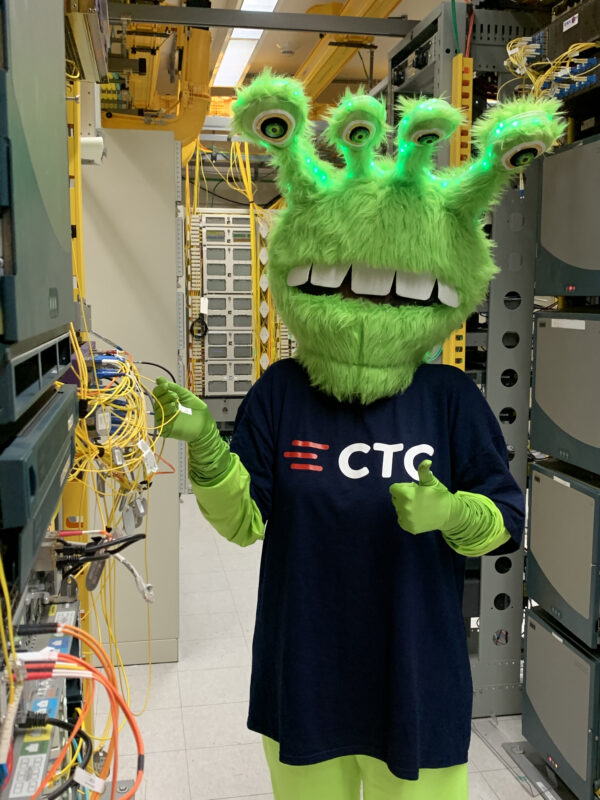
Kelly Burns: Our mascot is Gig A. Byte. So –
Megan McKoy-Noe: Of course, it is.
Kelly Burns: Yeah. He’s a fiber monster, and lights up his tentacles light up. But we partnered with –
Megan McKoy-Noe: His tentacles light up? What kind of a monster is this? Give me for folks that – because I’ll put a picture of it at pioneer.coop/podcast. But paint the picture of this Gig A. Byte Technical tentacle monster.
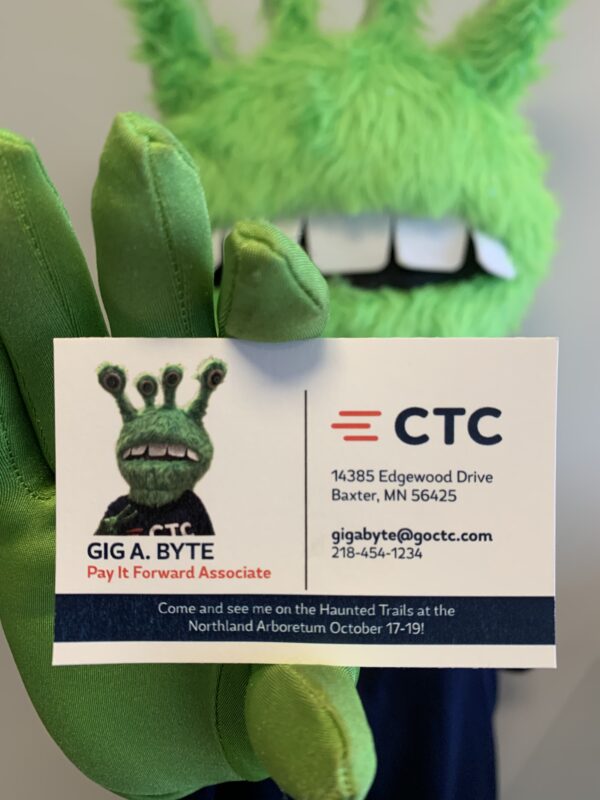
Kelly Burns: He is neon green, and he’s fuzzy. I’d say, he’s got some long fur, and he’s got four tentacles on the top of his head that kind of look like eyeballs, but they light up with different strip lights, so they have the fiber optic lights in them. And then we call him our pay it forward associate because a lot of times he is out in the community buying lunch for people or handing out gift cards or just, you know.
Megan McKoy-Noe: Wait, wait. Okay. Kelly, I can’t believe we have not talked about your fiber monster going out to the [community]. So does someone, does the mascot just go out on Fiber Fridays and buy lunch for people in the community? I mean, what?
Kelly Burns: Well, it started, as you know, we used to only have him for the month of October. We partnered with the local arboretum, and they host a haunted trail every year. And we got to pick our monster, and we picked Fiber Monster, and we liked him so much. And he became such a valuable employee that we were like, you know, he’s going to be our pay it forward associate. So we took a couple days and would go out to the grocery stores or local fast food joints, and we bought lunch for people. And he waved in the car, and now we have a lot of parades this summer. So we’re going to have to – now we’ve worked out a deal where he gets to work with us more throughout the year, so we’re hoping that we can have him attend some parades and our Taste Tech events, and it’ll be great.
Megan McKoy-Noe: So this is still a fairly new.
Kelly Burns: Yeah, well, we’ve had him for about four years, but I think now is the longest we’ve been able to hang out with him.
Megan McKoy-Noe: This is exciting. Does he have his own? Like, does his fur have pockets for, like, pulling out his pay it forward card?
Kelly Burns: He wears a CTC t-shirt, and then he’s got like a green jumpsuit. He doesn’t like the costume he has to wear at the ARB sometimes. So he, we change it up. And he’s got some shorts and bright shoes that light up also.
Megan McKoy-Noe: Oh my goodness. All right. Well we will definitely have to get pictures of Gig A. Byte.
Kelly Burns: Yes.
Megan McKoy-Noe: This is very exciting and an unexpected twist to our conversation.
Kelly Burns: Yeah totally.
Megan McKoy-Noe: Okay, so I wanted to – this makes me so happy – but I did want to talk to you because y’all have been doing this. How long have y’all been connecting folks to internet service?
Kelly Burns: Oh, gosh. It started back. I want to say, I mean, we’ve done DSL and things like that for years, but the fiber started around 2010, 2011. And the original fiber started with, it was a partnership between the county and the school district and some local government entities because they needed a fiber ring so that people could work and learn and do all the things that they needed to do. And that’s really what kind of started all of the the fiber projects.
Megan McKoy-Noe: Right. Now, have you been upgrading your system to all fiber? Are you 100% fiber? You still have some dial-up, DSL?
Kelly Burns: We are pretty much all fiber. We have, i mean less than probably a couple percent, some have some old copper. But for the most part, yeah, we’re updating everything. And everything we put in the ground is fiber.
Megan McKoy-Noe: Okay. And you’ve received some grants to help you expand service into new areas. So let’s talk about, I mean, we’ve talked about the fun that you all have with marketing, but also it’s very targeted. Storytelling is a big part of marketing for broadband. So how do you tell members and potential subscribers about when service is available in a new area?
Kelly Burns: Yeah. So traditionally, once we get the awards from the state or federal, you know, we’ll put out a press release, and we really talk it up on social media. And when we know what areas we’re starting with, you know, it’s kind of a long process. So before we do the grant or before we submit the grant, we are collecting interest and making sure that, you know, people know that there’s a possibility that we might bring fiber to their neighborhoods. And we also ask for letters of support. So then it’s not really a surprise. We have champions that will help us in those areas to go out and talk about what could be coming. And then once we award, it’s like a big party. It’s always exciting when we’re awarded because it’s like all of our hard work and all the community’s hard work in getting that has come to fruition. And then usually, you know, initially we send a letter saying, “Hey, we did it. We got fiber. It’s coming. Sign up now.” And then we’ll do pre-installation, so we get everything set up from the inside out. And then while they’re doing construction throughout the summer, then hopefully we can connect them. You know, it’s a lot easier to connect them at that point, and we send our broadband in a box, so they can just take their box and [inaudible].
Megan McKoy-Noe: What?
Kelly Burns: Yeah.
Megan McKoy-Noe: So you don’t just wait for the construction to be done before you do installations. You go ahead and do it early, have everything set up on the subscriber’s end, so the minute fiber is available, you send them. You said broadband in a box?
Kelly Burns: Yep. So we’ll send the router and we send the information that they need to get set up on their own. We show them how to look for the lights and where to plug everything, and then we send them some socks and some fun stuff.
Megan McKoy-Noe: And you include socks?
Kelly Burns: Yes. We have some –
Megan McKoy-Noe: Are they branded?
Kelly Burns: Little branded socks that we like to leave behind with them, so.
Megan McKoy-Noe: Okay, so they get socks in their broadband box. That reminds me of a Dr. Seuss story.
Kelly Burns: I was just thinking that. Like, “Hey, I could do something with this.”
Megan McKoy-Noe: Yeah. What else is in the box?
Kelly Burns: There’s setup instructions and then their router.
Megan McKoy-Noe: The router.
Kelly Burns: And equipment. Yeah, whatever equipment they need just to plug and go.
Megan McKoy-Noe: Okay, okay, I like that. Is there any like for managed Wi-Fi, do y’all offer that? Do you have like a number to call?
Kelly Burns: We do manage Wi-Fi. So as we’re doing these pre-installs, one of the prerequisite prerequisites is that they actually go in and set up their account. So then it’s much easier when they get the box in the mail. They’ve already done it. They have the app, and they just have to scan the router and link everything up. So it works out great. And we’ve also shown that the people who have received the broadband in a box, they actually have a higher NPS score and a better, you know, more satisfaction with us
Megan McKoy-Noe: I was going to say NPS is?
Kelly Burns: Net Promoter Score, so it’s basically their feelings about their services or how they feel about that company.
Megan McKoy-Noe: Yeah. Okay. Do you have any messaging with your broadband box, like party time, block party?
Kelly Burns: We have a welcome packet that is really kind of showcases who we are. So it talks about our employees, just a touch on our history, where they can reach out to us if they need anything. So it’s really just about kind of the service and how, you know, they’re coming in to be part of our family.
Megan McKoy-Noe: Oh, welcome to the family. I love that. I haven’t heard of anyone doing all of that work ahead of time and then sending a box. That’s just that’s a lot of fun. I’m curious. That’s for the new areas. But then you have your existing area that’s already built out, right? What is your take rate like in the areas where you’re available, and how do you track that and build it into your marketing goals?
Kelly Burns: Yeah, so typically we would say in a construction year or some of our existing footprint, we try to get about 50%. We like to be at, you know, 70 or 80% within the next couple years.
Megan McKoy-Noe: We all.
Kelly Burns: We all know there’s a ramp up period and time. You know, adoption rates take longer and longer. So, you know, within a couple of years, we’d like to be at that 70%. One of the things that we’re focusing on now, we’ve seen that just through some data trends that as our customers hit that 5 or 6 year mark, they kind of get in the honeymoon phase, so they become more stagnant and just kind of complacent. And so at that point now it’s like, well, it goes back to the Taste of Technology. We just want to make sure we’re continually engaging with them and just seeing if they need anything or, you know, what can we do to kind of help them know that we’re here.
Megan McKoy-Noe: Yeah, I like that. Do you break down your market by where you have lower take rates and have specific marketing that you do in those areas? And what does that look like?
Kelly Burns: Yeah, so we do. We have some very, very focused areas that we’ll be working on this summer. And we have a lot of board members who, you know, a lot of people know our board members. And so one of the things we’re doing is really showcasing them in those areas to say, like, we went out and took pictures of all of our board members in their, you know, day-to-day habitat. So like, you know, we have one who’s a dairy farmer, and we have one who she owns a hair salon. And one who owns a flower shop and some restaurants. And so by featuring her and her business, it humanizes him a little bit, you know, and it gives them more personality and also they’re recognizable in that community. So we can say, hey, not only are they a board member, but they’re a customer, and they’re in your community. So that’s a new one that we’re kicking off here in the next couple of weeks. And the board is really excited about it, and the pictures have turned out just fantastic. They’ve just been so fun to work with, and I’m excited for that campaign. I think it’ll be great. Any time you can feature your own employees or people that are in the community, it just goes so much further.
Megan McKoy-Noe: Oh, 100%. So how are you going to take those images and get them out in the community? Are you doing direct mail? Are you doing targeted digital advertising? Are you going to have fliers out in community centers? I mean, what are y’all doing for that?
Kelly Burns: Yeah. So we will for sure have postcards going out and postcards or mailers. We’re thinking of it. You know, people can just toss the postcards so easily it seems like. So one of the things we’re trying is different shapes. And, you know, doing like a five by seven card and putting it in an envelope and different things just to try to get people to open it up.
Megan McKoy-Noe: Yeah.
Kelly Burns: So playing around with that a little bit. We’ll also do a lot of targeted social media, some Google ads. There’s a couple communities where a billboard makes sense, like there’s one where everybody knows her. So having a billboard locally, like, I think that’ll really resonate in that area. You know, some of the smaller areas, it’s really just about kind of getting their face out there and their messaging out there. And they’ll be at the Taste of Tech events. They love coming to those too. So just having them in the community so they can talk to people and answer questions, that’s been really great.
Megan McKoy-Noe: I wonder if you have, especially for your board members that are business owners like you mentioned, one has a hair salon. You could always turn that into a discount coupon for going in to seeing her. Let me, you know, I’d love to give you a cut and help you connect. You know, 10% off or something like that. I don’t know, you could have a lot of fun with that to add some value to the card. But do you have any QR codes for them on those mailers for them to be able to sign up? Although if they don’t have good service, it might not be as effective.
Kelly Burns: We usually put QR codes and the website and the phone number just, you know, as many options as we can really.
Megan McKoy-Noe: Cover your bases. Sure.
Kelly Burns: Yep. We have yard signs. Yard signs aren’t necessarily with their pictures on them, but we do have some of the taglines like, I think one, she owns a flower shop, so it’s, “Growing your community.” Something like that. I forget the specific tagline, but it’s –
Megan McKoy-Noe: Yeah.
Kelly Burns: “Rooted in your community.” That’s what it is.
Megan McKoy-Noe: Oh, I love that. I want to see an example of that. I think that’ll be a lot of fun. But nice. You have those messages getting the board members out there. I love that, and hopefully that will help increase your take rates in those communities, too, because it’s about building brand awareness and brand loyalty by tying in people they know. Well, one last question before I let you go, Kelly. What advice do you have for a utility communicator that is switching gears from launching a brand to increasing broadband market share in their community?
Kelly Burns: Oh, I would say just really get to know the community. Spend time with the community. And if you can get a couple champions there, they will catapult your business tenfold. Like, I have a couple champions that we’ve worked with, and they call me on a monthly basis. Construction’s been done there for a couple of years, and they’re like my favorite people to talk to every month. You know, just to say, “Hey, how’s it going?” Like, we’re still here. So it’s great. So really just get to know the communities and the people in the community.
Megan McKoy-Noe: And how did you find those champions? Because we talked about your board members, but this doesn’t sound like board members.
Kelly Burns: No. So I think initially when we first had talked about doing broadband, they had, you know, a couple of them, one in particular had gone to these council meetings and government meetings and was like, “Well, how do we bring broadband to our tiny little community?” And he just kept coming up to the meetings. And then, you know, just in talking and meeting, he helped us get letters of support, and he was at every event. And then you just form a bond, and then just kind of builds from there. That relationship building is huge.
Megan McKoy-Noe: Does he have a Bigfoot t-shirt?
Kelly Burns: No. He should have one though. He would wear it with pride.
Megan McKoy-Noe: He would. He would. Well, I love that. Finding those champions in your community, building those relationships with them and then keeping those relationships going past your initial launch, past when they connect so that they’re still advocating for you in the community. I think it is so important. Well, thank you, Kelly, so much for sharing your story with utility pioneers. She is Kelly Burns at CTC and I’m your host, Megan McKoy-Noe at Pioneer Utility Resources. And until we talk again, keep telling your story.
Outro: StoryConnect is produced by Pioneer Utility Resources, a communications cooperative that is built to share your story. StoryConnect is engineered by Lucas Smith of Lucky Sound Studio.