Share

Good storytelling design doesn’t care what platform you use. Listen to Alabama Rural Electric Association Art Director Danny Weston’s four design principles to strengthen the way you show your story, and hear how he saves time by design.
Learn how to link content in Adobe InDesign: https://helpx.adobe.com/indesign/using/linked-content.html
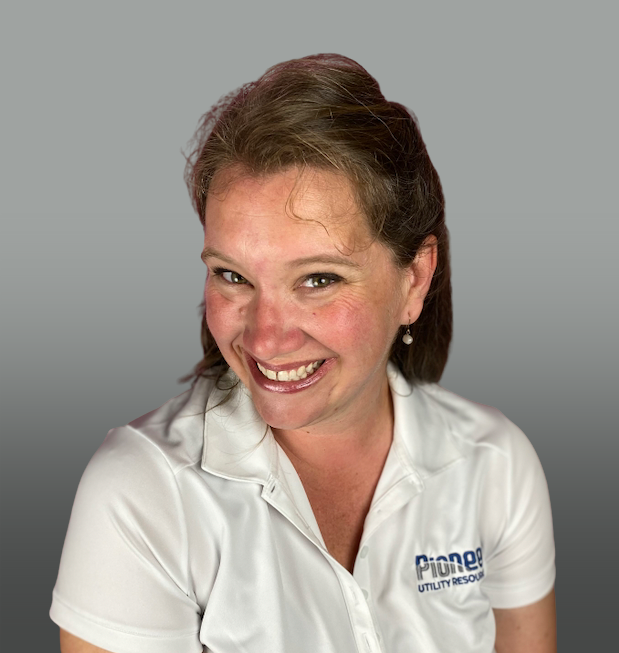
Danny Weston
Learn how to link content in Adobe InDesign: https://helpx.adobe.com/indesign/using/linked-content.html
Transcripts have been lightly edited for clarity and readability.
Intro: A production of Pioneer Utility Resources. StoryConnect, helping communicators discover ideas to shape their stories and connect with their customers.
Megan McKoy-Noe: Are you saving time by design? That’s what we’ll be talking about on this episode of The StoryConnect Podcast. I’m your host, Megan McKoy-Noe, one of the storytellers at Pioneer Utility Resources, and I am joined on this episode by Danny Weston, art director for Alabama Rural Electric Association. Danny helps electric co-ops across Alabama design stories for Alabama Living magazine, designing stories for more than a million readers every month. Or has it gone up now?
Danny Weston: Yeah, at least a million. We’re 450,000 subscriptions every month now.
Megan McKoy-Noe: Nice, nice.
Danny Weston: If you multiply that times two and a half, 2.3, there you go.
Megan McKoy-Noe: We can multiply it by three, if you, four, five –
Danny Weston: Math is just for people who like rules.
Megan McKoy-Noe: Math is fun. Now we are recording live at NRECA’s Connect Conference in Kansas City, Missouri, with 700 of our closest co-op communicator friends. As Andy always says, any noise you might hear in the background is ambiance. Group karaoke does not start until later. So Danny, thank you so much for joining us here today. Before you joined the Alabama statewide, and you’ve been there how many years now?
Danny Weston: About seven years now.
Megan McKoy-Noe: So you’re just getting started. I like that.
Danny Weston: Just getting started.
Megan McKoy-Noe: Yep. Yep. But you worked on branding and digital advertising for several design agencies, which I like. You’ve got a really clear vision for design. And then for several years, you created social stories and marketing for the Alabama Army National Guard.
Danny Weston: That’s right.
Megan McKoy-Noe: Which is amazing. What role do you feel graphic design plays in storytelling?
Danny Weston: I think that there’s an important aspect to having a visual element to any story you tell. I mean, not any story, but if you’re going to talk about a story that has something connected to it, odds are one of your favorite books is going to be included a kid’s book. And that kid book, kids book, had pictures in it. I remember reading about The Monster at the End of This Book with Grover.
Megan McKoy-Noe: Oh, I love Grover.
Danny Weston: It’s a beautiful story. And it’s wonderful because there’s a brick wall. There’s tape. There’s wood. There’s nails, and I see that. And I remember that story because of the visual elements that it had. So when it comes to telling a story of even a product you’re trying to sell, visualizing that product is just as important as telling you the details of why the product is great.
Megan McKoy-Noe: Yeah, I think sometimes we get too caught up in listing everything out, and we don’t forget that visuals have a really important aspect to that too. They help it. They help it hit home. Now, a lot of your designs are focused on stories in print magazines. I believe if I’m wrong –
Danny Weston: That’s right.
Megan McKoy-Noe: Do tell me.
Danny Weston: That’s correct. No, you’re still correct.
Megan McKoy-Noe: But you’re also, from what I have seen of you, and I’ve been a fan of yours for years. Not in a weird way, but, you know,
Danny Weston: I’ll take it.
Megan McKoy-Noe: But you’re also a big proponent of digital storytelling and using different channels. What are the different design rules for print versus digital design? Because some people try to just copy and paste.
Danny Weston: Sure.
Megan McKoy-Noe: And you can’t do that.
Danny Weston: You can’t necessarily copy and paste. Well, even if you look at a social media differences between a square versus a vertical versus a banner, those types of things matter when it comes to the perspective and the ratio of what you’re designing. But in print media, you have to remember things like margins. You have to remember that if a color runs across the edge of the paper, then it has to bleed properly. And otherwise you cut and you get a white line, and you didn’t want that white line there because the design wasn’t there. And dealing with all of it, you have to remember that there still has to be some type of alignment, and you’ve got to have the right type of proximity of your information to the to the details of what’s happening with the image that you’re using. But I think switching it over to digital is recognizing that you have a whole lot more freedom of doing something. You don’t have to be stuck with one image. You can do a carousel of three images. They can be independent of each other, or they can somehow be connected as some large panoramic or telling a story that is multiple frames in the image instead of one single solitary print.
Megan McKoy-Noe: And then folks are interacting with it too, which especially carousels, are having a moment right now on Instagram.
Danny Weston: They are.
Megan McKoy-Noe: It’s huge. And being able to get folks to be more engaged with your story and to swipe through to see what is next. It does make the visual aspect more interactive, but you’ve got to design it in a way that they’ll want to swipe.
Danny Weston: Yes, absolutely.
Megan McKoy-Noe: Have you figured out the magic formula for that? What catches the eye first?
Danny Weston: Well, I know what catches my eye, and that’s anytime Deadpool posts something that I have to hold and scroll. And it’s beautiful. It’s a little cartoon. It’s like a flipbook that happens. Of course, it’s 50 images, it seems, but I just hold and scroll and I get to see something happen like that. I’ve yet to figure out how to make that, but I do know that it’s something that draws me in. If I know that in the same 10s I can see one image or I can swipe through ten, well, that’s a value proposition. I’m getting ten for the price of one. And it was all free, but I’m getting more for my time there.
Megan McKoy-Noe: Well, and especially if it tells a story, if it’s something that grabs you, and you’re like, “Oh, well, I didn’t know Willie Wiredhand had this other adventure side to him.”
Danny Weston: That’s right. That’s right. That guy’s a superhero. I think.
Megan McKoy-Noe: He really is. I believe so. Yes. So, utility communicators, and I’ve seen this, you know, we’re at Connect, so everybody’s excited. We’re all sharing stories in the hallways and trying to not one up each other, but to. It’s almost like we’re so excited. We’re all shouting ideas over each other. And, “Oh, but what about this? And have you thought about this?” It is the best. And we all have a lot of different skill sets that we bring to our jobs, right? I’m a former newspaper reporter and editor. I don’t know. I know you were working in agencies. Were you also a reporter in a past life?
Danny Weston: No. I typically had to deal with reporting the facts to various folks. I’ve worked a lot in video over the past 20 years in my career. Video photography, creative professionalism, I guess, is what it might be referred to as.
Megan McKoy-Noe: I like it.
Danny Weston: I always like to consider myself a creativity expert because no one can prove I’m not. And I think that’s maybe part of the part of the appeal. Dare me. I dare you to dare you to try to prove me wrong.
Megan McKoy-Noe: No, no, I would never. I would never.
Danny Weston: But looking at it as reporting what’s going on. No, nothing as fancy and wonderful as journalism.
Megan McKoy-Noe: No. Well, but there are a lot of folks here that are. Some people are not. Some people have a focus on video. Some people are amazing photographers. You have people that know the Adobe Creative Suite and have fully embraced it. You have other people that are touting the wonders of Canva, and then you have some people that are like, “Can I put it in Word?”
Danny Weston: Right.
Megan McKoy-Noe: Right, and so they’re coming at all these different stages, but they still have to remember good design.
Danny Weston: That’s right.
Megan McKoy-Noe: Right. It doesn’t matter what your experience is, you still have to know how the “I” flows and what’s going to grab attention. It doesn’t matter what platform you’re using to do that in. So there’s different foundational principles that you can follow on any platform to strengthen your story through design. And I remember years ago, and if you cannot remember this, it is okay. It’s a lot of pressure, but you had an acronym.
Danny Weston: I did, yes.
Megan McKoy-Noe: For those principles. How do you explain good design?
Danny Weston: So I didn’t come up with this. And the individual who did come up with it spells it a little differently, but I don’t think it’s as impactful. Her name is Robin Williams. Not the one that was the genie. And she wrote a book, I think it’s the introduction to graphic design. But truthfully, good design is CRAP. It is C-R-A-P. It has contrast, it has repetition, it has alignment, and it has proximity. So all of those things that go along with it, proximity has to be the image has to be close to the caption. If something is in a straight line, it should be in a straight line. If you don’t want it in that line, then you break that rule, but do it on purpose, not on accident. So you can have lack of contrast. One of my favorite shirts is my kid’s shirt, and it says “My favorite color is black.” And it’s a black vinyl ink on a black shirt. So you only see it when the light hits it. And I think that’s marvelous because the purpose of the contrast was broken, because that’s what the reason that you wanted it.
Megan McKoy-Noe: It was intentional.
Danny Weston: Because it was intentional.
Megan McKoy-Noe: Yeah.
Danny Weston: So if you’re not doing something with intentionality, then you’re doing it on accident. And that’s not necessarily the best aspects of design. So good design is CRAP. It’s not crappy, but it’s CRAP.
Megan McKoy-Noe: So the C is?
Danny Weston: Contrast.
Megan McKoy-Noe: Contrast. So making sure that something stands out, and I think that’s really important for accessibility too, not just for it to look good or grab attention. So contrast. And then the R is?
Danny Weston: Repetition. So you want to use let’s say you’re making a flier that’s being printed. You don’t want 30 fonts, 25 typefaces. You don’t want that.
Megan McKoy-Noe: But that’s fun.
Danny Weston: It is fun.
Megan McKoy-Noe: Comic Sans, we need more of it.
Danny Weston: And you know what? Comic Sans is great when it’s by itself.
Megan McKoy-Noe: Okay.
Danny Weston: You can use Comic Sans unironically. It’s okay. It’s okay. But you don’t want things that don’t complement each other, and you don’t want to do anything when you could do three, why use ten? When you could just use three?
Megan McKoy-Noe: So do you have a rule of thumb for fonts?
Danny Weston: I think you want to make sure that things have an easy way to read them, so determining if it’s going to be more digital. You don’t want necessarily those serifs to get in the way of the spacing. If it is going to be printed –
Megan McKoy-Noe: We should say the serifs are the little feet that you’ll see on something like Times New Roman.
Danny Weston: Right. Right. The little feet and hats that fonts wear. Yeah. Yeah. Sometimes you want a typeface that has a top hat, and it’s great. But making sure that it’s there, and it has purpose. You’re not changing the typeface just because you’re changing what’s being said. You’re changing the typeface because you’re drawing attention differently.
Megan McKoy-Noe: I like that, and you’re being mindful that something – like, we use Good Headline Pro. And we use a family of that, and we use it across all of Pioneer’s storytelling channels. And if ever I see, like I’m known for this at Pioneer, someone will use something, and it’s not Good Headline Pro. And I’m like, “No!”
Danny Weston: No.
Megan McKoy-Noe: Because that continuity is part of telling our story. And you want everything, even though someone might not realize it’s that font. It’s part of telling the story and knowing that we’re consistent, even with things like that, helps people feel more trust.
Danny Weston: Right, that repetition creates the part of telling the story of the brand. Yeah, absolutely.
Megan McKoy-Noe: Yeah. Okay, so that’s the C.
Danny Weston: Contrast.
Megan McKoy-Noe: The R for repetition. And then the A?
Danny Weston: Is alignment.
Danny Weston: And alignment is sometimes disagreeable. People are like, “I don’t want it to be aligned.” But I want you to look at go and look at a headline of some kind. Odds are that headline is lined up to the left side because we, as English readers, read from left to right. But if you center something, it ruins the flow many times of how you’re trying to see it. Take any poem you’ve ever read and take that copy it from the internet. Paste it into Word. You don’t have to open up InDesign, paste it into Word and center all of it and try to read it. And it’s much harder, much harder. But when you align that to the left, you haven’t ruined how it’s being presented. You’ve made it easier to read, and it lets you play. If you do want to deal with sizing, you want to make some contrast occur with sizing, not color. You can do that more easily because then you can line things up better. If it’s centered –
Megan McKoy-Noe: I have this debate, playful, joyful debate sometimes because some people do really enjoy centered. And I am a left aligned girl. Sometimes I’ll do left aligned. I don’t know if it’s right or right or not. I’ll do left align, and at the bottom of a piece I’ll do a right align.
Danny Weston: I do that a lot.
Megan McKoy-Noe: Yeah. Just to kind of hit home and kind of balance the page out a little bit, and it makes me feel happy on the inside.
Danny Weston: Yeah. No that works.
Danny Weston: What makes your eyes twitch with design?
Danny Weston: Hmm, what makes my eyes twitch? I think it is the use of different shades of the same color without having purpose. So let’s say you have this nice deep blue, and then you decide to use something that’s still a dark blue, but it’s not close enough. Or it’s just enough off to where maybe it looks like you use two different printers, let’s say.
Megan McKoy-Noe: Sure.
Danny Weston: Then that is, if you’re not doing that on purpose, if it doesn’t have an intention behind it, it’s like, no, just pick the same swatch. You don’t have to use the eyedropper or something like that. Just pick the same color. I think that really bothers me when two colors are supposed to be the same, and then they’re not. Usually it’s within text as it breaks down, usually.
Megan McKoy-Noe: Well, and it comes down to the repetition. You want it to be the same because anytime that there’s something a little off, you might not even realize why your eye is twitching.
Danny Weston: Right.
Megan McKoy-Noe: Right. But it’s something we say, especially in writing, that it’s road bumps. It’s anything that gets in between the reader and your story. And so sometimes design choices like that can get in the way and keep someone from really absorbing the story. So I like hearing what bothers you because not everybody thinks about that.
Danny Weston: Right.
Megan McKoy-Noe: And you think about it all the time. Yes. And then so that’s the C-R-A, and then what is the P again?
Danny Weston: P is proximity.
Megan McKoy-Noe: So, getting close to each other.
Danny Weston: Yes. Exactly. So you understand if something is connected to something else – body of text with a photo – they should be near each other. If they are distant from each other, they should be. If they’re not, not.
Megan McKoy-Noe: It tells a story.
Danny Weston: It tells a story, right? And if you are doing a – think, consider a compare and contrast. If I’m comparing two things, and I’m going to list their pros and cons, I’m not going to list a pro and a con on the left side with each other. I’m going to divide them because it makes sense. I’m saying there’s pros and cons. I’m saying something is green or red, and I’m pushing those things to other side.
Megan McKoy-Noe: Left and right.
Danny Weston: Right. Exactly. So that those both those items exist in their entity because they have alignment with one another. And I’ve created contrast not with color, but in the content –
Megan McKoy-Noe: The placement on the page.
Danny Weston: The placement and proximity of what something is so that it tells the proper story at the proper time.
Megan McKoy-Noe: And like, it’s crazy that all these little choices we make all impact how the story is absorbed by the audience. Now in the past, it’s been a little while, but you were speaking at Connect and I know you get around in the best of ways. No, but you speak a lot of regional meetings. I know you speak at a lot of meetings in Alabama about how communicators can save time with graphic design. Because it’s one thing to understand the principles, but it’s another to have time to put them into action. And I think that’s where some of us, like we have a saying at work, sometimes you want to make steak, but you only have time to flip a hamburger, right. And there are some tips and tricks that you have shared with folks about sharing your story and doing it, and saving time by design. There’s, you know, using the tools that you have more effectively. So which, what are the top three settings that you tell people if they’re using Adobe, which I think a lot of folks that are doing design work are, what are the settings that they can use to be the most efficient with their time?
Danny Weston: Well, I will say there’s something before whatever software you’re using is if someone has requested a design from you. Let’s say it’s make this web banner, whatever it is, and they don’t give you any type of footprint or place to start off with. Then if the person who’s requesting something doesn’t know what they want, then how can you know what they want? And I call it a stick figure masterpiece. Take a sheet of paper, and with them present, draw a stick figure. This is person. This is Danny. He goes on the left, and then headline goes in the middle. And then call to action in the bottom right. And you’re just putting squares, and you have this stick figure masterpiece that says, “This is what it’s approximately going to look like.” And then you go, “Okay, I know where to start from here.” And that, no matter what piece of software you’re using, gives you a starting point instead of staring at a blank canvas for 20 minutes deciding. But when it comes to the actual tools, there are methods in what I would, you know, lovingly refer to as the Holy Trinity of design, which is Illustrator, InDesign, and Photoshop that they will allow you to set up multiple canvases, multiple size documents, and modify one while modifying the other at the same time. So InDesign has a great way where you can link something to itself. So you can have one page. Let’s say it’s 11″ by 17″ for a nice poster going on in, you know, your break board. And then you have another thing that’s going to be sent out as a flier or bill stuffer, that type of thing for co-ops. You can have all the information in those things, and if you notice a spelling error, you change it on one. It will link to the other, and it fixes that spelling error.
Megan McKoy-Noe: How do you set that up? What is it called?
Danny Weston: So that is a linked design. You can do it in two pieces. You can do it in InCopy, which is a piece of software in Creative Cloud has that no one uses, including myself, but with an InDesign you’re simply linking itself within itself. And there’s some steps and processes it’s hard to kind of walk through, but it’s some functions within the menu bar.
Megan McKoy-Noe: Well, what we can do is at Pioneer.copop/podcasts with this episode, we can find out the steps and have a link for it in there.
Danny Weston: And that would be great because once you see where those steps are and the shortcut key or one of those types of things.
Megan McKoy-Noe: You can set it up.
Danny Weston: Oh, all it is a click here. Yeah, yeah.
Megan McKoy-Noe: But a lot of it is just being aware that that’s an option.
Danny Weston: Yeah.
Megan McKoy-Noe: And I’ve got to be honest, I’ve been designing since Quark and PageMaker were big. So, and I didn’t know that you could do that.
Danny Weston: It’s a new feature.
Megan McKoy-Noe: Okay.
Danny Weston: And it’s pulled from when Illustrator did something similar with multiple. I’m sorry, not Illustrator, Photoshop with multiple images on the screen. And you would say, you know, these layers impact both documents at the same time, but this layer only impacts one single document. So it’s kind of working through those processes as each one changes.
Megan McKoy-Noe: I love that though because we all have different versions of the same thing that we’re putting out there.
Danny Weston: Right.
Megan McKoy-Noe: So that’s one good thing. Do you have another like favorite setting or favorite trick that you always tell folks about? You don’t have to tell us if it’s a secret.
Danny Weston: No, I think it’s the idea of recognizing that you should try to make everything changeable, or you should be able to go back. So, for instance, nondestructive. That’s the word I’m looking for.
Megan McKoy-Noe: Nondestructive?
Danny Weston: Yeah. For instance –
Megan McKoy-Noe: That’s exciting.
Danny Weston: Photoshop. We all if you’ve used design, you’ve used Photoshop. And you are, I don’t know, dealing with a layered image where there’s a photo and then maybe a magazine nameplate behind it, and then the rest of the photo. So you’ve got layers, like your like your iPhone will do the portrait mode type thing. Is not cutting out that image to where you just have a floating head, instead, you’re using the mask function, which is the exact same process, but now you can modify it. You haven’t deleted anything, you’re simply hiding it. Don’t be afraid of masking. I think too many people are afraid of Photoshop masking when it’s your friend, so it’s doing things where you can go back and fix it if you need to, without having to do all your steps over again.
Megan McKoy-Noe: Okay, I love that. And I will admit I should use masking more often.
Danny Weston: It’s so much easier. Now, you literally drag a square around the head of the person you want to separate, and you click a button and it does it for you.
Megan McKoy-Noe: Well, part of that is Adobe Firefly, and the AI system that has been woven in through the entire Adobe suite. And I’ve got to admit, I geek out over and forgive me for folks that are not using these yet, but the generative expand and generative fill are like my favorite parts of Adobe Photoshop right now, because it just makes life so much better. Adobe, like generative fill will help me. I always have to edit headshots for folks, and I used to have to create the backgrounds.
Danny Weston: Step and repeat it. Yeah.
Megan McKoy-Noe: Right, so much, and now you don’t have to do that anymore. And then same with generative expand where it just adds on. It doesn’t do chairs very well.
Danny Weston: No, it doesn’t, but it will. It made an entire human out of just a headshot once. Yeah, I did it presenting to our directors, and I did live in front of everyone. And sure enough, it did. They were really tall, but you know, 20 minutes, you could have made it work.
Megan McKoy-Noe: Giraffe people. Yay!
Danny Weston: Yeah.
Megan McKoy-Noe: I like it.
Danny Weston: It was fun.
Megan McKoy-Noe: Yeah. All right. What design choices do you think trip people up and get in the way of their storytelling? Because, I mean, I’m geeking out over some of the different tactics that you can use, but sometimes we get too focused on that.
Danny Weston: Yeah, I think sometimes we try to do all of it at once instead of breaking it down to parts and pieces. If you know, let’s say you’re lucky, and you have your copy already.
Megan McKoy-Noe: And you don’t write it in InDesign?
Danny Weston: Right.
Danny Weston: You don’t write it while you’re putting it in there.
Megan McKoy-Noe: Cause that’s how I write.
Danny Weston: Then you know you have it.
Megan McKoy-Noe: Full disclosure.
Danny Weston: If you can figure out, like, what your word count is going to look like on a page, then you can have just a box until you get your work. Let’s say you don’t have your copy. You know, I want my text to be here, which means if someone else is writing it for you, which is sometimes the case, then you can tell them you only have this many words. Or it would be best if we had this many words. If we start to increase that size, then we lose this cool effect we have. Or we lose placement for the call to action. And so figuring that type of thing out would be good is to consider things in small parts. It’s a what is it? Tiny bites for an elephant. You know one bite at a time is how you eat an elephant. I think that’s the mindset there.
Megan McKoy-Noe: So you’re saying don’t try to put everything that you’re given onto the page in one big text box.
Danny Weston: Right. Yes. Yeah. If you’re using InDesign, divide things out into multiple things, which was something I had to learn because I was taught to use a single text box for everything on PageMaker. So when we switched, it was, “Okay, well, I don’t need one text box.” Now, you have to be mindful when it comes to accessibility stuff that you need to make sure that when that exports as a PDF, that it is linked correctly, if you are making sure that you’re abiding by those accessibility standards.
Megan McKoy-Noe: So I hope everyone is.
Danny Weston: Right. But most PDFs aren’t on websites. If you want it to be, just make it HTML.
Megan McKoy-Noe: Yeah. And I think that’s a lot of what like Pioneer is moving towards that for everyone that we support as well, trying to help out. Yeah. So I like that. And I like thinking in design pieces and not just a huge, you know, 900, 1,200 words thing that you’re putting in. But think about the call to action. Think about your sidebars. Think about different entry points for your story. And don’t try to put everything in. Because if you put everything in, no one’s going to read it.
Danny Weston: Right. If you write for everyone, you write for no one. And so if you design for everyone, you design for no one. So understand your audience with that too.
Megan McKoy-Noe: Okay. No, I like that. We mentioned Adobe Firefly, which I get excited about, and there’s so many other AI tools out there, and we didn’t talk about this before. So if you aren’t doing anything, that’s fine. But what design support, if any, do you feel that artificial intelligence offers to utility pioneers?
Danny Weston: I think from a design perspective, it helps you do that stick figure masterpiece. I think it comes down to if you know someone needs, you know, details A, B and C and content one, two and three, then if you can describe that into a chatbot of some kind, and it can generate a ugly image. It gives you an idea to go, okay, maybe the starburst that boss wants me to use isn’t the best choice, so I can prove that Starburst won’t fit here by showing this little rough, “Hey, I mocked this up.” Or “This was mocked up. What do you think of this idea?” And it gives someone else a better idea of going, “No, let’s do purple and gold instead of purple and green,” those types of things. It allows you to do things faster. You’re not necessarily going to use an image of a lineman you create just because it looks great. But I do think there’s opportunities to use it with humor involved, for sure. One of my favorite things to do is to ask the image generators to generate an image of a lineman putting out fiber line in the style of an Italian Renaissance painting or something like that. And it’s hilarious.
Megan McKoy-Noe: Of course.
Danny Weston: And you could use that in social. You could tell a story. “Hey, we’ve been doing this a long time.” Maybe not this long. You know, that type of question, that type of thing.
Megan McKoy-Noe: Yeah. Which image generators have you played with?
Danny Weston: A lot of them. So I’ve played with some of the crazy ones online that you’ve never heard of, and I would not recommend using those. They are not.
Megan McKoy-Noe: Don’t tell us about those.
Danny Weston: They are not the safest. But the ones that are, that have a name attached to them. Your Copilot built into your Microsoft suite. Even going to Bing.com, which is just a search engine, people. It’s like Google, but better. So you go to Bing, and you can Bing it, baby, and it’ll make you an image.
Megan McKoy-Noe: That’s not going to be a thing.
Danny Weston: One day they’re going to pay me for this.
Megan McKoy-Noe: No, no.
Danny Weston: One day. Bing it, baby.
Megan McKoy-Noe: Okay, moving on.
Danny Weston: So using that, using Copilot to make an image which is ChatGPT. So you can do a few with a free account, you can do more with a paid. And then in your Adobe suite. Illustrator will design something. Photoshop will design something. InDesign now will create an image out of a box. So using those. It’s also really easy to install your own locally run image generator that yeah, they’re not as good. But there’s a great way to learn how the process works and to have little bits and pieces that get modified.
Megan McKoy-Noe: Well. And I think one of the best things about the AI boom since 2022, it’s been a wild ride. But it’s helping you visualize things fast so that you can see, as you said, what works, what doesn’t work. And I use it as a brainstorming tool all the time because you’ve got something just in the tip of your mind or I don’t know, it’s not tip of your tongue, but you’ve got it right there. You can almost see it, but it’s just not quite there. And you can just, I use Claw just for brainstorming. And we just we have our conversations, and it works out. So, I’ll admit, you know this and I’ve been a fan, as I said of yours, for a while, I think we were, we went to a carnival together? Right?
Danny Weston: Oh yes, with the statewide editors. That’s right.
Megan McKoy-Noe: And I’m a visual communicator, so I love thinking about the ways we present our stories. Before I let you go, is there anything else that you want folks to think about as they work on designing their next story?
Danny Weston: Yeah, I think it’s important to recognize that how you want something to look is an important aspect of what it should look like. Yes, you’re potentially designing something for someone else. Someone else has requested the page layout, or they’ve requested the flier, or they’ve requested the Facebook post, whatever it is. But you have an opinion on what that should look like. And because you are one of the types of people that will see it, there are people like you. I know there’s only one of you, and that’s great, but there are people like you that have similar thoughts. And so understanding your perspective and still allowing a design to be yours, even though it’s not what you would want it to be, it can have elements of what it is. Because if you can be connected and proud and glad for that design, then you can be a champion for it to someone else and you can say, “Yes, this was great.” Or “How can we consider doing something that’s along these lines?” And I think it’s just being consistent with what you want, and not being afraid to let someone know that they’re wrong in a nice, polite way. You know, “I’m sorry, ma’am, sir. This is the way it should be instead. Trust me, I’m the designer.” If you can say that without being pretentious, I know it’s hard. Maybe practice in the mirror.
Megan McKoy-Noe: Trust me, I’m the designer.
Danny Weston: I mean, I don’t mean it that way, but you get what I’m saying. Allow someone the opportunity to trust your profession.
Megan McKoy-Noe: Or you can just say, “I just trust my vision.”
Danny Weston: Oh, okay. I trust my vision.
Megan McKoy-Noe: Yeah. Yeah.
Danny Weston: “I feel strong about this.”
Megan McKoy-Noe: Let’s try my vision and see how it works. Let’s use data to try it out and see. And, yeah, yeah. Let’s track my vision. That’s terrifying. But, yeah, having a clear vision, following through and remembering to pair your vision with. I don’t normally say that word C-R-A-P.
Danny Weston: I get it. I get it.
Megan McKoy-Noe: I’m from the South. Yeah, we have different rules.
Danny Weston: Oh, I’m from the south too.
Megan McKoy-Noe: I know you are.
Danny Weston: But I like knowing the rules.
Megan McKoy-Noe: Oh.
Danny Weston: Just knowing them.
Megan McKoy-Noe: Okay.
Danny Weston: I don’t commit to obeying them.
Megan McKoy-Noe: Ah. I see.
Danny Weston: My children, don’t listen to this.
Megan McKoy-Noe: Look at – mmhmm. My husband’s like, you know, someone’s got to teach our daughter how to swear. And I’m like, we’re not going to have this conversation in front of our daughter right now. I know. Anyhow, we are diverging from. So I get excited about it. I’m not going to say the word, but C-R-A-P. Focus on that with your vision and have faith in yourself. And remember, no one’s going to read the story if they can’t get into it. You’ve got to design ways to enter your story.
Danny Weston: Right. Absolutely.
Megan McKoy-Noe: Well. Danny, thank you so much for sharing your story and your point of view, your vision.
Danny Weston: You’re very welcome.
Megan McKoy-Noe: With utility pioneers. He is Danny Weston from the Alabama Rural Electric Association, and I’m your host, Megan McKoy-Noe at Pioneer Utility Resources. And until we talk again, keep telling your story.
Outro: StoryConnect is produced by Pioneer Utility Resources, a communications cooperative that is built to share your story.