Share

In rural Georgia, Tri-CoGo is using Smart Town to keep first responders and lineworkers connected on the go, and a new batch of personas is driving more value for the co-op and subscribers.
Greg Mullis
Transcripts are lightly edited for clarity and readability.
Intro: StoryConnect, A Pioneer Podcast, helps you discover ideas to shape your stories and connect with your community. Love this episode? Follow StoryConnect on your favorite podcast platform and YouTube so you don't miss your next great idea.
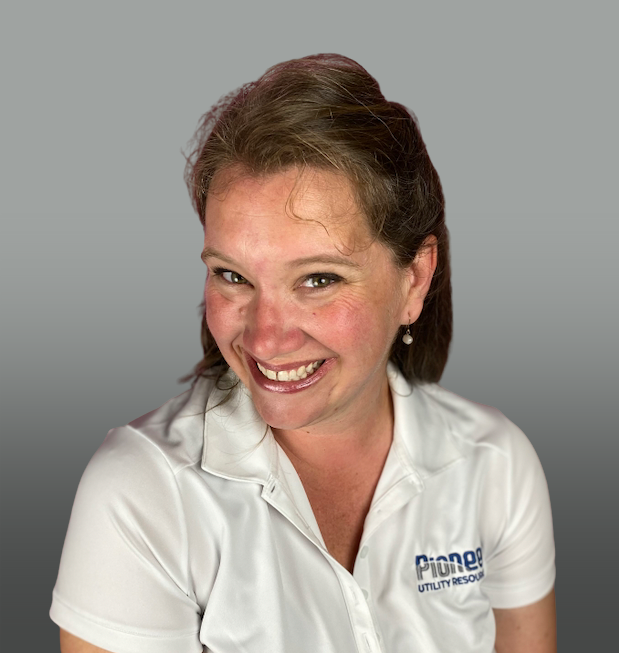
Megan McKoy-Noe: Connecting your community. Smart towns, personas and bringing connections home. That's what we're going to talk about on this episode of StoryConnect, A Pioneer Podcast. Hi, I'm your host, Megan McKoy-Noe, one of the storytellers at Pioneer Utility Resources, and I am joined by Greg Mullis. He's the chief operating officer for Tri-CoGo go in lovely Gray, Georgia. Greg, thank you so much for joining us today.
Greg Mullis: Thank you for having me. Good afternoon.
Megan McKoy-Noe: It's exciting. Now we are at Calix ConneXions and you are taking the main stage.
Greg Mullis: I am by storm.
Megan McKoy-Noe: So exciting. And you're talking about how you're expanding SmartHome and SmartTown. But not everyone can hear you today, which is a shame. I'm very sad for them, but that's why we wanted to get you on the podcast. So for folks who aren't here, can you give us a little snapshot of what's been changing at your co-op?
Greg Mullis: Absolutely. So we've been in a growth mode for five years. We just reached 11,000 subscribers, which is very exciting.
Megan McKoy-Noe: Congratulations. Was there cake?
Greg Mullis: There was cake, and there were cupcakes. Salted caramel.
Megan McKoy-Noe: Ooh.
Greg Mullis: I'll get one and ship it to you. They're fabulous.
Megan McKoy-Noe: No, no, it's fine. But next, like when you hit 12,000. Let me know. I'll drive down.
Greg Mullis: We'll have to do it. The cool part is the salted caramel cupcakes are from one of our customers.
Megan McKoy-Noe: That, again, that's bringing those connections.
Greg Mullis: We like to keep it in the family.
Megan McKoy-Noe: Huzzah! I love that. All right. So you just celebrated 11,000.
Greg Mullis: We did. We really had a neat year. We've been trying to figure out, you know, what's next. And you know, everybody that's built out, you know, what do we do? We're going to build off-systems some more. I'd like to build, you know, maybe another thousand passings off-system next year.
Megan McKoy-Noe: When you say "passings off-system next year," could you explain it like I'm eleven?
Greg Mullis: Sure. So we're an electric cooperative. We are the subsidiary of Tri-County EMC. There's only 14 Tri-County EMCs in the country, so it's not confusing at all.
Megan McKoy-Noe: Such a rare name.
Greg Mullis: Absolutely. So in Georgia, there are 42 electric cooperatives. We have an assigned territory, and we have built out that territory to our member-customers.
Megan McKoy-Noe: Yeah.
Greg Mullis: So along the way, we realized there were going to be plenty of opportunities as we pass areas that are part of the IOU that we share serving Georgia with, that we could serve what we call off-system. So these are non-cooperative electric customers. So they're not members of the co-op, but they are customers of the subsidiary.
Megan McKoy-Noe: Okay. Got you. So it's just going outside your historic service area for the electric co-op. Because you can go further. You can grow more in your community through broadband.
Greg Mullis: Absolutely. Both residential and commercial. You know, we have a limited amount of, you know, commercial opportunities. So if we can build to some of that
Megan McKoy-Noe: You have to fight for everyone.
Greg Mullis: Absolutely. But, you know, we're excited about that growth. But we're also thinking about things like, you know, how do we create a more sticky environment where our competitors want those customers back that we took from them?
Megan McKoy-Noe: They always want them back.
Greg Mullis: They always want them back. But also, how do we, at the same time push, you know, some ARPU. So, you know, we found some success with that this year. It was hard work. It took us really about a year to get it implemented. And I think, as I'm going to say tomorrow, there was some paralysis from analysis where we just couldn't figure out, you know, it's one of those things where you have a great idea and then, you know, five seconds later you look at it and say, that's just stupid. You know, but we finally –
Megan McKoy-Noe: So you overthought it.
Greg Mullis: Yeah, we did, but we left here last year really inspired to go out and complete those projects. And it really gave us an opportunity at the same time to take on Wi-Fi 7. Half of our system was XGS and half wasn't.
Megan McKoy-Noe: Oh.
Greg Mullis: So, you know, it took a good bit of capital to knock that out, but at the same time, we were able to figure out a strategy where, you know, let's work with Calix and come up with one solution across the board for, you know, which router are we going to deploy? How will we do that? You know, how will we, we're switching from E7 to using E9 to be able to accomplish some of this. So there was a big, you know, technical lift from our operations team, and they did a phenomenal job. But, you know, we sat around for a while with our calculators and our creative, you know, pencil and thought in a very productive way of, you know, how do we make something that we can all feel comfortable with to pursue, both from something we're going to advertise, but to something that our techs have to deploy every day in the field.
Megan McKoy-Noe: Yeah. So there was a big investment that you all made over the last year. The equipment is better, and it's all uniform.
Greg Mullis: Yes.
Megan McKoy-Noe: Which is huge.
Greg Mullis: Wi-fi 7 across the board.
Megan McKoy-Noe: Which is huge because everyone then has the same experience, and your techs are working with the same materials and everything.
Greg Mullis: And that's really important for them because it allows them to focus on that white glove experience in the home. We also added multi-gig, and two of our multi-gig products come with what we're calling wall to wall. So we'll employ as many extenders as the techs, you know, can consult with and feel is effective for the environment the home is in. The great thing about that is our techs have really done a great job of upselling both the extenders, but also the multi-gig. We had budgeted for around a 5% take rate for multi-gig, for our four gig, and we're at a little over 11%.
Megan McKoy-Noe: That's a good year.
Greg Mullis: You know, we've pushed ARPU over the last 5 or 6 months by closing in on $0.75. So that just feels really great. Now, you know, we're seeing some churn like everybody.
Megan McKoy-Noe: Sure.
Greg Mullis: But it really helps, we think, with some of the stickiness. And it also makes it feel a little better that you're pushing overall revenue for the company.
Megan McKoy-Noe: Well and serving folks that need you, which is huge. Now part of that, and you mentioned it with wall to wall you have changed up your subscriber personas, and I think you said that was one of the takeaways you had.
Greg Mullis: It sure was.
Megan McKoy-Noe: Last year. Because a lot of the talk last year was about subscriber personas and using experience as a selling point. I was checking out your website yesterday, and it was cracking me up. You've got the ultimate home champion.
Greg Mullis: Yes.
Megan McKoy-Noe: You've got the work and play pro. You've got the wall to wall defender.
Greg Mullis: Yes we do.
Megan McKoy-Noe: Which I love that because it does feel like you're fighting a battle sometimes with extending your Wi-Fi in the home. My husband has put so many different pieces of equipment around my office trying to make sure because I'm in the very back of the house, and he has it in his work office, his immediate connection. So it's a whole thing. So I love wall to wall defender. You've got the home hero. And then the savvy starter.
Greg Mullis: Savvy starter was probably the one we fought over the most.
Megan McKoy-Noe: Really?
Greg Mullis: Because we just couldn't come up with something that didn't say "cheap." And we just weren't going to go there.
Megan McKoy-Noe: Sure.
Greg Mullis: But you know, how do we assign value to your lowest tier where it still feels like quality, and it feels like an investment, and a value? So, you know, those are some of the goofy things that we really got caught up in.
Megan McKoy-Noe: But they're not goofy. They're important because.
Greg Mullis: They really are.
Megan McKoy-Noe: Like just creating those personas helps people know, it sets expectations for that tier.
Greg Mullis: Yes.
Megan McKoy-Noe: It's huge, and it impacts sales. I've talked to so many people, and they say the minute they started using personas, everything changed. How did it change for you?
Greg Mullis: Well, definitely from an ARPU push, but I think it's really empowered. We have a fairly new marketing coordinator, and oddly enough, she's not from the industry.
Megan McKoy-Noe: Sometimes that's a good thing.
Greg Mullis: It really is, because in so many ways, from some of our reporting to things with our billing system that we want to, you know, like with churn analysis and just so many things that we're suddenly doing that we weren't a few years ago, she's come in and really said, "Why are we doing it this way?"
Megan McKoy-Noe: Yeah.
Greg Mullis: And I encourage her, go find as many of those things as you can and push against the envelope because I'm all about change in a positive way. And if you can use your natural skepticism as you learn to help us weed out the things that we just assumed were okay, then it's a better day. So she's really been empowered by that. But what it really allowed us to do, and we used a consultant to help us, you know, put together some things in postalytics, some things in MailChimp, some campaigns with Engagement Cloud and have those ready for her to get there. And she's been able to hit the ground running with some of those. So we're really seeing those you know, hit the market, and we're excited about where that can take us with the take rate.
Megan McKoy-Noe: And I love that you have specific landing pages for each persona based on the digital ads that you all are running. I mean, that's just smart.
Greg Mullis: Well, we're learning. You know, that's one of the great things about coming here is not only the things that Calix can teach you and the wonderful sessions here, but, you know, standing around on the breaks and the receptions and the events. And, you know, we went to the hockey game last night, which was so much fun. But I missed really most of the game because I was standing around talking about – How could you? – how do you do things, and how can I borrow an idea? So, you know, we've really implemented a lot of things that we're looking forward to seeing come to fruition over the next few months.
Megan McKoy-Noe: Was there a good idea at the hockey game that you can share with us?
Greg Mullis: There was a waffle that was kind of encrusted in sugar with a scoop of vanilla ice cream on it.
Megan McKoy-Noe: Are we back on the caramel cupcakes again?
Greg Mullis: Oh, we could be. I'm gonna have to start jogging when I get home. But, you know, this is just such a fabulous environment to talk with great minds in the broadband space and meet friends.
Megan McKoy-Noe: So you've got someone that's using these new personas. You've got these custom landing pages for all of your digital advertising and work within each persona. How else are the personas driving your marketing efforts? And you've already mentioned the success that you've seen, but like, what's next? You started this out saying, what's next? You've got the personas in place. Now what?
Greg Mullis: We are days away from kicking off SmartTown.
Megan McKoy-Noe: Ooh.
Greg Mullis: We've been working with law enforcement, going to sit down with some of our first responders on the fire and EMS side over the next week and hopefully kick all this off within about two weeks. We've done all the, you know, behind the scenes technical stuff. So now we've got to do some training with employees and also with the first responders.
Megan McKoy-Noe: So for folks that don't know about SmartTown, which is one of Calix's programs, can you tell me what that means when you say you're kicking off SmartTown?
Greg Mullis: It's a really neat program where you can take, add a couple of extra SSIDs networks on top of everyone's router and offer connectivity across your service territory. Now, whether that be someone walking around their neighborhood, but, you know, part of the neighborhood has bad cell coverage, but you can connect to the Tri-CoGo customer homes that you're walking past. Are it being a law enforcement, first responder, fire truck, ambulance that needs telemetry out in the field that has, you know, an area where there's bad cell coverage. And we all have those as electric cooperatives in some rural, some very rural spaces. It gives them the opportunity to pull in a yard or, you know, we can make blue spaces, blue zones with an outdoor extender on a pole somewhere where we know we've got some areas with low, low densities. So we'll give them the ability to really, in a life saving way, be able to connect to who they need to in an emergency situation. So we are very excited about that ability to, you know, once again, give back and solve challenges in our community.
Megan McKoy-Noe: Well that's huge. I mean, Georgia, we've got some pretty rural areas in Georgia where you could drive for miles and not have a bunch of stuff around you.
Greg Mullis: And we're very much a, I guess, kind of an oddity in that we've got some areas. One of our counties is very high percentage of national forest and forestry land. So there's very low density. You're not going to have a lot of homes, but very, very challenging from, you know, law enforcement, even our linemen trying to respond and talk on cell phones or truck radio. So we're looking forward to using SmartTown to kind of connect both sides of the utility even more with ways that fiber is enhancing the lives of the linemen, so that we can kind of embrace that growing continuity between the two sides of the company.
Megan McKoy-Noe: Well, and amplify that connection to better serve your community, too.
Greg Mullis: Absolutely.
Megan McKoy-Noe: Which is a beautiful thing.
Greg Mullis: Yeah, we're excited about, you know, some new opportunities with event spaces. That was really kind of how we got started. And I know you and I talked about our food truck story a couple of years ago.
Megan McKoy-Noe: Apparently, we always talk about food.
Greg Mullis: Food is important. We're Southerners. I know you went off and left us a little bit there, but you're still a Southerner at heart. And we frame everything around food somehow.
Megan McKoy-Noe: Okay. So for folks who don't know, previously Greg and I talked on the podcast, I think it was two years ago now.
Greg Mullis: Yes.
Megan McKoy-Noe: But about how you were providing access and the ability for food trucks to charge instead of being cash only when folks are watching fireworks, people could still use their credit cards and still run those through at the food trucks.
Greg Mullis: Absolutely.
Megan McKoy-Noe: In parks and in open spaces.
Greg Mullis: We had some very ambitious Chamber of Commerce folks who wanted to put an event together, but they chose to do it at the rec complex that has terrible cell coverage. So we were able to kind of ride in on our white horse,
Megan McKoy-Noe: Of course.
Greg Mullis: And, you know, we started out putting up a couple of Calix's APs. And we figured out pretty quickly that we really didn't know exactly what we were doing. So we asked for some help. We also realized that people absorb a lot more. You know, we're full of water, and we absorb a lot more signal than you think, so we evolved. We learned. But we now have the capability of not only carrying several dozen food trucks, but also providing access to about 5,000 people attending that event. So that's been really awesome. You know, not just for the day of the fireworks, but also any day of the week that parents go out to take their kids for little league. They can sit and work, you know, there. We've got Wi-Fi coverage for the whole facility. So we've done that at several places.
Megan McKoy-Noe: I was going to say, that was the first one that y'all did.
Greg Mullis: So we're expanding that. We actually got a grant to expand that more in Jones, so a few other facilities. One of the special needs playgrounds, we put that in there. Actually had the Lieutenant Governor come down and do a ceremony there. It was a good way for the community to come together, but also a good way to, you know, get a little free coverage for Tri-CoGo, which is always fun.
Megan McKoy-Noe: Well, and any time that you can make life better for your community, it's what Tri-County was made to do.
Greg Mullis: Absolutely.
Megan McKoy-Noe: 100, almost 100 years ago.
Greg Mullis: We're taking the message from, like you said, 80, 85 years ago and just extending it in a different way. And, you know, that experience that we provide has been amazing to see the response. You know, we talked a little bit about stickiness. One of the things that I'm really quite proud of is we use Calix for their business insight survey process. And we just did our third survey. Very proud to say we went from three years ago, a 90 NPS to 91 last year. And we're just announcing to our customers a 92 this year. So that's really, really exciting.
Megan McKoy-Noe: You know, it's so hard, but NPS is a great way to track your net promoter score, knowing how people feel about you.
Greg Mullis: Yes.
Megan McKoy-Noe: And it's hard to put a number on why it's important to connect your community, to do things like SmartTown, to do things like helping food trucks exist so that we can eat. You don't get instant return on investment for that, but slowly over time, people, they grow to trust you, and they know you're always there for them.
Greg Mullis: Well, and I'm a big proponent of what have you done for me lately? And I think that's the reason that we are told to expect our net promoter scores to go down. Because, you know, it's the, well, we've been married for several years, and I'm used to you, and you haven't done anything lately. We haven't gone on any nice trips.
Megan McKoy-Noe: You got to keep your connection –
Greg Mullis: Well that's it.
Megan McKoy-Noe: Spicy and –
Greg Mullis: Being, yes. Absolutely. So being able to roll out things like the value-based sales, you know, we're now providing ProtectIQ to every new, you know, we were selling that as an upsell. It's now included in every one of our value-based offerings.
Megan McKoy-Noe: I've heard a lot of folks, I think the folks at WC –
Greg Mullis: Yes.
Megan McKoy-Noe: – are doing that as well, because it's just something they want folks to have.
Greg Mullis: I do think it's really important to continually offer something new or something exciting, some extra seasoning on the, here we go again with food.
Megan McKoy-Noe: I know, I know, we're back with the food. But yeah, just to add something new, to bring some life back to it, to keep you top of mind for them so they know you're always there. Are you organizing any community date nights to let them know how much Tri-CoGo feels about them? Because I know that you have ideas for what could be served.
Greg Mullis: Yeah, it's interesting. We on the co-op side, on the electric side, had a couple of Taco Tuesdays where we had let's just call them beverages, but invited people in to talk about the things they were concerned about from the electric side. And we probably really should do that on the broadband side.
Megan McKoy-Noe: Just have a cupcake truck.
Greg Mullis: A cup – that's awesome. I hadn't thought about it.
Megan McKoy-Noe: And go out into one of those community spaces that y'all are providing as part of your release for SmartTown and celebrating that. And you could have fun with this.
Greg Mullis: We really could.
Megan McKoy-Noe: I'm excited.
Greg Mullis: Yeah.
Megan McKoy-Noe: We're gonna have to check back –
Greg Mullis: We'll send you an invite.
Megan McKoy-Noe: Well, of course, I'll drive down. It's not that far from Decatur.
Greg Mullis: No.
Megan McKoy-Noe: I'm excited to see what y'all do. Is there anything else that you wanted to share with folks that you think if they can't be here at Calix ConneXions something that might help spark an idea for them?
Greg Mullis: Well, I'm excited about the actually on demand version of ConneXions because we couldn't bring the whole team, obviously, and we try to do a good job of rotating. But, you know, we'll have some employees propped up, you know, in front of the monitor to watch. You know, networking is so important.
Megan McKoy-Noe: It is. It's the best.
Greg Mullis: You know, I spent 30 years on the electric side, and suddenly got thrust into the broadband space. And it was by choice. It wasn't, you know, I didn't have a gun held to my head.
Megan McKoy-Noe: You were keeping things new. Trying stuff out.
Greg Mullis: But it's such a wonderful, it feels like a small space. It's such a small world. You see the same people so many people doing innovative things. And, you know, that's what I just encourage my team is to go meet somebody new, go find an idea that you hadn't thought of and borrow it if you can. But also try to pay it forward. We've invited so many co-ops to our place to see what we've done, and we try to show them the bad and the good, But we've got to do more of telling our stories. And you know that by who you are and what you do every day.
Megan McKoy-Noe: I love that. Well, and I just appreciate you coming back on the podcast to give us an update.
Greg Mullis: Well, this has been fun.
Megan McKoy-Noe: On the cupcakes and how your story is growing. It's the best way. If folks can't be here in-person or it they don't get to go to conferences a lot, we're kind of bringing the networking to you a little bit. So thank you so much for sharing your story with utility pioneers.
Greg Mullis: You're very welcome.
Megan McKoy-Noe: He is Greg Mullis with Tri-CoGo. And I'm your host, Megan McKoy-Noe at Pioneer. And until we talk again, keep telling your story.
Outro: StoryConnect is a production of Pioneer Utility Resources. Send questions to hello@pioneer.coop and learn more about our member-owned marketing agency at pioneer.coop.