Share

When Stuart Gregory and Carrie Binns wanted to make an impression and grow Bulloch Solutions’ brand in new territories in south Georgia, they thought outside the carton — er, box. By converting an aging fiber splicing van into an ice cream truck and opening a general store in the lobby, they are engaging members and potential customers in new ways.
Stuart Gregory and Carrie Binns
Transcripts have been lightly edited for clarity and readability.
Intro: A production of Pioneer Utility Resources. StoryConnect, helping communicators discover ideas to shape their stories and connect with their customers.
Andy Johns: I scream. You scream. We all scream for broadband. That’s what we’ll be talking about on this episode of StoryConnect: The Podcast. My name is Andy Johns, your host with Pioneer. And I’m joined on this episode by Stuart Gregory, who is the director of business development at Bulloch Solutions, and Carrie Binns, who is the sales and marketing coordinator at Bulloch Solutions. Hey, Stuart. Hey, Carrie, thanks for joining me.
Stuart Gregory: Hey, how are you?
Andy Johns: So I’m excited to do this one. We talked, Stuart and I, talked back at the NTCA Marketing and Sales Conference in Austin about this ice cream truck that Bulloch is rolling out, and Stuart and Carrie were nice enough to take some time to talk a little bit more about what all they’ve got going on. It’s exciting. It’s a good summertime podcast. Summertime is a great time to roll out an ice cream truck. So, but I guess first, let’s just start kind of big picture. What have you guys got going on with the ice cream truck there in south Georgia?
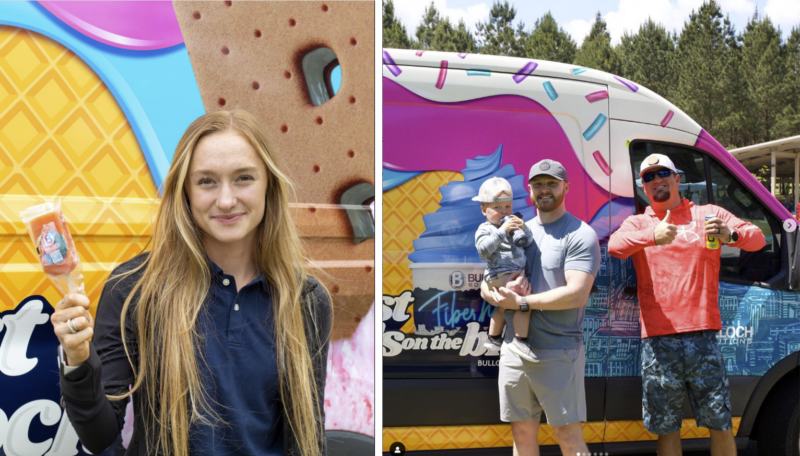
Stuart Gregory: Yeah. So we, you know, took a van that nobody wanted to drive anymore. And the accounting department said we couldn’t trade in. And repurposed it and made it an ice cream truck out of it. So we did a real fun like vehicle wrap. Carrie got some outdoor waterproof speakers installed in the undercarriage so that we can Bluetooth and play, you know, ice cream music. And we’ve got a chest freezer, solar generator, solar panel, and we drive it around to community engagement events and just to hand out ice cream, that has nothing to do with broadband. But everybody loves ice cream, and it’s been wildly successful.
Andy Johns: I’ve been to South Georgia in the summertime, and I know ice cream. Ice cream is about all you can do sometimes to try to cool off.
Carrie Binns: The heat index was 104 last week when we were at our final community concert, our free concert series we sponsored this summer and passed out ice cream. I think we went around probably ten rounds around the parking lot to make sure everybody in the crowd was hydrated with their ice pops.
Stuart Gregory: Yes. Yeah.
Andy Johns: That’s awesome. So tell us a little bit about the van. So this was a van that you guys had, kind of, you had in inventory. You all had been using it as part of the fleet, and then the vehicle wrap. So it’s branded all over the place with, you know, with Bulloch Solution’s logo and everything. It’s kind of a look of it?
Stuart Gregory: And ice cream sprinkles and all that kind of fun stuff. There is a Bulloch “B.” Our kind of icon, favicon looks like an ice cream sandwich on it. There’s a cup of soft serve with our logo on the bottom of it. It’s just kind of a collagey thing. Yeah. And it’s a Ford Transit full size that we used as a mobile fiber splice, you know, instead of having a trailer. And we ended up getting a real fancy fiber splice trailer with air conditioning. And so we tried to pawn it off on the IT department, and they didn’t want it because it rattled too much. And so we were left with this van that needed a purpose. And Carrie and I, as we do, try to find super ridiculous ways to make a statement, and we were kind of brainstorming. We’re traditional whiteboard brainstorming folks, and we were just beating around the bush one day and started looking at like Facebook marketplace, I think, at food trucks and other things. And then we kind of connected the dots to like, “Well, we’ve got this van. Why don’t we make an ice cream truck?” And I called the manager who is in charge of vehicles, and I said, “Hey, can I turn this van into an ice cream truck?” And he said, “Yes.” So then I took it to our GM, and he looked at me like I had something foreign thrown out of my forehead, but didn’t say no.
Carrie Binns: He didn’t say no.
Stuart Gregory: And then we just kind of ran with it. And so Carey coordinated getting the design and talk about the inspiration for that.
Carrie Binns: So it was actually really fun. I actually have a picture. I don’t know if you’ll be able to see it. This is a sticker we just did. Here, I can zoom in. There’s a little bit. That’s just a die-cut sticker I just did for our new store. But it is. It’s got sprinkles on top. So in the back, we’ve adopted the phrase, “Fiberhood for Bulloch Solutions.” So we use that phrasing a lot. And at the very back, and wish I had a picture of it, it says “Everything’s sweeter in the fiberhood.” That was one of my genius ideas. I will take credit for that.
Andy Johns: That’s a aood one. Yeah, that’s good stuff.
Carrie Binns: So when you drive away, right, there’s the messaging. So we didn’t want it to look, it got a little bit of feature of the broadband piece, right? But for the most part, it’s really vibrant and really fun. There’s even a waffle cone [inaudible] on there.
Andy Johns: As there should be. Yeah.
Stuart Gregory: Of course.
Andy Johns: I’m a waffle cone guy myself, if we’re gonna talk ice cream for a second.
Carrie Binns: The opportunity for this has grown exponentially. So we thought that it would just be, let’s take it to a cul-de-sac in a neighborhood where we may have a lower take rate, and we want to see if we can switch these guys over. And then it turned into a community engagement piece, which was huge. We actually took it. And I want to touch on a couple of these points because we didn’t know the good that it would do in the community, and we partner with the Literacy Council a lot in community engagement. Like Stuart said, a $2,000 billboard doesn’t mean as much to us as being in the public and making connections with people in the community. And we actually took it to a food drop a couple of weeks ago where they donate boxes of, you know, nutritious food for the children in the summer. And we took juice pops out and parked with the literacy truck like the fun bus. And so we have partnered with other people who have fun busses also, which has been really great. And we did a dairy fest a couple of weeks ago too.
Andy Johns: Makes sense.
Carrie Binns: So it was all about dairy education. So we came out there and handed out stickers and ice cream. And so it’s turned into to more than just let’s go to a neighborhood and pass out ice cream. It’s been more of a community piece which has been really valuable.
Andy Johns: Yeah, a lot of times when we’re doing the podcasts on some kind of campaign or something, I ask how well it’s gone over, how it’s been received. I don’t think we even need to talk about that because obviously it’s free ice cream. People are going to love it. One of the things that I was going to ask because this makes particular sense for you guys, because of, you know, the rebrand a couple years ago. But then also you guys are moving into a lot of CLEC areas that are more suburban kind of than your traditional cooperative footprint. Talk to us a little bit about that, how the brand has evolved, and then how the audience and subscriber base has evolved a little bit, too, and why this fits.
Stuart Gregory: Yeah. So we went you know, we were founded chartered in 1951. You know, traditional telco co-op, and I want to say probably in the late 20 aughts into the early 20 teens, you know, we were seeing a change in the number of devices on network.
Andy Johns: Sure. Absolutely.
Stuart Gregory: And the expectation from the customers and from the members specifically was, well, I’m paying you $69 a month, and it’s your fault and problem that my Alexa doesn’t work, or my network Wi-Fi printer is not working, or whatever the example could be. And our network is 100% fiber and has been since 2011. And so we knew from a network stability –
Andy Johns: Y’all got it done earlier.
Stuart Gregory: Yeah. We were first in Georgia to be 100% fiber overbuild. First in Georgia, gig certified. Right now, we have XGS-PON deployed 100% across the network and can produce 10 gig residential. We’ve just certified some Wi-Fi speed tests on Android cell phones. Iphones don’t have the antenna for it, but Androids do. And I happen to have Android phones.
Andy Johns: Interesting.
Stuart Gregory: We were able to produce and certify a 2.5 gig speed test on Wi-Fi 6E on Pixel 7 Pro and a Galaxy 21 Ultra.
Andy Johns: Good for y’all.
Stuart Gregory: Yeah. So, and that’s network wide. So right now, we can say legitimately that we have the fastest residential network in the world. And so that’s really cool. And so we know on the technology side that, you know, everything’s as good as it’s ever going to get. But the customers were still having problems and, you know, from the traditional strategy and focus for a long time was, you know, we stop at the ONT, and that’s where we stop. And everything that happens inside the house is yours. And the expectation was not that from the customer side. And in good co-op, you know, altruistic fashion, the telco hired my company, Capstone Technology Solutions, to help kind of troubleshoot some of the Wi-Fi challenges and device challenges that they were having on the customer side. And then that led to a greater conversation about a merger. And that’s where the Bulloch Telephone Cooperative became Bulloch Solutions was to really kind of solidify the ownership of the expectation from our members. And so we’ve really kind of hit the ground running with that. And now we will literally help, sell, install, source, any network connected device in the home. We’re low voltage unrestricted now, so, you know, alarm systems, camera systems, smart home technology, mounting [inaudible] TVs, audio visual, whole home stereo, video doorbell. I mean literally any network connected device, and it’s not a profit center. It’s, if the customer’s buying the stuff anyway, but they’re only going to get 10 or 20 or 30% of the benefit of the device because it’s a self-install, a DIY, but they’re not going to understand why it’s not working or why this wire means this on the thermostat, even though there’s, you know, good instructions and all that. We’re just saying, “Hey, we’ll help you.” And, for us, obviously, the more devices on the network, the more Internet they buy. The more Internet they buy, you know, the better for us. And so it’s kind of been, you know, a change in the the idea that we stop at the ONT. And now we’re all the way inside the home. And so that really kind of represented. One person to yell at, one check to write. We do everything people think IT guys do. Because, you know, that’s a thing, right? And that’s a trend that’s happening. Oh, you’re an IT guy. Come fix my 70 volt stereo system. Or you’re an IT guy, build me a website. Or, you know, any of that kind of stuff. And but so we do all those things and try and help support the customers. And so that’s led the Bulloch Solutions brand was supposed to be the antithesis of the Bulloch Telephone brand. You know, our lobby looked like it was from a bank, you know, with bank tellers and very traditional uniforms and all that kind of stuff. And I started turning all that upside down when I started, when I came on board. And then Carrie has really helped me kind of spread that throughout the rest of the company. We have a general store in our lobby that Carrie did all the branding and merchandizing and retail layout for.
Carrie Binns: Just opened up last week.
Stuart Gregory: Yeah.
Carrie Binns: It’s really fun. So just really short, it was used to facilitate the transition from cable to streaming. So end of life cable is the end of the year, and we have 1,800 people who are freaking out a little bit. So we decided to come up with a solution in-house, in-person so that they could get their hands on all these devices, and we can program everything start to finish for them. We have cash and carry Roku pieces, and then they realized really that they’re half of them are already streaming anyway. They just didn’t know it. Or we can make that transition a little bit easier with that. And then we’ve got some really cool straw hats and socks, you know, more stickers because we love stickers.
Andy Johns: Everybody loves stickers.
Stuart Gregory: Yeah. And it’s really an interesting thing because like when we were talking about doing this, the general store was like, Yeah, we can do streaming products, but there’s not enough variation of streaming products that we can be distributors for. So then it was like, Oh, well, then we’re going to do a bunch of like really silly t-shirts. And so we did a knockoff of the Patagonia logo. And it says “I.T. Happens.” Like “I.T. Happens” across the bottom.
Andy Johns: Okay.
Stuart Gregory: But the Patagonia logo looks like soft serve frozen yogurt. So there’s kind of like an innuendo inference of like, you know, something happens.
Andy Johns: Right, right.
Stuart Gregory: And that’s been a hit of a shirt. People love that shirt.
Andy Johns: I’m sure.
Stuart Gregory: Yeah. She just designed an awesome one. “Not your mama’s Internet.” And it’s kind of a retro like concert style, like 70s concert t-shirt. “It’s not your mama’s Internet.” And then –
Carrie Binns: “Talk nerdy to me” is a new one. It’s got a little tape on the glasses, and they’re really fun. But the cool thing about this is that we have to think, like the ice cream van, we’ve got to think about what we’re going to use this for in the future. So right now, the intended purpose of the fiber general store is (a) not intimidating to anybody. Stewart was like, what do you want it to look like? And was like a cross between like a Cracker Barrel and an Apple store. Can we do that? And he was like, yeah, absolutely. So that’s sort of what it is. So it’s not, it doesn’t scare our cooperative member who lives out in the cotton field, right? But it also doesn’t – it’s, you know, as exciting as it can be with neon signs and things for our college kids who are coming in and want their phone repaired or whatever it is that they need. But now it serves this purpose. Later on, it can serve a purpose for the smart home and for different devices that we want to promote. So it’s really, I’m hoping it will evolve through the years to be whatever we need it to be at that moment to help transition our customers into the future with IT and tech.
Andy Johns: Yeah, and that’s really important. I know, you guys, the demographics of Georgia Southern University, right there. Obviously, a great big college there with, so you got those kids coming through. So you guys have some kind of unique challenges there. I had other questions to ask specifically about the van. But while we’re here with these other ideas, whether it’s kind of an edgy shirt a little bit for especially for a lot of 70 year old telephone co-ops or an ice cream van or a general store. Let’s talk a little bit, because there may be people listening who are saying, that’s a really cool idea. My board would never go for it. Or my managers would never go for it. How do you feel like you guys have gotten buy-in, or do they know about it? Is this going to be a surprise if they listen to this podcast, what all you guys are doing? How have you guys got bought in to make it happen?
Carrie Binns: They walked through, our board members walked through, after I opened last week, and the thing is – and I have a retail background. So this is why I was able to – we talked about this three years ago when they interviewed me the first time. Was it, Hey, Carrie, you’ve got this retail background. We want you to be able to like to do this for us. And so it’s finally come to fruition. But the cool thing is, is like product assortment really mattered. And I know this seems like something silly because we’re not opening a store to sell products for a broadband service. We’re like, we’re not a t-shirt store. But the items that we put in there were very carefully chosen because we knew that the college kid wears that straw hat to the festival. But my board member also wears it to cut the grass. Does that make sense? So like carefully chosen dress socks that are branded, but also Stuart wears them with his sneakers. Like every piece in there was very intentional. We have these paring knives, and this is just an idea for people who are thinking about doing it. We started these paring knives a million years ago to give away an annual meeting, right? And they’re Rada paring knives. People love these things. We’ve been doing for like 15 years now, and everybody’s always asking for these paring knives,
Stuart Gregory: $2 or $3 knife. It comes in a little clearer tube.
Carrie Binns: They love them. People were asking about the knives everywhere you go. And if they don’t get their knives, you know. So we like to give them. So we sell the knives, but then did like a branded cutting board beside it. So everything was like accessible and not scary. But then there’s your Roku remote. So like you need that also, you know what I mean?
Stuart Gregory: And so, taking all of that. And then when we pitch the cohesiveness of these things and the intentionality of these things, when I go to my GM and, inherently, the board, it’s, you know, the first crazy idea, like I had to sell. So and that was the very unique design of our new office. So I got.
Andy Johns: That was your first one, huh?
Stuart Gregory: Yeah, that was my first.
Andy Johns: Swinging for the fences right off the bat.
Stuart Gregory: Yeah. Yeah, it was. Well, I was either going to be successful, or I was going to get fired. And fortunately, I got real lucky, and it turned out well. But we wanted a building that was the antithesis of Bulloch County Rural Telephone Cooperative. And we went there. I mean, all the way. And so every time I’ve gone back to pitch the next thing, you know, it’s this. Our whole strategy is to find our people where they are. And our board is beginning to understand and very supportive and understanding that the world is changing. This is not your mama’s internet anymore. Like it’s a funny thing to say, but it’s also what’s happening. You know, 3 to 5 devices on the network, you know, 25 mbps speeds. You know, that’s in the past. I’ve got 10 gig at my house right now. Now, do I need 10 gig? Absolutely not. Do I need more than 300? Probably not. But this is where the world is heading. This is where the technology is heading. And so having a little disruptiveness in our strategy has been part of the sales pitch to our board, and it’s been successful.
Stuart Gregory: You know, we’ve grown significantly in customer base. We’ve grown significantly in brand recognition and community engagement. And it’s almost impossible now to say that the people in our community, across all the different socioeconomic groups that there are, don’t know who we are and what we’re doing. And that speaks to, you know, them letting us do like, ice cream trucks, and I have a 500 square foot smart home in our lobby, like with hardy board siding and an eave and a glass front door, and there’s a living room, a little kitchen, a bathroom and a bedroom. And, you know, there’s Roku and Sonos and alarm.com and Ring and Samsung refrigerator with a camera inside of it so that you can see if you’ve got milk in the fridge. And, you know, like all that kind of stuff. And so, you know, at this point, we’re not even asking for buy-in. They’re just waiting for the next ridiculous thing for us to pitch.
Andy Johns: Wow. That’s awesome. And there’s a lot to unpack right there. But I really like the idea of just meeting people where they are because, you know, like you guys were saying. Sometimes if you have flipped channels the same way for 30 years switching to a different, you know, it’s scary. Or the idea talking through a smart refrigerator, all that kind of stuff. That’s awesome to have it there. On the flip side of that, and we did a podcast episode not too long ago about knowing when to say no. But you know, it strikes me when you’ve got an ice cream truck, everybody’s going to want that at their event. I know you guys said you’ve taken it to a lot of events. Have you guys developed any criteria, whether it’s specifically for the ice cream truck on where to take it, or on any of the other different areas where you’ve gone, you know, to know, okay, this is where we need to be. But with limited staff and whatever, we can’t do everything. How do you decide what to pursue and what not to?
Carrie Binns: So the great thing is I haven’t had to pursue anything. I love that they come to me, which is great, and we get to pick and choose, but really we haven’t chosen. We’ve chosen them all. When I got hired, Stuart said, “All right, I want us to be everywhere.” And I said, “Done.” And that’s what we do. And it’s been a natural progression of like, okay, we’ll just take it along to transport things. So we do a past chairs golf tournament for the Chamber of Commerce every year, and the natural progression of things was just to bring it with us. And it was on Cinco de Mayo. So we did some, you know, Mexican ice cream things, you know, mango fruit flavored things. So it’s like we can adapt to each one. So the budget has not, you know, we’ve kept it pretty, pretty slim. But we were just talking right before you called about how to come up with a solution that works for a bigger festival because we’ve got that. So that’s what we’re brainstorming on now is this peanut festival is a two-day festival. Tons of people. How can we bring that same experience to people and get exposure without like, you know, fortunately we’ve got some staff, we’ve got a ton of staff here that’s super engaged too, so they love to volunteer at these things.
Carrie Binns: We haven’t really had to work too hard to get volunteers to help. We did recently sponsor a four-part concert series downtown, and we had different people there every week too. Or, you know, and we did four separate concerts all summer. And that was really, it’s a lot of fun. And that says a lot about the company culture here, too. But just the environment that we get to work in that people don’t mind hanging out with each other and doing, you know, doing good for the community outside of work, too. So the staffing hasn’t been an issue. And as far as like regulatory pieces, we haven’t run into any sort of like FDA regulations or anything crazy. The one thing I will say, and if anybody’s listening that wants to do this, you know, the fine line between we’re going to give this away, and we’re going to come and set up as a vendor and sell, like I’ve had to, I’ve drawn that line in the sand, and I don’t want to cross it.
Carrie Binns: Like, I want this to continue to be a community outreach piece. So I don’t want to become a vendor of ice cream. That’s not what we do. Like, it’s more about spreading goodwill and having a good time and that kind of thing. So but a lot of times when you go to sign-up for these, you know, community engagement sponsorships and festivals, they have clear lines like, “Oh, well, you can’t come and set up anything unless you’re a vendor.” So those little bits have been just a phone call from the coordinator, and I’ve said, “Hey, we’ve got this we want to give away.” “Sure, come on. We’ve got a space for you.” So, you know, it’s just, and I will say this too, there are a lot of people that work, you know, in my position for BSPs and, you know, community engagement and sponsorship is sometimes is a designated full-time position. I love what I do, and I love that piece, but it’s only as big as you make it. And the sky’s the limit with how much the community wants us to participate. And so Stuart lets me know if I’m doing too much, though. And he says, “Yeah, slow down.”
Stuart Gregory: Yeah, go home.
Carrie Binns: Right. Or go home. Yeah, I think we did. We pulled a 14 hour day last week for the concert, so yeah, but that was cool, you know? It’s fun.
Andy Johns: Yeah. I had two last questions for you, and one of them touches on what you just mentioned. Internal communication, because, you know, we talked about getting buy-in from the board and the management, but, you know, it’s also important at a co-op to get buy in from the other staff. You know, because we know that the staff that you guys have there, they’re not just interacting with customers and members at work. They’re talking to them at the baseball field or at the concert or at church or the grocery store. And if they don’t buy-in to the idea of we got, yeah, we’re wasting money on an ice cream truck or whatever, then that works against you. Have there been any secrets, do you think that in terms of that internal communication or kind of getting them on board to say, yeah, you know, I’ve worked here 20 years. It’s different now, and I’m good with that. Because that doesn’t happen everywhere.
Stuart Gregory: Yeah. Yeah. So there has been some hesitancy to the change in the culture. The awesome part is that the change in the culture has been very, very supported from the top heading down. And then my approach to getting employee buy-in is the same with the customers, is I meet them where they’re at. So like I go on installs. I go hang out over at the, so we have two buildings. We have our admin in front of the house, and then we have a completely separate building where engineering and construction, all of our field guys, warehouse, all that stuff is. And I go over there often. I take them breakfast and give them like 30 minute updates on I’m like, “Hey, here’s this new thing that we’re doing.” Or, “Hey, this is coming out. So you’re aware.” And I really do try and meet them where they’re at. And, some of them, you know, wish we wouldn’t do all that stuff, I’m sure. Absolutely. But most of them see the waves of positivity that have now percolated and are still rippling back from all that we’re doing out in the community. And that’s been huge. So, you know, like our customer satisfaction and customer awareness has probably ten X in the past three years.
Andy Johns: Wow.
Stuart Gregory: Like, because before January 2020, we didn’t do any of this stuff.
Andy Johns: Right.
Stuart Gregory: Like literally any of it. We spent probably half a percent of revenue on, you know, marketing and community engagement, like some social media posts here and there and, you know, a decent website. But you know, companies of our size, theoretically, B2B, B2C, you’re going to spend between 5 and 7, 7.5% on marketing, community engagement, advertising. And even with all that we’re doing, because we’ve been good stewards of the money of the co-op and we’re finding effective ways to execute these things, we’re still less than 2% of revenue. And our spend, and that’s not only all the stuff that we’ve talked about, but we sponsor every football team, baseball team, Little League, you know, summer camp. We were buying band uniforms for, you know, like, we do all of that stuff too. And, but we’re good stewards of the money. So when we say yes to a lot of this stuff, I started looking at it like, well, yeah, I could be the platinum sponsor, but I can only do five of these. But I could be the silver sponsor, and I could do 30 of them.
Andy Johns: Right.
Stuart Gregory: And that helps. And so trying to be a good steward of the money in that sense has really trickled in circles all the way back down. Because when an employee has a cause that they want to champion because they’re directly affected by Breast Cancer Awareness Month or Autism Awareness Month or something like that, we can then help and get behind that as well. And that helps with the morale and the buy-in because they think I’m crazy.
Carrie Binns: They think we’re harebrained. That never changes.
Stuart Gregory: Yeah.
Andy Johns: Right.
Stuart Gregory: Right. But they also, like my enthusiasm for this is not manufactured.
Andy Johns: I can tell.
Stuart Gregory: Yeah. And I really, really do. I’m inspired. I’m excited. The buzz has had and solving these problems and figuring out ways to make people’s lives easier with technology. And whether or not they buy it from us is irrelevant. They need to connect it. And, you know, at the end of the day, that’s where the bread and butter is. If they get it from us, awesome. And if they don’t, no big deal. But we really, and the bulk of the people that work here have similar enthusiasm about doing this. You know, this isn’t a 9 to 5 for almost everyone here, which is super, super rare. I know in the co-op space, it’s the old model. You know, work there 30, 35 years, you know, get your retirement and go home. And, but even then, like, we have people that have been here 25 years that come to the concert series and volunteer because they want to be a part of it. And so that helps. That helps with the employee buy-in. But they do think we’re lunatics, but.
Carrie Binns: Even though they love us, they think we’re harebrained, and that’s okay.
Stuart Gregory: But when they want a straw hat because they’re splicing fiber, you know, out in the field, “Hey, we got straw hats now.”
Andy Johns: That’s awesome. That’s awesome. That’s so good to hear. But the last question I have, and I’d like to hear, you know, from from Carrie and from Stuart on this one. But, you know, whether it is an ice cream truck specifically or whether it is, you know, redoing the front of the building, whatever big idea somebody has, what advice would you give them if somebody at another co-op who’s sitting there with some of these ideas and would love to make them happen? What advice would you have for them on kind of getting that ball rolling?
Stuart Gregory: Go ahead, Carrie.
Carrie Binns: Okay. Well, I was going to say, you don’t necessarily have to reinvent the wheel of a marketing plan for it to be successful. So you do you remember in the beginning when you said, oh, yeah, want to – I don’t even know if you recording us then. You started asking questions about, so here’s your strategy. I just really want to hear about the details of your strategy. And we started laughing because we know what we want to accomplish, but it doesn’t take all of that. I mean, and I think it’s important to plan and think about finances and things like that. But I think you take the piece of that and sometimes marketing professionals have a hard time, you know, not planning all these things out. You just kind of have good intentions. You know what you need to accomplish. You’ve got to budget, and you’ve got this. And then when you really just throw it on the wall and see what sticks. And that’s proof with the ice cream van too, because while we still want to use it for its original intended purpose, this summer it has become something greater than we ever thought it would be because we were open to ideas from the community and trying things out. And so I think maybe don’t be scared of trying things that maybe, nobody’s ever done. Because if you fail, just try something else, you know? And yeah, that’s my marketing strategy always.
Stuart Gregory: To convert that transit. Just to give a perspective. With the vehicle wrap, the solar generator, the chest freezer, the speakers, you know, we already had the van, and it had already been depreciated.
Andy Johns: Sure.
Stuart Gregory: We’re in it like six grand.
Andy Johns: Think about the impact. Yeah, think about the impact to the brand.
Stuart Gregory: Right. Yeah. $6,000, and $4,000 of that was a vehicle wrap because it’s a big van.
Andy Johns: That’s three months of a billboard, you know.
Carrie Binns: That’s what I was thinking too. Three months of a billboard.
Stuart Gregory: Yeah. And, so when we’re not using it, it’s parked up front. And, you know, people drive by it and, you know. And then, you know, we opened this, our new office up to the community and certain community organizations, non-political organizations obviously, like the United Way and Chamber of Commerce and that kind of stuff. We host meetings for free in our office because we want people to come in and see the general store and the smart home and the ice cream truck and kind of, you know, get feedback from them. And to kind of answer the question and to kind of build on what Carrie was talking about, you can do really cool stuff with very little. You know, if the hardest thing is buying merchandise or branded materials and all that kind of stuff, there’s a million websites out there where you can find really cool stuff that’s inexpensive. Like, I laughed when she presented this to me. We have a, it’s called a “tech taco,” and it’s like this little foldy taco bit with a button clip, and it’s a wire. It’s a cable management thing.
Andy Johns: Okay.
Stuart Gregory: But it’s like burlap or canvas, and it’s got our logo on it, and it’s completely ridiculous, but it’s really, really inexpensive. And, you know, like, if you’re going to do swag bags for customer retention for your business customers, or you’re going to be dropping off swag bags for a golf tournament for them to give out for the, you know, the winters and all that kind of stuff. You could throw $7 worth of stuff into 50 bags, and, you know, make a huge impact with seven bucks. And, you know, if it works, and there’s return, then do it again. And then do it again. And then do it again. And then, you know, it’s like mean that.
Carrie Binns: That’s basically it.
Stuart Gregory: Right. And then if it doesn’t work, pivot and go do something else. We weren’t sure that any of this was going to work. And we still tried the traditional stuff. We did 1,100 political signs, direct mail fliers, three months ago. Set up a separate URL. Set up a separate phone number because we wanted to be able to track it directly.
Andy Johns: Sure.
Stuart Gregory: Zero came back.
Carrie Binns: Yeah that’s what my looked like.
Stuart Gregory: Right, and it was in like the middle-middle demographic, like the middle-middle.
Andy Johns: So you segmented. You got a pretty good. Yeah, still
Stuart Gregory: Yeah, yeah, yeah. Absolutely. We’ve got software that tells us, like, this person’s likely to drive a Ram and eat Hardee’s. And so we like drilled down into that, right. And, and –
Carrie Binns: That tells us that traditional marketing doesn’t work for us. It doesn’t. The humor works. Don’t be scared. Also, don’t be scared to try humor. And, you know, “not your momma’s Internet,” is silly, but it works. The ice cream truck is silly, but it works. You know, and people are intrigued by humor. Yeah. So think that too. You know what I mean, those kind of things. And I’ve seen other telcos do it too. They do it great. So they do a great job. So yeah.
Andy Johns: That’s awesome. There’s a lot to unpack through all that. I hope folks will listen through that and take some ideas and kind of, you know, jump out there, try something new like y’all are doing. So thanks for sharing those ideas.
Stuart Gregory: Yeah, absolutely. Thank you for having us.
Andy Johns: She is Carrie Binns, sales and marketing coordinator at Bulloch Solutions. He is Stuart Gregory, director of business development at Bulloch Solutions. I’m your host Andy Johns with Pioneer. And until we talk again, keep telling your story.
Outro: StoryConnect is produced by Pioneer Utility Resources, a communications cooperative that is built to share your story. StoryConnect is engineered by Lucas Smith of Lucky Sound Studio.