Share
Internal communications is a critical part of storytelling, but one we often forget. At Medina Electric, Katie Haby’s using the CliftonStrengths training program to help staff focus on strengths to build cross-department teams and happier, more engaged employees. Hear how the program’s helping the co-op strengthen its internal storytelling approach!
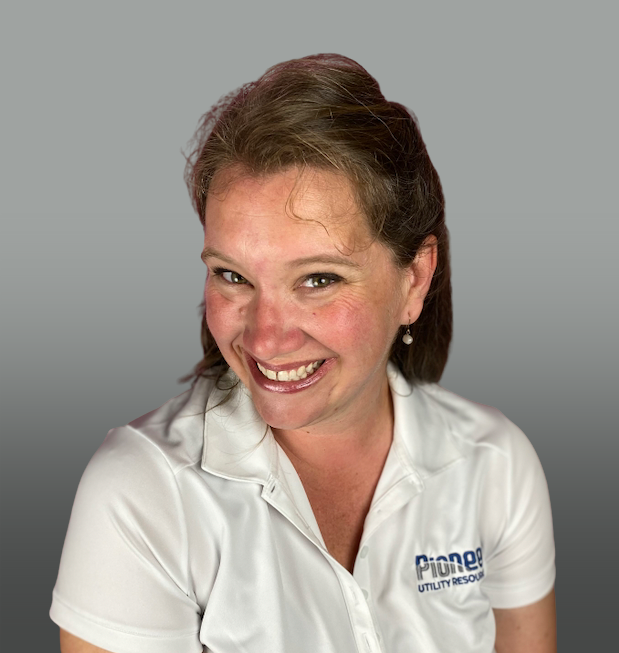
Katie Haby
Transcripts have been lightly edited for clarity and readability.
Intro: A production of Pioneer Utility Resources. StoryConnect, helping communicators discover ideas to shape their stories and connect with their customers.
Megan McKoy-Noe: How can you unlock staff strengths to harness your internal storytelling potential? That’s what we’ll be talking about on this episode of The StoryConnect Podcast. Hi, I’m your host, Megan McKoy-Noe, one of the storytellers at Pioneer Utility Resources, and I am joined by Katie Haby. She’s the manager of key accounts and business development at Medina Electric Cooperative in Hondo, Texas. Katie, thank you so much for joining us today.
Katie Haby: Thank you so much for having me. I’m really looking forward to it.
Megan McKoy-Noe: Well, this is fun. We’ve been talking about this for a while because you’ve been doing this for a bit. But I wanted you to start off by just telling us a little bit about Medina Electric and your employee base.
Katie Haby: Okay, so, I work for Medina Electric Cooperative. It is a distribution cooperative based in Texas. So we cover parts of 17 counties in Texas. We have a service area of, Texas is big, and we like to have a lot of it. So we cover about 10,000mi² with our service territory, very, very large landmass. We have about 20,000 members and like 30,000 meters, so very rural. You know, the northern, we go from Hondo, Texas, which is west of San Antonio, all the way down to Rio Grande City, which gets kind of close to the lower tip of Texas. So we see a lot of geographical changes in that from our northern office to our southern office. Cultural changes, definitely have a different challenge in that we have seven offices that we have staff at. And so,
Megan McKoy-Noe: Of course.
Katie Haby: Right? So we have about 130 staff, but they’re spread across seven offices. And so that presents a very unique challenge in our internal storytelling and in our internal culture building.
Megan McKoy-Noe: So an internal culture building is so important for any utility, but especially a utility that stretched over such a large area because you want your utility story to be consistent no matter where your members are. So, and that’s one of the reasons I wanted you to come in, because y’all are doing something very interesting at Medina Electric. Internal communications, it’s critical, but something that we forget about sometimes. So, before we dive into your strengths training, talk to me a little bit about what channels you’re using to tell your story to staff on a day to day or a month to month basis.
Katie Haby: Right. So yeah, you noted it, right. It’s definitely a challenge with that many staff people and being that spread out to have a consistent story. So we have a really good team, and we’ve had a good system in place for a number of years. I think that has set us up to tell a really good internal story. We use a monthly newsletter. We send that newsletter via email also, and printed so that everyone gets it how they want it. We have a TV station. We call MEC TV, and so each week we put out a show on MEC TV that plays in all the offices, and so all staff members can watch that, ight? And that’s kind of going over all the information they’ve seen in their newsletter and email.
Megan McKoy-Noe: And I have to ask, where does that play?
Katie Haby: So we have a TV in each break room at each office, and it plays there. And then during Covid, during the pandemic, we actually started where we also put it on our internal portal, and they can go to a link there and watch it. So they can see it, even if they don’t go to the break room. And an email gets sent out every Monday reminding us that it’s there because like we all know, right? We get busy. And even if something’s updated every week, we’re not going to go check it if someone doesn’t remind us to do it. And so our communications team does a really good job of keeping that in front of everyone. And that keeps our story very consistent across all the offices. And then they also do a good job of doing individual communications with individual departments to kind of reiterate some of those story points we need to make. So our MSRs, our member service representatives, get a special email every month in addition to everything else because obviously they’re front facing and have an opportunity to tell that story.
Megan McKoy-Noe: Do you give them like story, you called them story points, but do you give them talking points that they can use with the members each month?
Katie Haby: Yes. So whatever we have that we’re kind of covering that month that we to make sure we’re keeping in front of members. We’re giving the staff talking points on and resources and, you know, who to go to if you need more information on any of those things.
Megan McKoy-Noe: I love that. So you’ve got emails going out to folks. You have your newsletter every month. And I have to ask, what is the name of your internal newsletter?
Katie Haby: Oh, it’s the Medina Insider now. It always had, several, right, several names over the course of my time here. But, the Insider.
Megan McKoy-Noe: Some of the names like watt’s up? And you know, there’s with electric co-ops, we have fun with our names. So the Medina Insider. So you’re giving them insights. Email, you’ve got a portal, an intranet that you’re using for folks where you’re putting the same information. You’re printing it out for folks in case they don’t use a lot of these normal, you know, digital channels. So maybe getting it into the trucks, getting it out to folks that are in the field. You have video going in your break rooms to make sure people see the message regularly, and then you decided to take it a little bit further with your employee engagement. So you’ve been really focusing on employee engagement over the last year, specifically using the CliftonStrengths training program by Gallup. Can you share a little bit about that program, and why your co-op thought it would be useful?
Katie Haby: Sure. So, a couple, almost two years ago now we did, we used Gallup to do an employee engagement survey.
Megan McKoy-Noe: Okay.
Katie Haby: And so Gallup has specific questions that they ask and survey employees, and that helps determine the engagement. And so that is part of what drove our interest in the CliftonStrengths program. Because there’s a lot of data based on CliftonStrengths that people that are working in their strengths and working in their natural talents are six times as likely to be engaged in their job. And so, that was really that Gallup survey that determined our employee engagement numbers at that time. And then we’ve done it since then. That was what drove our interest in CliftonStrengths is, how can we help? How can we kind of facilitate our employees’ engagement. Instead of just taking shots in the dark, this is kind of a scientific way to do it that’s proven out. And, we’ve seen really good results so far from our initial sessions, so.
Megan McKoy-Noe: Well, I love that. I think I was reading up on the CliftonStrengths finder a bit, and I think one of my favorite strengths was “woo,” which is winning others over. I got very excited about that one because it’s a lot of what we do at Pioneer. But there are so many other strengths that this training can help you identify. Some of them are like activators, connectedness, strategic, relator, which I think is really key when you’re working on internal communications, is finding people that can relate to others. Maximizers, folks that are really good at ideation. So I think there are 34 different strengths that you’re identifying across your entire employee base. How are you aligning those staff strengths once you identify them with how you tell your story?
Katie Haby: So we’re having every employee, we’ve had every employee, take the CliftonStrengths assessment. And so to your point that gives them, it puts in order their 34, kind of puts in order where those 34 fall for them. And so then, we sit down with each department and look at each employee’s top five. So that’s really what we have this first year been focusing on, is your top five. And we’ve really encouraged employees to know their top five, really understand them, that we do a three hour session with each department where we dive into their CliftonStrengths report on an individual level, and then also as a group, right? And that’s, I think, where it comes to telling the internal story is making sure that not only the person understands their strengths and how they can apply them in their daily job, but also how the group as a team, how they as a group can use everyone’s individual strengths and how that can strengthen the team. And when you’re talking about internal storytelling, right, we just did a session with some of our operation folks, and, one of the guys on the crew had a very good communication.
Katie Haby: Communication was in his top five. So when you’re telling your story internally and when you’re telling your story externally, then the conversation was had that okay, if you, as a crew, are out on a job site and a member comes up and has questions, based on your CliftonStrengths, who do you think should be one of the two people that goes and has that conversation with that member? And it really pinpoints to them, okay, this is someone that we need to use, better utilize, to tell our story. He may be a ground man, but he’s a very good at communication. It’s a natural talent for him. And so if he goes alongside with a foreman, he’s going to do a really good job of communicating our story in that instance to that member. Same internally, right? It’s understanding people who have a lot of strengths in the influencing domain of CliftonStrengths. They’re going to be good employees to have share your story internally because they have a lot of natural influence on other people.
Megan McKoy-Noe: Yeah, it’s exciting for me because one of the challenges that folks have at different utilities, especially when you’re spread out, is finding employees that they can engage with the story and tell others about the story internally, right? So I have seen utilities like create committees where they have someone from different departments, but they’re just kind of looking for volunteers. If you know the strengths and that you’re not just saying, “Hey, who wants to do this?” You’re identifying those strengths and saying, because this is one of your strengths, we’d love to have you involved in this committee. So are y’all doing that? Are you do you have committees internally for your staff based on these strengths?
Katie Haby: So we do have committees internally for our staff. They were selected before we rolled out CliftonStrengths. So it’s not something that we used in picking those people. But in every meeting that we’ve had with departments, as we’ve gone over their strengths, that’s definitely been a point we’ve made, is now when you get in these meetings with committees, you all need to know each other’s top five. Because that will help you understand how you’re working together as a group and also where your natural power comes from, right? That’s the whole premise of CliftonStrengths is that our natural power really comes from leading and being authentically who we are. And so this top five will help the committees move in that way, help each department move in that way. And just kind of let employees really shine a mirror up on themselves and really embrace the gifts that they naturally have that they probably know about on some level, but maybe haven’t put words to, and CliftonStrengths gives us all a common language to be able to talk about those things.
Megan McKoy-Noe: Well, I know from working with you that you have your strengths in your email footer. How else do your staff internally share what their top five strengths are?
Katie Haby: So we encourage people to put it on their email footer. We also have it on our Teams message. So anytime you Teams message someone, you’ll know what their top five are. We’ve encouraged staff with offices to put it on the door so people know what it is. And then on our portal, we have a chart that shows each person and what their top five are. So that if you’re working with someone, even not on a formal committee, right. But if I just have to do a project with someone in another department, I can go and look and say, “Okay, their top five, one of their top five is context.” So people with context in their top five really like to know, the historical, the things that happened before, right? And why we’re doing – they’re going to want to know a lot of the history behind things. And so that can even guide your interactions one-on-one with folks. Because, you know, I need to go to him or her, and I need to outline all the history, whereas someone else may not. They don’t want to waste time hearing about that. So it gives you a way. A lot of those things are things you learn about people as you work with them. But, the top 34 report really gives you kind of an instant insight into how that person probably naturally functions and makes it a little easier, especially as you add new team members and go through all those storming and norming stages on teams. I think I’m really excited to see how that plays out as we add new employees and have them do that assessment.
Megan McKoy-Noe: Oh, I’m very excited to see how this plays out. I mean, ever since I heard that y’all were starting this, I was like, Katie, we’ve got to talk about this. This is exciting. Because it really helps you tailor your storytelling to the individual from the communications perspective, which is important, but it’s also really effective for building teams and building experiences for your employees. Now you’ve had several of these coaching sessions so far. You’ve reached, is it still 60% of your employees?
Katie Haby: We’re probably at about 75% at this point. We just have two operations crews left to do our, to actually do our training with. They’ve done their assessment. But yes, we’ve made it through a lot of the employees.
Megan McKoy-Noe: So I’m curious, I know I’m excited about it. You’re excited about it. But what’s been the response to the training from your employees so far?
Katie Haby: So they actually get excited about it as well.
Megan McKoy-Noe: No.
Katie Haby: I know.
Megan McKoy-Noe: This is wonderful.
Katie Haby: It’s been very fun. The training is, so we go through it, we really make sure they understand the reason for the assessment and make sure that they understand why it’s so important. And it’s been so rewarding because every group we’ve met with definitely was very responsive. And, you know, there’s always, it’s fun to see in the individual teams. Every individual group kind of has its own little mini culture. And you can see that as you do the assessment and see all the kind of ribbing and joking that happens, especially with between operations guys as we go through those strengths, but also to see them really embrace it. You know, one of our operations crew members that we did, the teams that we did the assessment with, one of their guys had empathy and is top five. And so that’s exciting to see. And it was exciting to see how he embraced that part of his natural gift, and how all the other guys on the team embraced it too. Right? They, of course, have to give them a little bit of a hard time about it, but.
Megan McKoy-Noe: Of course.
Katie Haby: Recognized it as a gift that he has and recognized how that helps them as a team. So everyone has been so responsive about it. Internal staff, external staff, everyone has really been excited about it, I think, and I’m excited to see how we keep it in front of them, and kind of keep building on this base.
Megan McKoy-Noe: Yeah, because I wanted to ask about that. You know, you’ve been going through this process for about a year now. You said you have two teams that are left to go through. Once all of your employees have been through the program, how are you going to follow up on the training and using those lessons learned for your staff storytelling?
Katie Haby: So we are actually doing something right now where each week we are highlighting something with CliftonStrengths in every newsletter and on MEC TV that we talked about. So we’re keeping that story going through those items. And then once everyone’s taken the assessment and so probably in the next like five weeks after we’ve rolled it out to everyone, we are going to kind of highlight everyone with different strengths. And so we’ll pick the activators for example. And one week will show who all has activator in their top five. And then we’ll pick context. And so we’re going to do that so that everyone’s also putting faces to those strengths and kind of helps keep that alive.
Megan McKoy-Noe: Well, and it’s also going to help you a big part of the challenge with internal communications is breaking down silos within your employee base. So it helps form connections across teams, which I think is really critical, especially when you’re so far apart with seven different offices. So I love that idea of showcasing people that share strengths across the entire utility to give them a reason to connect with each other.
Katie Haby: Exactly.
Megan McKoy-Noe: Which is nice, yeah.
Katie Haby: Right. And we do, we only do it every two years because of our how spread out we are, but we do an all employee meeting every two years. And I would imagine that we will see this very rolled into that employee meeting that we do next year.
Megan McKoy-Noe: I love it. Well, one last question before I let you go. What advice do you have for folks that are trying to strengthen their internal storytelling?
Katie Haby: You know, I think just staying, make sure you’re staying in touch with the employees, right? Make sure you’re staying in touch with the people that you’re telling the story to. I think it’s so easy – the longer we’ve been somewhere to kind of sometimes get removed from that. And it’s really the most important part of us telling our story is connecting with the people that we are going to tell our story to, finding ways to make that happen. And, also understanding right, and being okay with when they’re giving us feedback that they’re not hearing the story we’re telling them, being able for ourselves to humble ourselves and go back to the drawing board and say, “Okay, they’re not getting the story I’m trying to tell them, so how can I change it?” Rather than just, “Oh, they don’t get the story,” and giving up. I think that’s the, just always stay, you know, stay kind of in the trenches and never lose your passion for it, for sure. That’s the most important thing about storytelling, I think.
Megan McKoy-Noe: I love that. Never lose your passion. And that’s one of the things I’ve always recognized with you, Katie. You have such passion for the work that you’re doing. So thank you so much for sharing your story with utility pioneers today. She is Katie Haby from Medina Electric Cooperative, and I’m your host, Megan McKoy-Noe at Pioneer Utility Resources. And until we talk again, keep telling your story.
Outro: StoryConnect is produced by Pioneer Utility Resources, a communications cooperative that is built to share your story. StoryConnect is engineered by Lucas Smith of Lucky Sound Studio.