Share

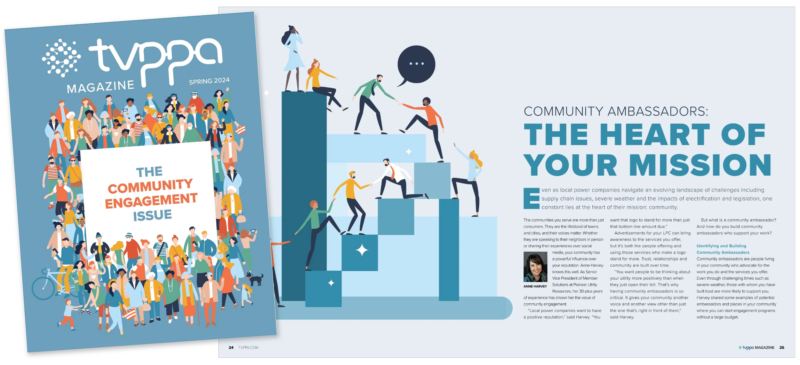
This article was originally published as a sidebar in the Spring 2024 TVPPA Magazine. Read the full article for great ideas from our friends at TVPPA!
Building community programs is a process. Much like the work of building a substation or feeder to boost reliability, creating a successful program takes a thoughtful and strategic plan to set a solid foundation and build community — and staff — trust.
Every utility has not only a strategic plan but also shared internal processes related to major infrastructure investments. Having similar documents for community engagement is also helpful, especially as you can’t participate in every worthy cause.
Be sure to have this information available publicly and review it regularly.
Building a substation is a major endeavor. You wouldn’t commit internal resources, funds and outside experts without reviewing metrics like System Average Interruption Duration Index (SAIDI), Customer Average Interruption Duration Index (CAIDI) or other industry benchmarks.
When you are building the case to start or update a community engagement effort, why wouldn’t you review past participation, event attendance, social media engagement, target audience and other metrics to help determine your actual or expected return on investment?
Substation equipment and construction evolves. Your outreach program should be refreshed every few years to strengthen your connection to new groups, events and local influencers, quickly found on social media.
Look outside of our industry for proven approaches. TOMS footwear and Bombas socks have become successful brands with their buy-one-donate-one model. Could your utility do something similar with energy efficiency kits or smart thermostat programs?
Building takes a team. Bringing in your colleagues as you design a community engagement program helps. They have unique views, represent the consumers you want to engage and can help spot ways to improve original concepts. Their support also provides you with helpers to organize events, spread the word and even donate personally to the cause.
If you wanted to use an innovative transformer in a substation, you would likely purchase one, test it and then decide if it lived up to the hype and was the best solution. Take this approach with launching a new community program and be upfront with community partners about what you are hoping to accomplish.
Don’t forget these critical steps, especially sharing the story of how many organizations you supported, how many employees volunteered locally and the impact of the community program on your website, social channels, news releases and your annual report.