Share

Starting in kindergarten, the team at Oklahoma Electric Co-op offers educational programs to students throughout their school experience. Hear how the programs developed and why engaging children became a strategic focus for the utility over the last decade.
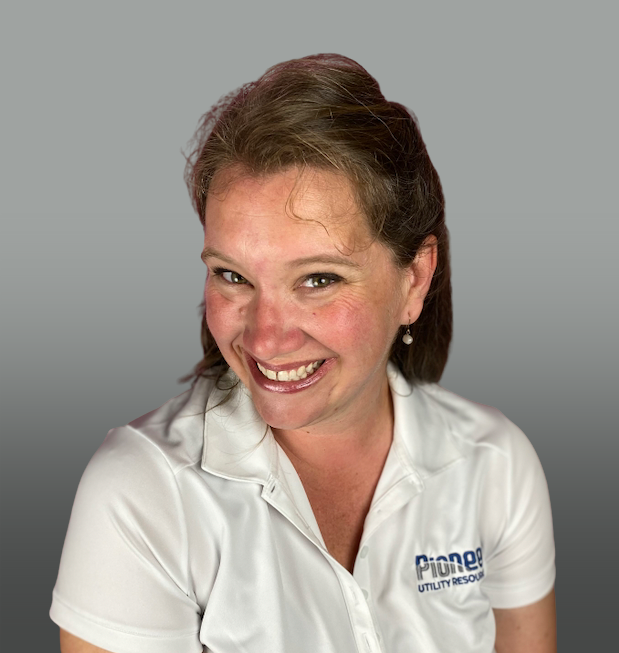
Tory Tedder-Loffland
Transcripts have been lightly edited for clarity and readability.
Intro: A production of Pioneer Utility Resources. StoryConnect, helping communicators discover ideas to shape their stories and connect with their customers.
Megan McKoy-Noe: What role do youth programs play in boosting member engagement? That’s what we’ll be talking about on this episode of The StoryConnect Podcast. Hi, I’m your host, Megan McKoy-Noe, one of the storytellers at Pioneer Utility Resources, and I am joined by Tory Tedder-Loffland, who’s been at Oklahoma Electric Cooperative in Norman, Oklahoma, for almost 18 years now, most recently as the education and outreach programs director. But starting this May, Tory will be launching a co-op education consulting firm called The Co-op Box. Tory, thank you so much for joining us today.
Tory Tedder-Loffland: Thank you Megan, I am glad to be here.
Megan McKoy-Noe: Now, could you start us off by telling folks a little bit about Oklahoma Electric Cooperative and the communities that you serve?
Tory Tedder-Loffland: Absolutely. Oklahoma Electric Cooperative has been around since 1937. We are headquartered in Norman, Oklahoma. It’s almost right in the middle of the state. We serve seven central counties in Oklahoma. We are the largest co-op in Oklahoma, serving just over 49,000 members with over 63,000 meters, primarily residential.
Megan McKoy-Noe: I’ve been a fan of OEC for a long time. I love seeing the different ways that you share your story. So we wanted to have you on specifically to talk about youth programs. Because almost every utility has some sort of a youth program from scholarships, the Washington Youth Tour, a lot of folks do, to statewide educational events, and this really is your bailiwick. This is what you do well on. So could you give us a brief overview of the scope of OEC’s youth programs?
Tory Tedder-Loffland: Absolutely. We do all of the statewide events, the Washington, DC Youth Tour. Our statewide has a energy camp, which is for eighth graders every year. We have a leadership summit that goes along with the Oklahoma Youth Expo, which is our statewide FFA show animal event. I think it’s the largest in the nation last I checked of a statewide event for FFA folks.
Megan McKoy-Noe: Those are all just statewide, right?
Tory Tedder-Loffland: Yeah, yeah, those are all statewide.
Megan McKoy-Noe: That’s a lot of statewide that you participate in.
Tory Tedder-Loffland: Yes, We have a very active statewide. And of course, Youth Tour, you know, statewide takes the delegation to D.C., so it goes national. On top of that, we have something called a Get Charged Program, and that is a hands on electricity education curriculum for K through 5.
Megan McKoy-Noe: Do you have a favorite?
Tory Tedder-Loffland: Well, I have to say, it’s really hard to talk about a favorite because each program kind of hits on a different demographic, a different interest in the child. And I think that’s really important. But I mean, if you’re going to force me, I mean,
Megan McKoy-Noe: I mean, I wouldn’t force you, Tory.
Tory Tedder-Loffland: I’m going to choose Get Charged, mainly because of its origin story. I think it really speaks to why co-ops are so great at what they do.
Megan McKoy-Noe: And get charges for fifth graders?
Tory Tedder-Loffland: It’s for K through 5.
Megan McKoy-Noe: K through 5, so this is their first introduction to your utility and the world of electricity and fiber, all of that.
Tory Tedder-Loffland: Correct. Correct. So every grade has a different lesson. They all align with state standards, and so you can go into the classroom without taking important classroom time away from the teacher, you are adding to their toolbox of resources. So, every grade has a different lesson. We go in, we provide all the materials needed to do that lesson to make that experiment happen. We provide the lesson plan, and we will teach the lesson. Sometimes teachers like that, sometimes they just want you to give them the curriculum, and they’ll take it over, and that’s fine. Especially once Covid hit, we had to pivot away from going into the classroom. So we started to make kits that our teachers can check out. We find home schoolers really love it. They check out the kits all the time, so we like to support every level of education.
Megan McKoy-Noe: Well, I should say I’m a home schooler ten years. So thank you for making –
Tory Tedder-Loffland: Well, there you go.
Megan McKoy-Noe: Things available for folks that are homeschooling as well.
Tory Tedder-Loffland: We do a lot of homeschool events because a lot of times home schoolers come together for big events. And so we’ll do a little education festival with all of our cool electricity experiments, and it’s a lot of fun.
Megan McKoy-Noe: And you said that the origin story for Get Charged is why – you don’t like to pick favorites – but it kind of is up there.
Tory Tedder-Loffland: Right. Right.
Megan McKoy-Noe: Share that with me.
Tory Tedder-Loffland: So, a couple of things kind of fell together at the same time. One, retirements were happening across the board and this happened in the electric cooperative world nationwide, right?
Megan McKoy-Noe: Oh, yes.
Tory Tedder-Loffland: So it was back in the what, 2015 era, 2014 era, and we were having retirements happen. So we had a restructuring going on in our department. We were changing jobs. I had just taken over youth programs. I was previously the editor of the magazine. Additionally, our company decided to undergo a strategic planning process, which I have to highly recommend. It’s a big undertaking, and it really takes, you know, top down involvement and encouragement. But what that gave us as a department and as a co-op as a whole, the ability to sit down and step away from the day to day work and really sit down and strategically think about what we’re doing, what our programs are, where we’re spending our money. When I took over youth programs, you know, we were spending money here or there, this softball team, that basketball team, you know, maybe a track meet, you know, just all over the place hit and miss. You know, always supporting the FFA, livestock shows and that sort of thing. But were we really making an impact? And so what we did is, is we sat down and started thinking about where to put our money and how we can do the most without giving up, taking care of the little guy, right, that’s what we’re all about at co-ops. But what can we do the most to make the most impact, be beneficial to people? And then, sadly, and I think this is something that a lot of states suffer with are the Oklahoma Legislature cut education budgets severely.
Tory Tedder-Loffland: We had a tax shortfall. And I mean, there was a severe crunch. Our schools, our towns were faced with consolidation or closing of school districts. And I think we all know if a town loses their school, they’ve lost their soul, you know. They’re going to really struggle. And as co-ops dedicated to improving the standard of life, we really need to think about protecting our small towns. And so all of those things came together as I was thinking about, what can we do? And Get Charged is a small thing. But it was through those conversations and through thinking out that sort of scenario that Get Charged came about. So I was thinking, “Okay, what can we do to contribute to the communities in a meaningful way? I’ve got a budget. I can buy product, you know, supplies to do the electric experiments that we can reuse. We go into the classroom, and then we bring it back,” you know, essentially. And so, it’s evolved since then. 2020 hit, and like I said, we made the kits. But I think that’s why I’m so proud of Get Charged just because I didn’t solve the budget crisis. But we did one thing that we’ve gotten some good feedback from our teachers.
Megan McKoy-Noe: Can you give me an example of one of the things that you all do, one of the kits that you have for Get Charged?
Tory Tedder-Loffland: Absolutely. I think I set every grade has a different lesson. So if we start with let’s just start with fifth grade. It’s one of the shorter lessons. We make a compass. So we’re studying the electromagnetic spectrum. We bring in the history of magnetism and traveling, voyaging people, discovering magnetism and how they could make a compass. We talk about transferring of magnetic power. And they create their own floating compass, and they have the best time. It is messy, but it’s a lot of fun. It’s a lot of fun. In fourth grade, we create a simple circuit. And then we add a switch to it, and they eventually communicate with Morse code using their switch. We replaced the light bulb with a buzzer, and they communicate with Morse code. And so through that lesson, we’re also talking about the history of communication and how important electricity was in that. And we talked about the different level. It’s just a lot of fun. It’s a lot of fun.
Megan McKoy-Noe: Now what about Get Charged? Have you tracked how many students have gone through those programs?
Tory Tedder-Loffland: So, that was I forgot to mention that was another part of the origin story that ties in. but that was part of why Get Charged was so great. Because I think nationwide, NRECA had just come out, or they were about to come out with their YAMEI, the young –
Megan McKoy-Noe: Young Adult Member Engagement Initiative.
Tory Tedder-Loffland: Yes. So we were all concerned about our loyal long time members who understood what co-ops were because they were there when we didn’t have co-ops before rural electrification. They’re, you know, dying. They’re passing on, and we need to be really concentrating on this up and coming, especially at OEC, where we are very urban. There is a connection to co-ops in rural communities that urban folk don’t necessarily understand, unless we, you know, I can talk about co-op stuff all the time. Then you got the housing.
Megan McKoy-Noe: I know.
Tory Tedder-Loffland: Back east and, you know, it’s a different kind of co-op.
Megan McKoy-Noe: Yeah, we have to tell our story.
Tory Tedder-Loffland: So how do you get that 35 to 45 or 30 to 45 age group to understand who you are and to care about who you are? You know, your why. And you do that by, you know, well, that sounds subversive. So I was going to say going through their kids. But you show your true colors when you do good things for people. And so that is one of the things. If I went into the classroom and got them so excited by the lesson and they bring that home to mom and dad, that’s relationship building. I’m building relationships with these kids from young years. I’m going to get him in eighth grade. If I get them K through 5 and they’re having fun, Then they’re going to want to go to energy camp in eighth grade.
Megan McKoy-Noe: Exactly.
Tory Tedder-Loffland: And if I get them an eighth grade and we go through that leadership training and we go through that co-op building, then I’m going to get them in Youth Tour. And if I get them through Youth Tour, they understand really what their impact on the world can be and what the co-op did to help support them in their journey, and they’re going to remember who we are as they get older. And we are seeing that. I am seeing kids coming to energy camp who remember me in the classroom. ‘m seeing kids, you know, from one year to the next. Oh, I saw you in third grade. What are you going to do with us this year? And that’s just a lot of fun. I mean, that’s just a lot of fun.
Megan McKoy-Noe: It’s a really fun way to tell your story. And as we always say on the podcast, you’ve got to keep telling your story over and over again. So I love that your programs cover such a huge spread of your future members time in school, so you keep coming back. And I love that you have that program, year after year. And then after they do the youth program, then if you have scholarships that are available, they know about it. They have the history with you, and then they can take you on into their future college careers if they go that path. If they’re looking for careers, they’re going to think of the co-op. You know, it’s creating a lifelong bond with these, your future members. So we’re always trying to figure out how to reach people when they’re in their 30s. Well start by reaching them when they’re, you know, six, seven and on through. Well, thank you so much for sharing your story with utility pioneers, Tory. She is Tory Tedder-Loffland at Oklahoma Electric Cooperative and soon to be at The Co-op Box. And I’m your host Megan McKoy-Noe at Pioneer Utility Resources. And until we talk again, keep telling your story.
Outro: StoryConnect is produced by Pioneer Utility Resources, a communications cooperative that is built to share your story. StoryConnect is engineered by Lucas Smith of Lucky Sound Studio.