Share
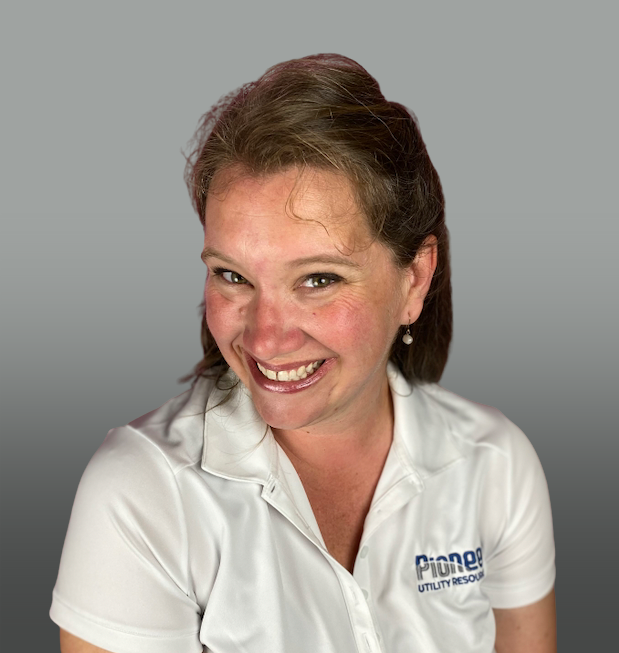
Lean into your personality, and don’t focus on the numbers. That’s the advice of veteran podcaster Carrie Huckeby. She shares how the Tennessee Broadband Association uses its “Lead Tennessee Radio” podcast to tell its story, with tips on ways audio storytelling can help utilities reach new audiences.
Carrie Huckeby
Transcripts have been lightly edited for clarity and readability.
Intro: A production of Pioneer Utility Resources. StoryConnect, helping communicators discover ideas to shape their stories and connect with their customers.
Megan McKoy-Noe: How can a podcast strengthen your story? That’s what we’ll be talking about on this episode of The StoryConnect Podcast. Hi, I’m your host, Megan McKoy-Noe, one of the storytellers at Pioneer Utility Resources, and I am joined by Carrie Huckeby, the executive director of the Tennessee Broadband Association, and a member of Pioneer’s board of directors. Carrie, thank you so much for joining me today.
Carrie Huckeby: Thanks, Megan. Thanks for asking.
Megan McKoy-Noe: You host Lead Tennessee Radio, which is a podcast that was launched back in 2019 by your association. And congrats, I heard you made Feedspot’s Top Tennessee Podcasts list this year, which is exciting. A lot of utility pioneers are thinking about starting podcasts, so we wanted to check in with you as a longtime podcaster to really help folks weigh the pros and cons of podcasts. So, Carrie, I’m curious, why do you think more people are tuning in to podcasts?
Carrie Huckeby: Well, I think people have a little more time maybe to listen to podcasts, and they’re looking for a variety, maybe from audiobooks to music to podcasts. And I think also for me, I’m always looking to learn something new, whether that be flower gardening or vegetable gardening or, you know, broadband or BEAD or whatever it is. So, I think podcasts are a really good source of information that, you know, doesn’t require you buying a book. You can just plug in and that trip to the grocery store or that trip to town, you know, gives you 15-20 minutes of information, so. I think, you know, I love podcasts myself.
Megan McKoy-Noe: Yeah, I agree. It does add a little bit of fun to otherwise dead air time that you might have while bebopping around town, so. Your association champions telcos and broadband service providers across the great state of Tennessee. And I’m curious, what is the goal? A defined goal. Because we tell folks you need to have a goal for each of your communication channels, right? So what’s the goal of TNBA’s podcast content?
Carrie Huckeby: Awareness. I mean, you know, awareness, storytelling. We talk about how important it is to tell our story. Individually, our telco members, also our associate members and vendors, you know, every one of them have their own individual story, and we really encourage them to talk about the work they’re doing, the connections they’re making, the quality of life, things that they do in their own communities, community grants. You know, sometimes cooperatives and small commercial independent companies aren’t real good about patting themselves on the back or touting their own story of what they’ve done or what they’ve accomplished or what it’s meant to their communities. So we encourage them to do, you know, to tell their story. But we as an association collaboratively serve over 30 something percent of the state. We have over 200,000 broadband connections in the state. Many of our, you know, who we connect are rural communities and environments. And so we need to talk about that, and we need to share what they’re doing so as a whole and how that partnership and that collaboration is so important. So our goal for the podcast is just another communication tool in, you know, the newsletter or social media, our convention. And then on top of that, the podcast might reach another audience that we don’t reach other ways. So awareness, storytelling.
Megan McKoy-Noe: And who are you telling your story to? Who is the audience for Lead Tennessee Radio?
Carrie Huckeby: Whoever wants to listen. You know, our goal is to provide content for our members that helps them. You know, all of our other telcos, marketing people, operations, network, regulatory, that want to know what’s going to be happening with BEAD, what’s happening with the mapping. It may be just talking to a cooperative that I’ve got one lined up soon to talk to Twin Lakes about their community grant program. So, you know, how do you set up a program? What’s the challenges of that? What’s the criteria? So, you know, there’s a vast amount of subjects that we could talk about that interest our members and, you know, just to help them know what’s going on. We did one recently on broadband labels. You know, everyone’s going to want to know what is going to be required for broadband labels. But then we also do some – I did a podcast recently with Greg Smartt. He’s the new president for the association. And just picking his brain about, you know, what do you look to happen this year, Greg? Or what are things that you’re going to work on? Or what will affect the association? So it is a wide range of topics, but I just try to keep my eyes open for what’s happening, current events and who we need to be talking to.
Megan McKoy-Noe: Yeah. What kind of time goes into planning each of those episodes, and then producing them, getting them out there?
Carrie Huckeby: You know, the coming up with the subject or who, you know, extending those invites to the guest. Then coming up with questions for those guests because everyone likes to know a little bit ahead of time what you’re going to talk about, even though podcasts are not recorded live, and you can start over – and which I love, because I stutter and stammer. And my Southern accent kind of gets in the way sometimes, so.
Megan McKoy-Noe: Oh, no. Southern accent never gets in the way. Come on.
Carrie Huckeby: But we love that editing. But still, guests like to have those questions in front of them, and so they’re not surprised. And then the producer takes it. Sarah Wootten, which is wonderful there at Pioneer and sends it. And she’s done it long enough to know kind of what I like in the podcast. It’s not as time intensive as you think it is. It just really, you need to sit down, make your guest list, do your questions, get it to them, and then the producers and editor take it from there. And then Pioneer does a wonderful job posting it, getting it on social media and all the platforms it needs to be on. So that didn’t really answer your question, I don’t think of how long –
Megan McKoy-Noe: No, no, it does.
Carrie Huckeby: How long it takes. But I probably should spend more time on it than I do. But fortunately, you know, with your guest, you can, you know, do 4 or 5 questions pretty quick. Takes about 30 minutes to record it, and so it’s just getting it in your schedule.
Megan McKoy-Noe: Well, and I write for our blog. I write case studies, and I do guest hosting for The StoryConnect Podcast as well. And I have found that podcasts, out of all the types of content that I create for Pioneer, podcasts are the easiest because once you have your system down, it’s much easier than sitting down and writing a blog post, you know? And then I love just taking ideas from podcasts, and then using them on blog posts later because I have the transcripts. So that’s my little personal thing. I love podcasts because they seem like they’re easier than other types of content that I create.
Carrie Huckeby: I completely agree. You know, I struggle with sitting down and writing an article, but, you know, coming up with 4 or 5 questions for a guest, seems to be a much easier. So, yeah, I love podcasts.
Megan McKoy-Noe: Yeah. And it’s more fun because you’re able to see folks and talk with them and just have conversations.
Carrie Huckeby: Right. You’re just chatting. Casual conversation. Chatting.
Megan McKoy-Noe: No pressure. Chatting with purpose.
Carrie Huckeby: That’s right. That’s right.
Megan McKoy-Noe: Now, what kind of equipment and software are you using to record your episodes?
Carrie Huckeby: Well, I just use my laptop, like you and I are doing right here, to connect to Riverside. [It] is the software platform that we use, and it has worked really well. And no complaints there. I use a Shure microphone that I got from WordSouth many years ago when we were doing some podcasts for – I guess I got it when I was doing the podcast for Lead Tennessee Radio. And doing some training with WordSouth that went back when the world was shut down, and we were doing all of that virtual. So, but my Shure mic, I love it. And that’s pretty much it.
Megan McKoy-Noe: Okay. All right. So not too much of an investment on the front end to get it going. I should say. There are a lot of different softwares that are out there for folks. We use Riverside as well because it lets you record video and audio in different tracks, which I think helps with the quality of the podcast. So that if you’re a little quieter than I am or I’m a little louder, which happens when I get excited about things, they’re able to adjust the levels in the editing process. So just kind of fun on the back end. There’s a lot of other software that can do that kind of thing for you at different paid levels. So I like hearing what folks are using. I think it’s fun. So you have your podcast. You’re excited. It is up. How do you get the word out about it? How do you publicize Lead Tennessee Radio?
Carrie Huckeby: First place, we put it on our website under podcast. And so every episode is listed there all the way back from the beginning, 2019. So you can go back and listen to some of the older ones, which I do sometimes just to, you know, refresh my memory about things. Also, we put it on our social media channels: Facebook, Twitter, LinkedIn. LinkedIn seems to be the most popular for podcasts because of that professional group, and our members, vendors and associate members follow us there. So we do that. And then I try to always repost it, and then sometimes our members will repost it. So that’s how we get it out there. And that seems to work the best for us.
Megan McKoy-Noe: I love that. And what kind of frequency do you have for publishing? Do you have one a week? One a month? One a quarter? How often are you producing podcasts?
Carrie Huckeby: You know, it can be sporadic because if we have the convention going on or planning, it’s kind of hard for one person to get all that in. So I tend to do several podcasts the first part of the year, and then I kind of slow down until the convention in June. But my goal is to try to get at least two a month. You know, that’s not a big number. It’s manageable with travel and my travel schedule and things. And plus my guests are always busy too, trying to squeeze in a, you know, a podcast in their schedule. But the goal is two and maybe three a month. Just depends.
Megan McKoy-Noe: Yeah, folks are hearing from you, not all the time, but you have a somewhat regular publishing schedule. I love the idea of when you have a big community event, or for you, you have a big membership event, you’re able to record several, and then have them come out over time. I think that makes a lot of sense. And take some of the pressure off. You get everything set up once, and then you’re good for a while.
Carrie Huckeby: Right. And what I try to do too, is if I have 2 or 3 guests that I’ve lined up, if I can record them all on the same day, then it doesn’t take a whole month. You know, get it all done on the same day, and then you can upload those and release them after that. So you don’t have to be setting one up for every week. Now, it doesn’t always work, but, you know, we try.
Megan McKoy-Noe: Yeah. It’s all we can do, Carrie, is to try.
Carrie Huckeby: Fingers crossed.
Megan McKoy-Noe: Yeah, fingers crossed. What kind of feedback have you heard from your members and the general public about Lead Tennessee Radio?
Carrie Huckeby: I was at the convention back in June, and one of the members came up to me and said, “You know, I listened to all your podcast.” And I said, “You do?” You know, you’re kind of surprised, I guess, when people come up and say, “Listen to your podcast.” So every once in a while members will say, “Hey, I heard so-and-so and you know, that was good. And that was good information.” I guess we track it more through – Pioneer helps me with that. The numbers of how many episodes have been downloaded in the first 30 days, 60 days. And I monitor that to see what’s most popular and to see the subject matter that people are the most interested in and, you know, and kind of keep that in mind when I’m booking other guests. But, you know, the best way is just the traffic, the number of downloads and see how we’re doing there. Also, what is helpful is our guest will normally post it on their social media, and it always does better when they post it and share it as well. It gives you that larger, broader reach when they do that. And we can always tell those number of downloads when the guest have shared them. So, you know, if they listen to it, please, like, you know, if they’re listening to it, tell us. We’d love to hear it, and we always like that feedback.
Megan McKoy-Noe: Yeah. Yeah. Well, and I was going to ask how you measure the impact of it, but it seems like you’re already doing that. You’re watching the metrics, and I love that you’re using the number of downloads and folks that are following you to kind of figure out what kind of content people are interested in and then plan accordingly. Do you have an editorial calendar kind of mapped out for the year with ideas? Like how do you keep track of those ideas, and what seems to be really interesting your audience?
Carrie Huckeby: Well, if an editorial calendar counts as a notepad on your nightstand or –.
Megan McKoy-Noe: Totally does.
Carrie Huckeby: Does it? Okay, great. Because I don’t know about you, but I have some of my best ideas when I’m getting ready in a morning or, you know, I think, oh, I should talk to them about, you know, this. And so I’ll write it down. I do need to be a little more strategic in planning. And I’ve promised Sarah Wootten, our producer, that I will do that. But right now it’s more listening with current events, what’s happening or learning about a workforce program or learning about digital literacy program or like I said earlier, about Twin Lakes and a community grant. Learning about these or hearing about these and thinking, Hey, that’d make a good podcast. So I put it, you know, on the list. I moderated a session at the SRC Donference for NTCA. It was Cadie Bergan. She [is with] Lead for America. And so I reached out to her and said, “Hey, we talked a little bit at the conference. How about a podcast?” And so she agreed. So, I don’t know how strategic that is, but that’s the way it’s getting done right now.
Megan McKoy-Noe: No, it makes, I mean, as long as you’re getting it done, Carrie, that’s like the number one thing. We can have all the best ideas in the world, but if we’re not actually getting them done, they don’t count, which is hard for me because I love ideas. We have an idea parking lot on Monday.com that we put ideas that we have. And then whenever we can make it work, awesome.
Carrie Huckeby: One more thing, I’ll say about the downloads too, about seeing those. You know, sometimes you’ll get a podcast, and it’ll have 50 downloads or 60 downloads, and you think, “Oh, you know, that’s not too many. You know, is that good? Is that bad?” But this is the way I think about it. If you’re having a conference or a training session, and you have 60 people in the room, that is 60 people that you’re communicating with and talking to. So I would say recommendation is don’t get too hung up on the number of downloads. If it’s not where – it’s not a million, you know, like murder mystery podcasts or all of those. You know, it’s not a million downloads, so throw it out. Just keep in mind that, you know, that’s 60 people that you reached that you didn’t before.
Megan McKoy-Noe: Yeah. And reached them on a platform that they’re more comfortable with, and they spent that time listening to you and hearing your story, and it’s powerful. Yeah, I think that’s a good point. Don’t get too hung up on the numbers. Especially because there’s not that huge time investment in podcasts anyway, so you can kind of balance out the investment.
Carrie Huckeby: Yeah. And it’s, you know, it’s a targeted audience. It’s, you know, we’re in the broadband industry, and that’s probably who we’re reaching and who our audience is. We want it to be as broad as we can make it. But let’s be honest, it’s probably a specific, targeted audience that we’re speaking to.
Megan McKoy-Noe: Yeah. Yeah. Well, one last question before I let you go. What kind of tips would you offer to someone who has never hosted a podcast before, and they’re thinking about getting into it?
Carrie Huckeby: I say don’t get hung up on – well, first of all, when you do it, don’t get hung up on the number of downloads, like we just talked about. But don’t be afraid of it as far as the time that it takes. Because I think you should give it a try and see how much of an investment it is. I would recommend that you work with someone like Pioneer that has that producer. They’re producing it and helping you with the editing, and they’re making you sound good sometimes when you’re not sounding that great. They help you with the guest, but that’s a big part of it. I also think that people hate listening to themselves, you know? I’ll hear people say, “Oh, I don’t want to be on the podcast. I hate listening to myself. I hate my voice.” Whatever. I recommend just being yourself because me, we’ve talked about the Southern accent, you know, like, “Oh, I’m going to sound so Southern, and all of this on the podcast.” But you know what? I’ve been in the industry for many years. Everybody knows me. They know I talk Southern, they know my personality. So I say, go with your personality because people, you know, that’s how you connect with people and get to know people and all that. So don’t be afraid to do a podcast because you’re worried about how you sound and things like that.
Megan McKoy-Noe: I love that. I was going to ask at the start, and then I thought, well, I’ll ease into it later on about how you felt about your voice. Because I love your voice, but that’s because I’ve been a fan of yours for a very long time. So I think that’s good advice just to to lean into who you are. Authenticity, I think, is one of the things driving podcasts right now. I’ve had folks say because of the rise of AI, artificial intelligence, people are leaning more towards podcasts because they can hear real people, they can connect with you in a way that they can’t in other platforms.
Carrie Huckeby: Well, I’m like everyone else. I hate the way I sound on, you know, on podcast or listening to myself. But hey, this old. I’ve been around this many years. I’m not going to change at this point. So, it is what it is. So, but I think podcasts too. You’re never too old to improve because you recognize that you say – my word was “you know.” And you know, you’d go through the transcripts, and I would have said “you know” like 50 times. And I’m like, Oh my gosh, who knew I said that that much? So you can look at podcasts as improving or recognizing some of the things that you might want to work on.
Megan McKoy-Noe: Some of your verbal hiccups, so to speak.
Carrie Huckeby: Your verbal hiccups. Yeah.
Megan McKoy-Noe: Now I’m scared to look at my transcripts to see to what I do.
Carrie Huckeby: It’s eye opening sometimes.
Megan McKoy-Noe: Well, just being able to talk to you today has been eye opening, Carrie. Thank you so much for sharing your story with utility pioneers. She is Carrie Huckeby, executive director of the Tennessee Broadband Association. And I’m your host, Megan McKoy-Noe, at Pioneer Utility Resources. And until we talk again, keep telling your story.
Outro: StoryConnect is produced by Pioneer Utility Resources, a communications cooperative that is built to share your story. StoryConnect is engineered by Lucas Smith of Lucky Sound Studio.