Share

In the second part of our conversation with Brianna Wall, we dive into audience segments and how the team at Oklahoma Electric Cooperative identifies and adds internal data to their communication strategy.
Link to OEC’s electric vehicle webpage: https://okcoop.org/ev/.
Transcripts have been lightly edited for clarity and readability.
Intro: A production of Pioneer Utility Resources. StoryConnect, helping communicators discover ideas to shape their stories and connect with their customers.
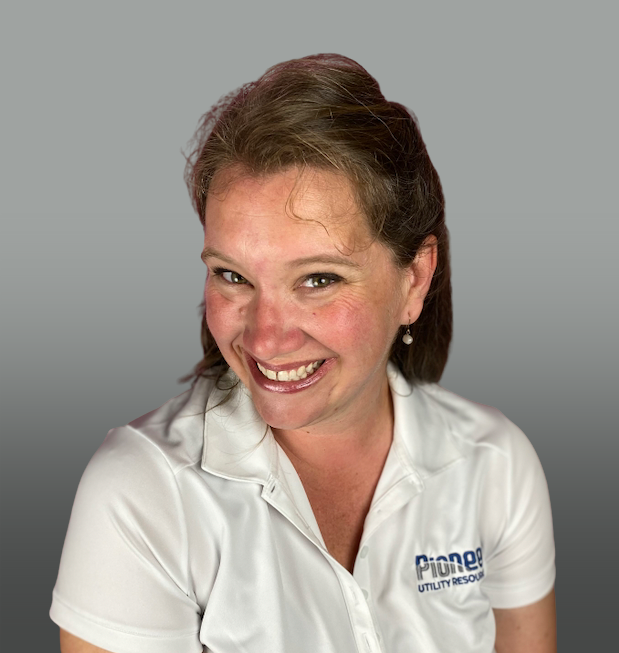
Megan McKoy-Noe: How can what you know about consumers change the way you tell your story? That’s what we’ll be talking about on this episode of The StoryConnect Podcast. Hi, I’m your host, Megan McKoy-Noe, one of the storytellers at Pioneer Utility Resources. And I’m joined by Brianna Wall, manager of marketing and member relations at Oklahoma Electric Cooperative. In this episode, we’re continuing a conversation that Brianna and I started about how her co-op adds data in their storytelling strategy. Now, in our first episode, which I hope you’ve listened to, we covered how the co-op collects data to guide community spending. It’s a fascinating approach that I love, and I think a lot of us could learn from. Now today, we are diving into audience segments and how her team identifies and adds internal data to their communication strategy. Let’s jump back into that conversation. I’m wondering if there’s any other types of data that your team is gathering right now and how you’re aligning this data, including audience segments that y’all might be looking at and message analytics, which you already mentioned. How are you aligning that to all of your strategic goals?
Brianna Wall: I love the segmented. To answer your first question, yes, we work closely with our member services department, who they collect a ton of call center metrics. So we try to stay in tune with them. “Hey, are you getting a lot of calls on a certain topic? Can we help clarify?”
Megan McKoy-Noe: But you can still pull the data. That’s the thing.
Brianna Wall: Yes.
Megan McKoy-Noe: And what software do y’all use?
Brianna Wall: We’re NISC.
Megan McKoy-Noe: Okay.
Brianna Wall: So we use–
Megan McKoy-Noe: That’s another cooperative.
Brianna Wall: Yes.
Megan McKoy-Noe: Always fun. So that’s really good for folks to know. They might not have known about that capability. But so if you are a member of NISC–
Brianna Wall: Yes. The feature our member service associates use is called “Contact Tracking.” And there are reasons built into that where that’s part of their process. Every time they answer the call, they go there first and click the reason for the call. So we have that on everyone who calls in.
Megan McKoy-Noe: I love that. And then you’re able to take that data, which a lot of utilities probably have and may not realize they could be using. And then, how do you then add that to your communication planning?
Brianna Wall: So we take that into consideration. There are all – this is going to kind of sound bad because our members are not numbers – but their interactions are numbers. So when we were trying to identify those themes, we had already predefined things like energy efficiency, renewables, electric vehicles, rates, youth programs, community programs that kind of [thing]. We predefined some buckets. So this data that we would pull from the member services side, those numbers would just go right in with the email numbers, with the social media numbers, under that bucket. Does that make sense?
Megan McKoy-Noe: Okay. Yeah, it does. It does. So that’s just another piece of data coming in to show you the overarching themes that your members are interested in learning more about.
Brianna Wall: Right.
Megan McKoy-Noe: I love that. What about audience segments? I know I kind of went down a bunny trail with the member service because I get very excited about that. But what, how are you using audience segments with your messaging as well?
Brianna Wall: Sure. So one example is we send out an email series when new members connect service. This is getting more and more common in the co-op world.
Megan McKoy-Noe: It is. It’s a wonderful thing.
Brianna Wall: It is. We love it. It took some work on the front end to set up, but it’s automated now. It’s all worth it. But every week for six weeks after someone connects service, they’re getting an email from us about something different. And in one of those emails, we promote our youth programing and our community programing. And if they click one of those youth links to tell them more about our Youth Tour or energy camp or whatever the case may be, they get a tag added to them automatically in MailChimp. That’s just called “youth” because it’s an internal facing tag. It doesn’t have to be fancy. But what we do with that is when we open up a scholarship program or youth tour contest or something like that, rather than e-blasting 50,000 people and risking all those unsubscribes, we have that built in audience of someone who has clicked on youth content. We know they’re engaged with that. They’re interested in that. So we target them with that kind of promotion. And, of course, the click rates, the open rates, are always so much higher, and no one’s unsubscribing. That’s our big thing is we don’t want to e-blast too much because we could get a lot of unsubscribes. So we use that a lot. We build in automated features. It’s called “Customer Journeys” in MailChimp. I know Constant Contact has a feature that’s similar, but we do that a lot. Just kind of classifying people by what their interests are and then giving them content that they would like to see.
Megan McKoy-Noe: I love that. So that’s segmenting audiences by interests that you have tracked through things like that, the new member email. Do you also have any audience segments based on where people live? Any age ranges or, you know, have you gone into demographics with some of your audience segments and specific messages like rebates that you’re trying to target toward people in a certain community?
Brianna Wall: Yes. So we have actually done that. One, we have done rebates, but I’m going to give you a different example. When we introduced a new rate, so during the pandemic, our board approved an alternative rate for residential. And for years, we had one rate everybody had to be on, and it made exactly zero people happy. So finally, they introduced a new alternative rate. And so our data team, we pulled some numbers on usage comparisons basically to see if you would have been on this new rate, you would have saved $200 last year. So we did that. We emailed probably 500 members total with the goal of getting them to switch to this new rate because they would save a substantial amount of money. That took some work and some coordinating with our data team, but we were able to use mail merge tags or merge tags in MailChimp so that each member, they opened their email, and they would see this is what you spent in 2019 at your current rate. If you would have been on this new rate, you would have only spent this number. And so we were able to get specific with each different account and each different person we emailed, and I thought that was pretty cool to be able to do that. That was kind of our first dabbling into that level of data in an email campaign.
Megan McKoy-Noe: What was your conversion rate as a result of that campaign? I mean, did you track and see how successful it was with those 500 people that you targeted?
Brianna Wall: Yes, there were about–
Megan McKoy-Noe: Not targeted. 500 people that you lovingly tried to help save money.
Brianna Wall: Yes. Yes. There was about, if I remember correctly, because we’ve done another since then, I think that one was about a 50% conversion rate.
Megan McKoy-Noe: Wow.
Brianna Wall: At the time. Yeah.
Megan McKoy-Noe: That’s amazing.
Brianna Wall: Which we knew during the very early stages of the pandemic. Our open rates were so much higher. Our click rates were higher because everyone was just hungry for content of any kind. They were just stuck in their homes.
Megan McKoy-Noe: It was a beautiful time, right? Looking back.
Brianna Wall: We launched our podcast in March or April of 2020, and it was fantastic. But if we go back and look at open rates and click rates from about March to June or July of 2020, ours were so inflated. I mean, they were just reading everything. So I think that that played a part in it too, because it went out during that time.
Megan McKoy-Noe: Sure. But also, I think there’s something to be said for using data to tell a very specific and personalized story. So while we were all a little, not bored, but we were hungry for information and couldn’t go out, right? So you had a captive audience. I do think personalized storytelling is the future of communications for many utilities, especially if you’re trying to encourage people to take an action. So maybe it wouldn’t have been a 50% conversion rate,
Brianna Wall: Right.
Megan McKoy-Noe: If you did it this year. But I bet it would still be 30-40%, and then you could reach out. You said you’ve done this one other time. What was the second time that you tried to use personalized storytelling with data?
Brianna Wall: Well, we rolled out an EV rate, so those with an EV rate, which it doesn’t just benefit those who have EVs, but also an electric vehicle, a level two in-home charger rebate. So we targeted. We had been tracking anyone who had previously clicked on an electric vehicle article we had published or social media, interacted with a social media electric vehicle post, or anything like that.
Megan McKoy-Noe: And I should say–
Brianna Wall: We knew who they were.
Megan McKoy-Noe: Yes, because y’all have one of the best campaigns I’ve ever seen for electric vehicles. It was. And it was Autumn, who is on your team.
Brianna Wall: Yes.
Megan McKoy-Noe: “Pimp my ride.”
Brianna Wall: “Deck my ride.”
Megan McKoy-Noe: Oh, “deck my ride.”
Brianna Wall: Because “pimp my ride” was taken.
Megan McKoy-Noe: That’s true. That’s true. Sorry. It just came. It came. But yeah, so Autumn had that series, and then there was another series where she just asked, like, a whole video series. I’ll include a link on our website at Pioneer.coop/podcast so that you can watch some of these videos. But they are amazing, and people love them.
Brianna Wall: Yes. And now I’m trying to think of what the second campaign was called. I’ll think of it probably as soon as we’re finished. But it was–
Megan McKoy-Noe: The idea was answering common questions like, how many groceries can I get into an EV as as a mom, you know? And if you’re tall–.
Brianna Wall: We got the tallest person we could find. Yeah.
Megan McKoy-Noe: Right. It was. It was fantastic. It was making everything, and that’s a whole other podcast.
Brianna Wall: Anyone who had interacted with that kind of content, and we had their email address for, we rolled out the EV rate. Ev charger rebate. And we have some other electric vehicle resources, probably just our whole our EV website, the web page, promote that. And yeah, we had some conversion from that too. I’m not sure what the conversion rate was for that campaign off the top of my head, but yeah.
Megan McKoy-Noe: Still, it’s ideas. It’s all about ideas and really thinking about how you can tell stories, personalized stories, through the data.
Brianna Wall: Yes.
Megan McKoy-Noe: So I love that you are adding this into your strategic planning and your goals. You’re using what people care about to make sure the messages connect with them. It’s so important to do that. How is your co-op measuring the impact of your communication efforts now that you’ve started incorporating data like this? I know it’s still new, but are there some ways that you’re trying to show the value of what you’re doing?
Brianna Wall: So again, we lean on member services for this because, like you said, a main goal is to reduce the call volume. And for us, especially in the summer time when those high bills start rolling in, and it just causes a lot of calls and concern. So our efforts, we kind of view our team as a support department to member services. Like what can we do? How can we help support you? How can we help reduce your calls, equip you to be able to answer calls and help you become experts on things that members will ask about. So we do. We use that which last summer, I’m not sure how it was where you are, but last summer, there were record high energy costs. Record high natural gas prices, and our power cost adjustment increased to the most it has ever been in our co-op’s 80 year history. It it was going, it was going to be bad. So we learned this in June, and it was going to affect July bills. So we didn’t have much, much time to prepare. So we did some targeted messaging, especially to the higher users who were really going to get hit hard. We did a big campaign about what was coming, and it not only reduced the cost, not really reduced, the calls didn’t go up in July because of high bills.
Megan McKoy-Noe: So that’s good.
Brianna Wall: That was a win. Because we were terrified that member services, they would just be slammed, and there would be no relief. So after the fact, when I talked to our member services supervisor, she was like, “Yeah, I mean, it was just a regular July for us.” And not only that, that the member services, because of what we had provided them with, they were confident in answering those kind of more complex billing questions. When you start talking about power cost adjustment and things can get dicey pretty quickly. But they were confident in answering those questions and providing the members with answers. And so not a lot of calls were elevated to a manager and things like that. So, we do. We follow up with member services. We try to look at call volume and just to make sure that what we’re doing is actually helpful.
Megan McKoy-Noe: Love that. I love to use the data not just at the beginning to create the messages, but then to follow-up and see was this effective. I’m assuming y’all gave a training and talking points to your staff when you had that?
Brianna Wall: Yes, we did.
Megan McKoy-Noe: It’s so good. And we always encourage folks to have like a benchmark for call volume before a crisis, so that after the crisis, you can see like communications work and so many folks don’t. Yeah, it’s just a good thing to add to your checklist when proving the value of communications.
Brianna Wall: Definitely.
Megan McKoy-Noe: Now, and I know I could talk to you about data for hours, but I wanted just to check. You talked about this at the Connect Conference, and I heard that during your session, you offered templates for communicators. What kind of templates did you create, and is there a way for any of our listeners to get a copy of these templates?
Brianna Wall: Sure. So yes, the templates that I made, they were copies of exactly what I use. So the layout of our communications plan, that’s a template. The spreadsheet where I track all of the data. So I input the numbers, and it’s got built in formulas and different things like that. That’s one of the templates. And then the budget log, because I can’t think of a more creative name for it, where it tracks all the community spending among all the different communities where all, ideally, someone would have to do is import their meter data, and it would run all the calculations for them. So hopefully that will work out. But yes, I am happy to email those to you, and you can post them on a website.
Megan McKoy-Noe: That sounds wonderful. What we can do is have a link to them so folks can download that. If they just go, again, to our website, pioneer.coop/podcasts, we’ll have a link to this in the podcast episode with Brianna. And as a co-op communicator, thank you for creating resources like that. I love the way that we can work together, share ideas and share resources because we’re all in this together. We all have the same end goal in mind. So thank you for creating those.
Brianna Wall: I will warn you, though. These spreadsheets are, I mean, they’re just spreadsheets. They’re not like, I can whip out a newsletter and make it look pretty good. But an Excel document, like there’s nothing fancy.
Megan McKoy-Noe: Oh, I don’t know.
Brianna Wall: [Nothing] pretty about them because that’s not my wheelhouse.
Megan McKoy-Noe: I am sure they are amazing. And again, it’s the idea and making it easier for other co-op communicators and utility communicators to put those ideas into action. That’s the goal here.
Brianna Wall: Yes.
Megan McKoy-Noe: Now, before I let you go, what else should utility pioneers consider when adding analytics to their communication planning?
Brianna Wall: So I would identify – I would benchmark. So what I do is when we create our advertising plan, for example. And each month our ads point to they direct the audience to a specific place that I can track. So start with benchmarking, whatever that is. For example, in July, we’re pointing everyone to our renewables page on our website. So I’ll go in June 30th, see how many page views it has, and then I’ll go back after the fact just to see what kind of an impact it has.
Megan McKoy-Noe: Yeah.
Brianna Wall: Did that answer your question? What was your original question?
Megan McKoy-Noe: No, it was just like a last thought of like, what should people do? And I think you’re right. Benchmarking, and then going back and tracking at the end. All right. Well, Brianna, thank you so much for sharing your story with utility pioneers. She’s Brianna Wall at Oklahoma Electric Cooperative. And I’m your host, Megan McKoy-Noe, at Pioneer Utility Resources. And until we talk again, keep telling your story.
Outro: StoryConnect is produced by Pioneer Utility Resources, a communications cooperative that is built to share your story. StoryConnect is engineered by Lucas Smith of Lucky Sound Studio.