Share

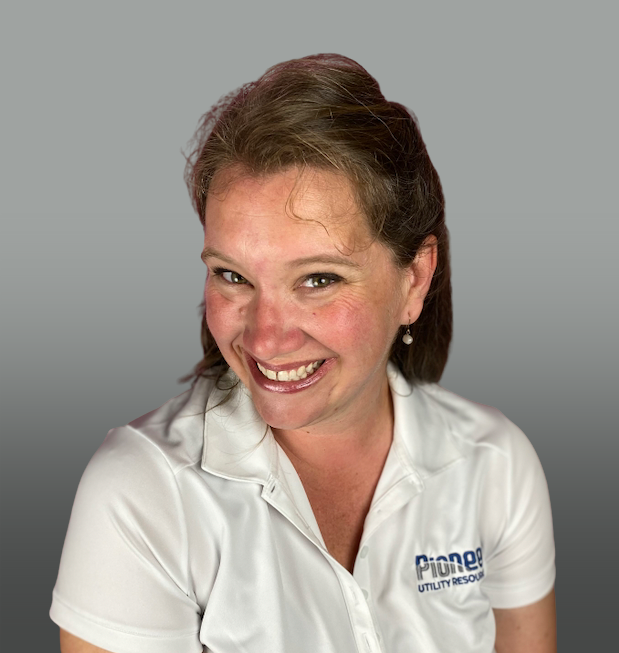
Robin Conover, one of the featured speakers at this year’s StoryConnect Conference, will lead a set of photography sessions as part of a new storytelling skills track. As shorter attention spans increase the importance of pictures in storytelling, we ask the retired VP of communications at the Tennessee Electric Cooperative Association for visual storytelling tips. She previews what she’ll share at StoryConnect, explaining how everything in the frame — even your outfit — tells a story.
Robin Conover
Transcripts have been lightly edited for clarity and readability.
Intro: A production of Pioneer Utility Resources. StoryConnect, helping communicators discover ideas to shape their stories and connect with their customers.
Megan McKoy-Noe: How can you show your story? We’re talking about visual storytelling on this episode of The StoryConnect Podcast. Hi, my name is Megan McKoy-Noe. I’m one of the storytellers at Pioneer Utility Resources and your host for this episode. I am joined today by Robin Conover, one of the featured speakers at The StoryConnect Conference March 8th through 10th in the Great Smoky Mountains. We hope to see you there. She is leading a set of photography sessions as part of a new storytelling skills track at the conference, which is really exciting. Now, if you have not gotten to meet Robin before, she retired in 2022 as the Vice President of Communications for the Tennessee Electric Cooperative Association, and she was editor of “The Tennessee Magazine.” She has spent the last three decades documenting the people and places of Tennessee and has shared photography tips with her readers of the statewide magazine and her monthly column, “Point of View.” Robin, thank you so much for joining me today.
Robin Conover: Hey, well, thank you. It’s great to see you. I’ve been out of the loop for all of three months since retiring, but yeah, good to see you and looking forward to March. Smoky Mountains is just down the road from Nashville, so we’ve got NRECA here, and then I’ll drive down and see you guys.
Megan McKoy-Noe: Yay! We cannot wait to see you, and I’ve gotten to talk to you and gotten to know you over several years. But I’ve always wondered, when did you fall in love with visual storytelling?
Robin Conover: Well, back in my day, so you already dated me to 30 years ago, plus actually, closer to 35, I guess. You know, it was kind of called photojournalism. And that’s that’s what I well, I majored in journalism and minored in art photography because we didn’t have photojournalism at the school I went to back then. So anyway, I just kind of came along, got into it as a work study program to earn my, I guess, room and board is what it was. So I started working for the newspaper and the yearbook on campus, and just a little bit for the local paper when they needed football or something like that. But yeah, storytelling just came across. I didn’t write as much back then as I did so. The challenge was really to tell the story in one picture or two or three, you know, three tops, because we were on newsprint, you know, little newsprint back then for the local paper. So anyway, it was just, tell the story best you can in the images, and then the writer would come along and usually write either as we shot it or after we shot it. You know, and we usually work together with them, but that’s sort of when I fell in love with just this whole process. And then, of course, to get it on a page, way back then when we then had to go to the darkroom and use the hot wax machine, not for stray hairs, but for the actual paste the stuff down on a board and take a picture of it. So been there, done that, the whole thing. But yeah, way back. So that whole process is what I kind of fell in love with.
Megan McKoy-Noe: Well, and I’ve got a bit of a newspaper background as well, so I know how your words, you’re used to write in a style where you might have to lose the last graph or two. And I think it’s really interesting that you started with the pictures and how much can we share in just this picture. You’re talking about how you got started back in school, but now I think we’ve come full circle because our writing has to get smaller and smaller. Attention spans are getting shorter and shorter. Have you seen an evolution in visual storytelling over that time? Has the pictures and the way we share them become even more important with the shorter attention spans?
Robin Conover: Yeah, I think you’re right on target with that because, I mean, we pick up our phones, and if it’s not 122 characters or whatever, you know, you don’t even read. I mean, we edit ourselves now. If somebody posts something this long on Facebook, how much do you read? The first two and look at the picture. You know, and what do you look at on social media or Facebook or websites or whatever? If there’s not an intriguing picture, and you just scroll right by it, you know? So I think that all that has kind of come full circle to where we’re so much more visual than we used to be. And if we do say something or read something or type something, it’s so short and succinct. It is only supporting the image that you’ve posted or printed in an article or something like that. And I know with the magazine, with “The Tennessee Magazine,” we always shot for one big picture that sets the scene. It might be an environmental portrait; just depends on what it is. But yeah, you always go for that one image because the readers, there’s so much that distracts us. If you don’t see something that catches your attention, you just flip and you’re gone. And then you’re back in the classifieds and you’re done. So I think that that has really, really come full circle – that visual is so much more important to all of it now.
Megan McKoy-Noe: And that’s one of the reasons I’m really excited about the conference and really focusing on visual storytelling. It’s going to be a treat. Now, this is not going to be my first time to hang out with you in Gatlinburg. Several years ago I joined you in the Great Smoky Mountains for a special photography walk, which I still remember. It was just the two of us. It was so nice. And I remember watching you. You kept stopping to take in your surroundings, and you would find different vantage points for capturing a lot of nature shots. And I learned so much just walking through the woods with you. I’m wondering how can you find the right angle for showing a story, both in nature, which I’ve had a treat of doing with you, but also when you’re capturing scenes with people. What do you recommend to folks for finding the right vantage point?
Robin Conover: Yeah, and, you know, I do kind of split personality, I guess, because I do a ton of nature stuff. But, you know, in nature, you can’t say, “Okay, scoot over just a little bit.” Or “Run down that road for me,” or whatever. So nature photography really is kind of a discipline unto itself that you just have to be – so much of it is being in the right place at the right time. And a lot of that, you know, we kind of just learn, but you don’t realize how important that might be. I mean, I will even, like, go on Google Earth and see which way a building faces if I’m supposed to go take a picture of a manager or something. Figure out when the afternoon sun is on the front of the building, or is it the morning sun? And then you got the front of the building and the sign and the guy and the whatever. And so a lot of it is the famous f/8 and be there, which if you guys haven’t heard that, look that up, or I’ll teach it when I’m there. So f/8, which is f stop eight, and be there.
Megan McKoy-Noe: Okay.
Robin Conover: And so that’s one of the most important things. And then the other one is just the planning you can put into it. If you’re wanting to show, you know, the guys in the bucket trucks in the warehouse, you’ve got to kind of preplan that a little bit. And if you’re wanting to show – you know, it’s different than like spot moves like going to shoot storm damage recovery or something. You’ve got time to plan for it. And I always tell people that if you, because most people are writers first and photographers last. And most of us, a lot of you guys I know, don’t have the opportunity to have a photographer tag along with you. So you’re the person that’s got to do both. And so a lot of times while you’re sitting there trying to write down words and spell this and spell that, and you miss what’s going on out there. And you miss the certain looks they might have or the shots or whatever. So generally, I don’t do notes. I have a way to record whatever I’m doing. And as I’m speaking with someone, I have my camera right here, and I’m shooting or my iPhone or whatever. So a lot of times you have to kind of divide yourself and either decide that you’re going to rely on something to record your interviews and then just be so aware of what they’re saying or what’s going on or, you know, like, oh, yeah, whatever it might be.
Robin Conover: Well, we restored my dad’s old truck. It’s still down there in the barn. Well, then, “Well, let’s go see it,” you know, and that’s where the photo is going to be, you know, or whatever it may be. But if you’re not tuned into listening or planning a little bit before the interview starts, you’re going to miss the shots. You know, just because you’re not going to be at the right spot or thinking about it. So it’s kind of a, you know, go at it with a little bit of a voyeuristic eye and just really listen to what people are saying when you’re there. And even do a little bit of a pre-interview. You know, you could say, “Hey, what’s your farm look like? What you got? You know, what’s a good time to come?” And just things like that that will make the shoots go a lot better and be a lot more personable.
Megan McKoy-Noe: I like that. And you’re right, I hadn’t thought about splitting your focus with writing and photography, but the photography has to take a big portion of that. Again, visual storytelling is so much more important now with short attention spans. I love that idea of recording it because I’m the kind of person that just sits there and is taking notes, but you’re missing it. You’re missing what could be really good shots in front of you. What is your feeling about posed shots versus the natural shots like you’re talking about, where you’re watching the reactions? I mean, is one more valuable than the other?
Robin Conover: It kind of depends on the story, you know, or depends on. Of course, you always want to get a good portrait. And if you’re on location somewhere, that location means something to whoever you’re photographing. And so you don’t want to just back them up on a blank wall or with a tree behind them. When you have the opportunity to kind of show the scene with that person in it, then that puts two images together. And as long as it’s a good strong image, then that might be the only one you need as an opener. The only time I would zero in on somebody and just do like a headshot would just be maybe to even just start getting them comfortable with you. And so you kind of shoot that, and you show it to them. You’re like, “Okay, well, let’s keep working on this.” So where you might go shoot three or four or ten shots on your iPhone or whatever smartphone you’ve got, I’ve got my camera on me. I’m probably not going to be under 500 on any given feature because it’s just right here all the time when I’m shooting. Of course, that leads to more time on the computer and editing. But yeah, as far as just individual portraits or what I would call a portrait or headshot versus an environmental portrait, and if you’re doing a feature, then it’s an environmental portrait you’re looking for. If you’re doing a this guy got promoted, a lot of times that’s a newsletter type headshot kind of thing. But yeah, I’m always trying to show something in the background. Either the background is very, very important to the story, or it’s another way where you can add more of the information in your cut line, and then that becomes more like a tweet. I mean, 120 characters or whatever then that’s ready to go out on social media or whatever you want to do with it. So yeah, try to tell as much as you can in the background sometimes.
Megan McKoy-Noe: Well, and you mentioned if there’s a promotion or something that maybe you would just use a headshot there. But I think those could be environmental portraits as well. I mean, getting a picture of somebody working with a member or out there working in the field could be pretty powerful too. I don’t know that you need to limit yourself.
Robin Conover: Right. Yeah, right. They really are. Now you know, everybody in the office is going to want that headshot, you know, coat and tie with the studio lights or whatever. But yeah, you can see how excited we are about doing those images because they just don’t tell anything. It’s like, okay, you picked up your shirt that dry cleaner, and you got a promotion, okay. Now, what do you actually do? And that’s what you try to – and sometimes people are uncomfortable if you don’t do that shot. Then they think you’re not doing it right. So if somebody requests a shot or whatever, I try to start with that, and then go on with my ideas after that, because then they’re comfortable, and you did what they wanted to do or whatever. And same thing with like the all the grip and grin and the big check pictures. I cringe every time somebody sends in the big check. You know, we’ve got all these great programs for helping pay for playgrounds or helping the local spay and neuter clinic or whatever it is. But get a picture of what they’re using the money for instead of them shaking hands and handing over the big check because you can’t ever read the big check anyway. So, yeah, all that stuff, there’s always a good thing. And when you’re absorbing media, you don’t look at the big check shot unless you know the guy standing there with the big check. You know, you just go right past it, and then you don’t read all the good things the co-op has done. So that’s always, kids on a playground or wheelchair you help buy for somebody or whatever, that’s always a better shot.
Megan McKoy-Noe: Yeah. Now the “grip and grins” that is a term, and not all of listeners are aware. The grip and grin is when someone’s holding a plaque or a check or anything and they’re just staring straight at the camera. And it’s a deer in headlights kind of moment.
Robin Conover: Yeah.
Megan McKoy-Noe: That everybody asks for, and it doesn’t tell the story.
Robin Conover: And just like retirement pictures, too. That’s always such a, I just can’t stand – the only retirement picture the poor guy gets. He’s been there for 50 years, and they give him a cake, you know. So and now he may be flanked by his family, and that’s kind of nice to have. Go to their house, you know, and get a picture of them at their house. Or go out on his last day of work, ride with him for an hour, you know, or whatever it may be. Do something besides what we’re all comfortable and kind of conditioned the seeing, you know.
Megan McKoy-Noe: So I’m curious. We’re talking about some of the things that make you cringe and make me cringe as well. But you have had a really fun position while working at “The Tennessee Magazine” and working with all of the electric co-ops across the volunteer state. You’ve helped them share local stories. You’ve watched them as they’ve done that. Are there any pictures you’ve seen that have really hit home for you, where you were like “That is what we’re aiming for here?”
Robin Conover: Hmm. Probably. Well, the ones that affect me the most – I’m just trying to think There’s some. I’ll bring some and show them at the conference. But probably, the most, it’s just going out with a lineman during a storm, you know? How many of you have done that? Or after the storm. Just kind of feeling, you know, it’s all the environment to me because I’m outside a lot, so. But when they’re out there, and it’s like 110 degrees and Hurricane Katrina just came through or whatever. Those are more the real photos that I can see. I mean, members and everybody doing stuff is fine, but we normally don’t do terribly evocative stories. I mean, some of them can get around the edges, but mostly we’re printing fun things, interesting things, places to go, things to do, to get our readers into the magazine and to their main pages of the section. So, but any time you can throw a lineman on there with ice hanging off of his mustache or whatever, those are probably, to me, those are the ones that tell the story of what we do. You know, for lack of a better, I’ll have to think about that some more. But I’ll make a note to bring some of those pictures that affected me more.
Megan McKoy-Noe: Yeah, well, I love what you just mentioned, ice on the mustache. And earlier you talked about people when they get promotions, wanting to get dressed up for it. But some of the pictures that make an impact on me are when you’ve got a CEO giving an update, and I’ll see videos. And I pay attention to what they’re wearing. The CEO is not in a suit. You know, the outfit matches the crisis, right? So being aware of clothing as part of the story is important because that tells a story. If the elements are really bad and you can capture –
Robin Conover: I’ve got a good story for you on this one when you finish.
Megan McKoy-Noe: No, no, no, please. Tell. Tell.
Robin Conover: Yeah. So one of the first stories I went on was way back in the early nineties, I guess, and ostrich farming was getting to be big in Tennessee. And so some, I guess, a board member or somebody gave me the story idea about this couple that was raising ostriches in Brownsville, I think it was. And so I’m like “Okay, you know, just dress normal. I’ll be there Friday, whatever day it was. Just kind of be yourselves, and we’re going to walk around and kind of go through a day in the life of the farm with you guys.” Well, so I guess what she does on the side; she’s a Mary Kay consultant. And so, of course, she dressed in her normal Mary Kay consultant stuff, and it was like, this just is not going to work. So we shot for an hour, maybe shot for an hour. And I don’t remember either I asked her to go change or she got something on her Mary Kay outfit. I can’t remember which, but it was like, this just is such a non sequitur. We’re going to have to. And I think honestly, I shot him more with the ostriches in the mud or whatever, you know. But, and that’s one thing.
Robin Conover: You mentioned clothing. I always tell people, you know, be comfortable in what you wear. I want to capture you. I don’t care. Don’t get dressed up for this. Just wear your normal everyday stuff, whatever. If it’s a lineman and they’ve got wrinkles and stains, I might Photoshop that a little bit just to neaten it up. I’m not going to vastly change it or add logos or whatever, but I’ll help them out a little bit. But yeah, clothing makes a big difference. And like we were saying about the retiree parties, you know, and we all know linemen are the worst at trying to get them to do anything, especially bring a shirt that’s clean, you know, that you could photograph them in. But that is important to have some kind of discussion beforehand. And as we all know, red is a great color sometimes. You don’t want to overdo it, but if you can work some kind of red into either an outfit or the background or. Yeah, you didn’t know that one?
Megan McKoy-Noe: I do not know that. No, this is exciting.
Robin Conover: Yeah. Go through your next National Geographic, and let me just flip real quick. But National Geographic photographers are notorious for, in any kind of background they look for, they’re hunting for red. So this isn’t a great example, but it’s got a fire in it. So there’s red down there at the bottom. And so it just really draws your attention in when you see red. And I don’t know if that’s because it’s our lifeblood or what that is in an image, but any time you see red or can work in red, that’s kind of a cool thing to do.
Megan McKoy-Noe: So that is very cool. See, this is the thing. I always learn more things from you.
Robin Conover: There you go.
Megan McKoy-Noe: And you’ve been handing out amazing storytelling advice for years through your photography column. I’m wondering, what are those – besides looking for red and adding red – what are your top three or four tips for visual storytelling?
Robin Conover: You know, one of the most important things is the background, and most people will kind of just pass on that. So it’s going to depend on, you just, you almost have to be say with me. Well, when I shoot, I shoot with both eyes open. And so this eye is kind of looking over backgrounds and things like that. And the other eye is focused on whatever you’re focused on. So either it’s simplifying backgrounds or moving your subject in front of a mundane background. If you don’t want it to play, if they’ve got all kinds of details here and you want all the focus to be on them, then you want a very simple background, one that’s not going to distract. Or you might want a leading line like a fence that’s going to lead into their pose or whatever. So stuff like that just will make it more interesting. And it gives your reader, you know, instead of something right in the center, which that’s one of the first things. Backgrounds and off-center shots. If you just do those two things, it will improve your stuff immensely. So another thing you can do cinematically, when you watch a movie or something on TV or whatever, usually the sequence goes as a wide shot, medium, close up, medium, wide shot, and it just continually does that to kind of keep your interest as a viewer. We do the same thing when we go out on a photo shoot. If you know that you’re going to have enough room for more than one picture, always think about taking a wide shot, medium shot and close up. And if all you have is your cell phone to do that, you know what that requires; walk further away, walk closer and walk really close. You’re the zoom when you have one of these because optical zoom just really aren’t worth much. Anyway, those are just some tips to always move yourself and/or the side depending on the situation with the backgrounds that you want.
Megan McKoy-Noe: I like that, and I like the advice to get a variety of shots. So it’s not all one type of image. Now, my daughter, who you’ve gotten to meet, she asked for a camera for Christmas.
Robin Conover: Oh, what did you get her?
Megan McKoy-Noe: Oh, no, It’s a whole long thing. We’re still working on it. So she’s seven, and I was a little bit overwhelmed because we started looking at the options out there, and there’s a ton. And that’s just for a kid. So I can imagine there are so many options for professional communicators. So when they’re looking at visual storytelling, they know the importance of it, what do you tell them? Do they have to have a $10,000 camera to capture really strong stories, or can they work with something a little more affordable?
Robin Conover: Yeah. So I just did a presentation for CCIA in conjunction with an actual brick and mortar photo store. And Megan, the other day somebody asked me what brick and mortar store was, and I’m like, it’s a building that you can go in. So anyway, I know. So anyway, I found a brick and mortar photo store because Nashville is closed during COVID. And so the closest one to here is either Atlanta or St Louis. And I asked them the exact same question you did me. And, you know, for starters, if you’re just coming out of school or wherever, but your co-op doesn’t have a budget for cameras, then you’ve got a smartphone on your hip. And you know, I’ve heard a lot of pros say the best equipment is what you have on you all the time. And so we all have this. And so there’s no way you can have an excuse of “I didn’t have a camera.” Now, it’s not the end all, be all. Would I rather have a DSLR or a Mirrorless? Absolutely. But with this camera company, we came up with lists of equipment, and it’s like a base list. So you start with your iPhone, then you want to buy a gimbal or then you want to get an Osmo.
Robin Conover: It’s just how you can build that system up. And I’ll bring that to the conference, and I can actually share those lists with you too. But no, you don’t have to have a $10,000 camera or lens, though they’re very tempting. So anyway, but in everything that technology is changing. Everybody’s going to Mirrorless now, which I don’t have. I still have DSLR. I’ll explain that at conference too. It’s just a lighter camera, and it’s changed. It just changes how you view the images, and it’s a whole lot lighter. Pretty cool for video and everything like that. But yeah, you don’t have to have upper Echelon stuff. You can get into it with just this and maybe 300 bucks of accessories. You can do podcasts with this and a good microphone, you know, so. And just the light kits are so much cheaper and easier to deal with now, too. I’ll bring that to the conference as well. So it’s so much more about how you see them than what you’re using to capture it.
Megan McKoy-Noe: I love that it’s it’s about seeing the story, and then catching it with whatever you have around.
Robin Conover: Yeah.
Megan McKoy-Noe: If you can send us those list, what we’ll do is add links to those on our website where we’re going to have this podcast posted. So that’ll be fun. And if folks heard “gimbal,” gimbal is a way just to stabilize your phone if you’re using it. And I think you can use gimbal with other types of cameras as well. But just so that you’re shaking hand doesn’t shake the camera as you move around. So I’m excited to hear about all the options that folks have within different budget points, which is important.
Robin Conover: Absolutely.
Megan McKoy-Noe: Now as somebody who has one of your pictures hanging in my home, it is always a treat to hear you share insights on visual storytelling. I can’t wait to see you in March and get to see all of the different gadgets that you use that can make your story a little bit stronger. A lot of the time you have the idea and then you get whatever equipment you have. But it just helps for someone to say, “Hey, look at this, or consider this bit to strengthen that visual story a little bit more.” So before I let you go, is there anything else that you want folks to think about as they plan on how to capture pictures for their next story?
Robin Conover: Yeah, I would say the background. You know, look at your backgrounds. So you went in and your subject needs to be off center. I don’t care which side whatever, but just get your subject out of the center of the image, and then really look at the background. And so if there’s a – I don’t know why – but people want to go stand next to plants in the office, if you have to take a picture of them. Get rid of the plants. So any stuff sticking out from behind or just if my eyeball, it’s just like writing. If you can’t keep your viewer focused on the image that you want them to see, they look at it, and they’re gone. Rather than looking at it and going in and seeing the horse trailer or seeing the muddy boots or whatever. And so just really look at your backgrounds and controlling what’s behind your subject, detracting or adding to the image.
Megan McKoy-Noe: I love that, especially thinking of everything in the frame as telling a story. And if it’s not telling the story that you’re telling.
Robin Conover: Exactly.
Megan McKoy-Noe: Get rid of it.
Robin Conover: Exactly. Yeah. And, you know, and I’ll say just a little bit. If I were a true photojournalist, I would never touch a thing because that’s not – photojournalists don’t do that. You just witness what happens. But as what we do for our publications, it’s a feature, you know, and so it’s like safety. You’re not going to put in an extra cone that wasn’t there. Pardon the extra noise. That’s my cat clawing on something.
Megan McKoy-Noe: I saw her earlier.
Robin Conover: I know the head came in just a little bit. But anyway, it’s you have total control over feature shots, you know, or cover shots or whatever. And so it’s up to you to have in there what you want and take out what you don’t want. And so that just takes a develop – that just develops over time those few minutes that you take looking around the viewfinder to make sure you’ve got everything in that you want and out that you don’t want.
Megan McKoy-Noe: Very cool.
Robin Conover: Hope that helps.
Megan McKoy-Noe: It does. It does. I mean, I can keep talking to you about visual storytelling all day. But Robin, thank you so much for sharing your story with our family of utility pioneers. I can’t wait to learn from you in person in March at the StoryConnect Conference. She is Robin Conover, a photographer and retired editor of The Tennessee Magazine. And I’m your host, Megan McKoy-Noe, at Pioneer Utility Resources. Until we talk again, keep telling your story.
Outro: StoryConnect is produced by Pioneer Utility Resources, a communications cooperative that is built to share your story. StoryConnect is engineered by Lucas Smith of Lucky Sound Studio.