Share

As far as electric utilities go, Jefferson PUD is relatively young. That hasn’t stopped them from taking some unique steps to bring broadband to rural and geographically challenging areas of Northwest Washington.
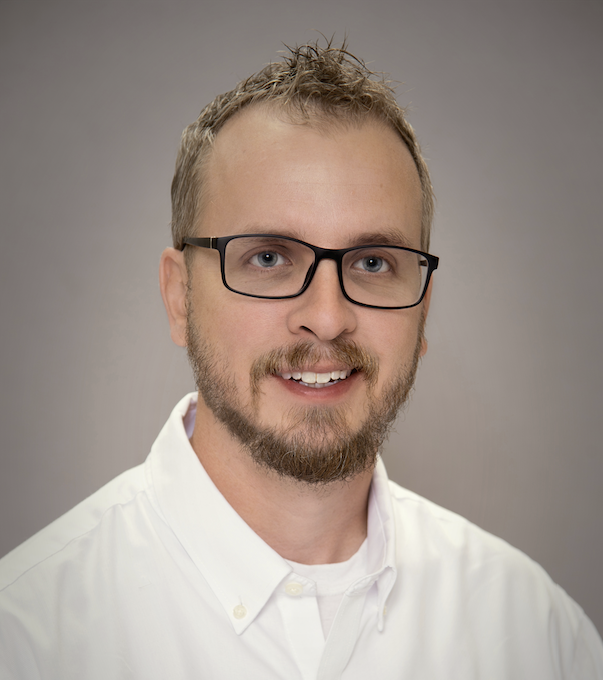
Will O’Donnell
Transcripts have been lightly edited for clarity and readability.
Intro: Rural Broadband Today is a production of Pioneer Utility Resources. Broadband, we need it for work and for school, for our health and our economy. What’s being done to bring broadband internet access within reach of every American? Let’s talk about it now on Rural Broadband Today.
Andy Johns: Hello, and thank you for listening to this episode of Rural Broadband Today. I’m your host, Andy Johns, with Pioneer Utility Resources. We are going to the Pacific Northwest. Will O’Donnell is the broadband and communications director at Jefferson County Public Utility District in Washington. Will was nice enough to be willing to to join me on this episode. We were talking about some of what he’s been doing. His role has changed a little bit. We were out at the NIC Conference out there in Anchorage, actually got to hike on a glacier with Will out there, which was pretty cool. I don’t get to say that about most people. But we were talking out there about the grant writing roles that you had to take a little bit of. And there are obviously a lot of grant opportunities out there right now. So I guess let’s talk first just a little bit about how your role has changed, Will, and what some of the new skills that you had to pick up along the way.
Will O’Donnell: Sure. Yeah. I started at our utility about five years ago. I had no utility experience coming in. I had worked as an executive director for a couple of nonprofits, and then before, that I had started my own businesses. So I’d always done a lot of communications, done a lot of marketing, all those kind of things. I was really excited. Our community did a whole campaign to try to take the power public, take the electric grid public, from the private company that owned it. In the early 2000s, the private company that owned our local power grid had outsourced all the employees, laid everybody off in the territory, and then had contractors moving in and just had remote customer service and –.
Andy Johns: Interesting.
Will O’Donnell: Outage response. Just every every aspect of trying to deal with the company, performance went down, and people noticed and were not happy. And a group of citizens saw in the Washington state law that you can actually condemn the assets of public utility district in the Old Grange rules that were passed in 1938 during Works Project Administration and all that. That’s how a lot of our local public utilities got started in the electric business and co-ops and things like that. Our public utility was formed at that time to be an electric utility, but never happened. In fact, we weren’t even a water utility until 1981. We were just a Jefferson County PUD Number One on the books, but not operating anything until 1981. So ’81 is power. 2008 is the big election year, big change year. And with a 51% vote, the county endorsed the PUD taking over the electric power grid from the private company that owned it.
Andy Johns: 51%. So it’s not like –
Will O’Donnell: 51.
Andy Johns: I mean, that’s a pretty divided – I’m sure that presented its challenges there to be so tight.
Will O’Donnell: It did. Yeah. And it was not a ringing endorsement, and it left some lack of surety about how to move forward, but they kept moving forward. It was interesting because a lot of folks that I knew. I came from kind of, I was in the organic food and organic farming world before this, and there were a lot of folks that kind of bought into some of the propaganda from the private company saying that, you know, there won’t be any solar. There won’t be any wind. We’re buying solar. We’re building wind farms. You won’t get any of these things if you move over to the public utility. But what wasn’t said loudly enough is that we would have, which is what we have now, which is 96% carbon free electricity due to mostly BPA power, 80 some percent, and then a bit from the nuclear power plant over on the Columbia. So it was a big, big change. In fact, our counties, it was like our emissions for the entire county went down by two thirds, I think. Yeah, just through the changeover of going from the private utility to the public power. Because 60% of the generation prior to going to BPA was, it was 60% fossil fuels.
Andy Johns: Big shift, certainly a big change to do that. And then, and that’s a good story to tell, certainly. Then along the way, in addition to electricity, broadband or internet service became a thing as well. So how recently did you all make that jump? And then with that, your role changed as well?
Will O’Donnell: Well, we’re going to go through the whole history here.
Andy Johns: Let’s do it.
Will O’Donnell: So in 2008, the vote went through, took another five years to decide and negotiate. And what we ultimately decided to do was purchase the electric utility from the private company that owned it before. We finally took control in April of 2013. Right around the same time, there was a big federal grant that our partners at NoaNet had received, and we were a sub recipient of that built the first 20 miles of fiber in Jefferson County to connect our anchor institutions. So we got into the electric business at the same time we got into the fiber business. But being that we were brand new to the electric business, and in 2012 had zero electric employees and had to hire them all by mid 2013, the broadband was kind of on the back burner. We had a little bit of a wholesale business knowing that did some of the connections for the anchor institutions. And then as soon as we put in the fiber, our local cable companies also decided to invest in a little bit more fiber in the business area. So some of the hope of connecting more folks kind of got taken away, and we were not in a position to be more aggressive about building out our wholesale business or our open access business.
Will O’Donnell: So fast forward to 2017, and I was working in Seattle, but my kids were in Port Townsend, and I was spending four days a week in Seattle, three days a week in Port Townsend. It’s about a two hour commute. And I was getting pretty exhausted. And it was – I had always been, I’ve always spent a lot of time with my kids. I love my kids. I’m a hands on dad, and I didn’t want to be anything else. So this job came open. It was their first dedicated communications position. I had a lot of opinions on how they could do their communications better, and I told them so in the interview. They hired me. In our county, there’s just such terrible internet access. We’ve got mountains and hills and, you know, practically fjords of long salt water valleys coming up. So it’s not easy to move wires around, and most folks in our county are on DSL. A lot of the DSL systems were tapped out. Internet’s becoming more popular. People are like, why can’t we get decent internet? And they also usually can’t get cell service in these places where they can’t get even decent DSL, where they’re barely getting a megabyte down and not up. So people were coming to us.
Will O’Donnell: Some of our commissioners or elected officials were gung-ho, others were – We were pretty much. We have three elected officials at that time. One was against, one was passionately for and one was not really that interested either way. So what I wanted to do, because it was something that was coming up so much, is I looked around and found a strategic planning grant through the Washington State Department of Commerce. We applied for it. That way we would just try to have a little process where we meet with the community and try to come to some consensus on where we wanted to go with our broadband plan. We obviously had 20 miles of fiber. We were adding to that for our own scada system for the utility. How could we make it so it was feasible for us to add more customers and to engage local ISPs to partner with us? That was the other struggle for us is we didn’t have many local ISPs, and the ones we had weren’t interested in spending a lot of money to grow in the way that would be necessary to reach those rural customers. So we went out – Go ahead.
Andy Johns: And like you said, I know those are expensive builds, and when you’re talking about the topography and natural barriers you all have out there, I’m sure that when you started looking at feasibility, there’s a reason why there wasn’t a lot of availability out there. Because it’s hard work.
Will O’Donnell: Yeah. I mean, I was always under the impression that we’re the local utility. We serve the people. If they have this need, that’s a utility need that we’re by law allowed to provide, that we should provide it. But after seven months of doing a strategic plan, the results were we don’t know what to do. There was clearly demand, but it was unclear if it would pay for itself. And it was unclear if we could, even under the open access model, get ISPs to come. I was cold calling them, asking them what it would take, how do we partner with them? And I would get some tepid response of, yeah, maybe we should meet in the future, and nothing would come of it. So we ended up that with some options, but they weren’t super. It wasn’t a clear green light. It was a yellow light in the fog, which, you know, maybe for some folks would be, would be the reason to say, okay, let’s just pause this. We were able to get a second strategic planning grant, and we really went at the business planning side of it to really look at the numbers in that second strategic planning grant from the Washington State Department of Commerce.
Will O’Donnell: And we wanted to do it, as I want to say, as yeah, as harsh as possible to really look at it. What would it take? What were all the different ways that we would lose money, and what were the few ways that we might break even. So we had about 20 different ways that we would lose money, and two options for making it break even or better. And the two options were we get retail authority, which the Washington state didn’t allow PUDs to have retail authority to actually provide the internet service at the time. Municipalities could do it, but PUDs could not. Co-ops could do it. PUDs could not. And then we needed to have it be largely grant funded. So COVID comes along and all of a sudden the government releases the funds, and then Washington state legislature changes the law to allow PUDs to be retail ISPs.
Andy Johns: Sure.
Will O’Donnell: So we’re given the flashing light.
Andy Johns: Yeah. All across the country, governments were loosening up everything. And when that demand was there, and everybody was virtual school and working from home and there was that need for it. That’s one positive to come out of all that is there were a lot of laws like that were dropped or changed or regulations made easier for folks like yourself to make it happen.
Will O’Donnell: Yeah. And it just made it clear during the middle of our study that, you know, that all of a sudden half of our employees were working from home. More than half. All of our board meetings were remote, and they were very difficult because people had terrible connections. And then the school issues, obviously, we had so many kids who couldn’t access the internet. We were building the drive-in hotspots around our county, which was a great effort. And it was a statewide effort, and we were glad to be a part of it. But it’s just something sad about kids having to drive somewhere and do their homework in a car, in a parking lot. You know, to me it just felt like we had to do more. We could not find a solution in the strictly wholesale model that we were confined to before. Because we were going to have to be connecting folks in very rural parts of the county, and there just wasn’t an ISP to serve them in our area. And the cost of building to all those remote, far flung, not dense locations was going to be really high where our wholesale charges were not going to recover that cost. And it’s a huge risk for the utility.
Will O’Donnell: And that was the concern among our elected officials who are nervous about this, was that we’re putting our electric ratepayers assets on the line. We’re putting all of their energy at risk by taking this jump. So we wanted to make sure that we were, if we’re betting with the house money, that we had as many odds in our favor. And with the retail authority and with the government funding, that’s what we had. I think they were a little surprised when we really have been so aggressive about going after all of these grants. And then we started getting all of them, and now it’s, “Oh, my god, we’re really in the business. We have to do that.” And we haven’t started building yet. That happens after the New Year. So that’s going to be, each step is a bigger challenge. You know, be careful. Be careful what you wish for. Writing all these grants has been among the hardest things I’ve ever done. And now I’ve got to help oversee construction and get the whole business off the ground. So it’s going to be harder still. But I’m excited about the challenge and so is our utility.
Andy Johns: Sure. One of the things that that puts those odds more in your favor, as you said, is some of those grants. That’s what they’re out there to do is to help make it work. So which kind of grants, you mentioned the grants about the strategic planning that you got early on. Which kind of grants have you all applied for and and gotten here the last few months?
Will O’Donnell: Yeah. So we were prepping to do an application to the NTIA for their broadband. It was the BIP program. I can’t remember what the acronym stands for, infrastructure projects. And our state then stepped in, and they became the lead applicant. We were a sub applicant. We received that award. And then we had another round of state grants that was administered by with ARPA funding. We received those grants. We have a local public works board. We got two grants from them. One won $1,000,000 to connect a very small rural area and another 2 million to build fiber to our business district. That one is a loan, but it’s 0.4% interest over 30 years, so it’s pretty hard to beat. And unbelievably, we were the only ones in the state to apply. Just our utility. Nobody else, no other municipalities. I mean, I couldn’t believe it when I read the initial announcement of the grant. They had the definition of unserved for a business area was one gigabyte down and 50 megabytes up. In Jefferson County, nobody provides that. We have, sort of, one gigabyte down from our local cable companies, but they don’t provide 50 megabytes up. And in fact, I wrote them to inform them we were going to apply so that they could challenge if they wanted to. And they wrote me a letter saying, we serve that area. We provide one gigabyte down and 20 megabytes up. We consider that area served, and it’s like, “Thank you very much. Just prove my case for me.” So.
Andy Johns: Yeah, because 30 up was the threshold, right?
Will O’Donnell: 50 up.
Andy Johns: 50 up, okay.
Will O’Donnell: 50 up, which they can’t do.
Andy Johns: Yeah, they can’t do. Interesting.
Will O’Donnell: So we got that, and so we’ll be building to our local businesses as well. Which some folks are a little upset about because the first goal was to get the unserved customers. Why are you also focusing on the business customers? Well, our business customers can’t get better internet. I mean, they want to have symmetrical gigabit Internet. They can’t get it. It’s kind of ridiculous that they can’t. And with that kind of opportunity, I just didn’t feel like I could pass it up.
Andy Johns: Yeah, definitely so. So let’s talk about the communication side of things. So that’s what you had been doing before. But then the grant writing is, I don’t know, as somebody who has been a writer for a long time, grant writing always seemed like this mystical, scary other form of writing that was always kind of intimidating. But as you get in, and as I understand it, you had to be the one to do a lot of the writing and gathering stuff together for those grants. Is that correct?
Will O’Donnell: Yeah.
Andy Johns: What were some of the things that you learned when you had to shift gears and do some of that grant writing?
Will O’Donnell: I think we talked about this at dinner one night in Anchorage. My first metaphor for grant writing would be it’s like investigative journalism and doing your taxes. So if you’ve been a reporter and you’ve had to research a story and you’ve had to really research it, like if you’re going to try to figure out the the inner workings of some local law or something like that or some sort of corporate espionage, then you’ve got to immerse yourself in how the whole system works. That’s a little bit what like grant writing is. You’ve got to read these ridiculous rules and kind of cut through to the heart of what it means. And then you don’t have to provide any narrative or emotion. But if you do and you can kind of see through to the heart of what you’re offering, because it’s generally for a public good, you’re just going to have that little bit of shine on your application, that other folks are not going to be able to bring when it’s just being prepared by an engineering firm or the engineering department. The engineering department is great, but they look at things a little bit differently.
Will O’Donnell: In fact, I would say the best thing is you need a partner like the engineering department, or you need an engineering consultant to make the best kind of application. Because you need to have both the technical side and a little bit of the narrative side. What I have found is that you have to like, that reading between the lines, you have to know what the grant makers are wanting, which is not always what exactly what you’re wanting to do with your project. They have a certain set of goals that they’re trying to pass on to the legislature, that they’re trying to enact based on other things like that. And you have your own departmental goals. You’ve got to figure out a way to make the case that you’re serving them as well as you’re serving your own needs, if that makes sense. You know, and moving into the broadband sphere is a community process. You’re serving your community. You’re growing your utility business. So it’s hard work to do, but engaging that broader utility or broader community is so essential, and that’s really work that the communications department can shine in.
Andy Johns: Definitely. And that answer leads to a couple more questions, but I’m going to stick to the one from earlier. So where do you start? You know, let’s say tomorrow you hear about a new grant that’s out there that you think might be a good fit. And you have, you know, like you said, a month or two to apply for it. Where do you start? I guess the first step, you’re kind of evaluating whether or not you’re going to apply for it. But then after that, do you start pulling a team together? Is it you that just starts writing? I mean, how do you even start?
Will O’Donnell: Yeah, at this point, I’m the project manager. We’ve been lucky that we’ve got a consulting firm that we’ve worked through that does a lot of the number crunching because they’ve been in this game for over 20 years, and they’ve helped lots of utilities apply for grants. So we designate an area, they crunch the numbers. They do the preliminary engineering. They spit that out. They give it back to me, and then I start pulling in all the supporting information, and then punching the numbers into the format that the state agency or the federal agency wants to do the application. But the big thing that I would say is you’ve got to know your odds of getting that grant. In the last round, we just applied for an $18 million ReConnect grant. We were prepping an application last – I started this work in the fall of 2021 to prepare for ReConnect Three, which was in February/March timeframe. We didn’t make it. We were just too busy. I was overwhelmed. I couldn’t get that in time. We put that one on hold to go to the next round. And I’m glad we did for a couple of reasons. If we had gone for ReConnect Three, we’d have gone for 100% grant. When I saw the areas that were awarded the 100% grant (1) there wasn’t a lot of them. (2) They were so remote and isolated. We would never have competed.
Will O’Donnell: We did not have the poverty levels. We’re considered a distressed county in our state. But compared to areas of rural Alaska, rural Arizona, and rural Mississippi, we might as well be a wealthy urban area. So we would not have won that, and that would have been a ton of work because those are huge grants.
Andy Johns: I’m sure.
Will O’Donnell: Huge applications. So what we did is we actually we talked it through, and we decided to go for a grant-loan combination 50/50 grant/loan. Because it’s months of work to prep everything and put it together, we want to have a better shot of winning. Now, a loan is not obviously as good as having a grant, but if you can’t get a grant at all because you can’t be competitive, but you can be competitive if you’re in this category, then I would go for it. And the same with like with the state grants. If it’s a $30 million pot of money total that they have to give out, don’t put it in a $20 million application. Don’t do it unless you really have your game worked out, and you know that you meet everything to a tee. And you’ve probably know the funders, and you’ve got the inside track. You’re just not going to get it, especially if you’ve never gotten a grant before.
Will O’Donnell: Put in something smaller. Keep your scope more manageable. And you know what? We did that for one of our grants where I was wanting to be very careful. We put in $1,000,000 application, and then one of our neighboring PUDs got $20 million bucks. And I was like, “Damn, we should have been more aggressive.” But the next grant that came available, I went for $12 million, and we got it. So it was a good lesson. But the main thing is I wanted to get the money. I wanted to put in all the work and have it pay off. Because it’s so discouraging to put in all that work and a lot of staff time and maybe consulting time, and then not get it. So be very careful with your scope and read the rules really carefully. Because so many folks, no matter how compelling of a case, no matter how many unserved or low income people you’re going to help out, if you miss a couple of things like not notifying the existing local ISP’s or not having your audited financial statements turned in. Just little details like that, I mean, those are pretty big ones, but there’s some little details. If you just miss those, you’re out of the running. So that’s where that, you know, approach to looking at it like a tax return comes in handy.
Andy Johns: I was about to say, you said investigative reporting and filling out tax returns and sounds like both are equally important.
Will O’Donnell: Yeah, very important.
Andy Johns: So the last two questions that I have for you.
Will O’Donnell: Sure.
Andy Johns: You’ve mentioned state opportunities being, I’m not going to say easier, but maybe not quite as many requirements and certainly not as much competition maybe as federal grants. What kind of opportunities are available in Washington, or what are some of the things that the state has put out there, the broadband office or whichever department is doing it? What are some of the opportunities that you guys have and some of the programs there in Washington?
Will O’Donnell: We’ve been really lucky. We’ve got three agencies. We’ve got the Washington State Broadband Office, which is new. And they’ve given out the most money recently. They’ve had bigger pots, and they’ve also done the, where they’ve gone after the NTIA grant, and then we were sub recipients, which was really helpful. I mean, honestly, that’s the best way to go after federal funds is to have your state agency be the lead and be a sub recipient. It’s going to be a lot less headache and a lot less red tape to deal with. We also have a public works board that’s under the Department of Commerce, as is the Washington State Broadband Office. And the community – the CERB board, and I can’t remember – but they are Community Economic Revitalization Board, and they gave us our first strategic planning grant. And they also do some broadband infrastructure funding, but more related to economic development. We haven’t gone after those funds to date. But yeah, so it’s been great. We’re lucky with we’ve got a great team at our state. They, like everybody else, have struggled to keep it staffed during COVID. They’ve had a lot of turnover. They’re just getting started, and they’ve got this huge task. I mean, it sounds great. They had, I think, $300 million, $250 million to give out. They gave out $100 million already in one chunk of grants. They just opened up another grant for $100 million that they’re going to be awarding, I think, in January that we’re applying for. But it’s a huge job to review all those applications. Just like it’s a huge job for us. So there’s been some frustration in our state about who won and who didn’t because we’ve won. I’m very happy with their work.
Andy Johns: Right. You’re not going to argue.
Will O’Donnell: I’m not going to. Yeah, I’m very happy.
Andy Johns: So one of the things that that I’m sure has come out, we talked about storytelling a little bit, and you mentioned it earlier, talking about the stakeholders and the people in the communities. But I would imagine that deep into these months long processes, it can be easy to lose sight of the why and what you’re after here. But have there been some moments along the way when you’re talking to those stakeholders or you’re talking to the businesses you mentioned? What kind of feedback have you gotten from folks? Obviously, you’re not connecting people yet, but what are you hearing from the community as you guys are kind of being the champion for them to go out and go after some of these grants?
Will O’Donnell: Oh the community is –
Andy Johns: Specifically on the broadband side.
Will O’Donnell: Yeah, in the broadband side, the community is like, “Well, what took you so long?” And they’ve been signing up, you know. I’ve done hardly any outreach because I’m not quite there or where, you know, we’re still a ways off from building. It’ll be next spring. But we have a sign up form for people to accept broadband or fiber to the home built to their home at no charge to them covered by the grants. And with almost no marketing, people are signing up for it like crazy. We just finished up a new sign up. I had kind of a sign up module I built through the website. That was very simple. We just licensed one from CrowdFiber that will show them if they’re in the project zone, if it’s not. It gives them all these other options. So we’re just going to be rolling that out next week. People have been so excited. The harder thing has been, just like anything else, you have to figure out who is the target community you’ve got to market to. For me, I’ve had to do a lot of marketing to our board to accept these loan projects. Especially, we’ve been very lucky to get all of these grants, but so it’s been like, “Well, why do we want to do a loan? We’re going to be paying that off. That adds more risk to our customers.”
Will O’Donnell: So I’ve had to do a lot of convincing and a lot of marketing and a lot of communicating about why this is important and why this better serves our need than going after X, Y, or Z grant. And then, you know, it’s been learning to speak a new language. We have now, I think, we’ve now got a contract with a network engineer to start in January. So for the last year, we’ve been building a broadband business without a network engineer, and I’ve had to read all kinds of weird textbooks and take classes and figure out some of this stuff so that I can, (1) do the grants and (2) also just keep moving our project forward. Luckily, that’s fun, and I think that’s what, you know, again, with the investigative journalism, not that I don’t have that background. I only wrote for my high school and college papers. I didn’t write for newspapers after that. But you know, the principles of you got to immerse yourself in a world and try to make sense of it. And the fun part of it being a communicator is you have to not only make sense of it, but translate it into language that anybody can understand. And that’s the real magic trick. And that’s what you have – that’s a superpower that you bring to any grant writing process as well, when you’re a communicator.
Andy Johns: Well said. I think that’s good insight. In closing here, last thing that I’ll ask you, that may have been the third or fourth time that I said last question, but this is a real question. What advice do you have for somebody like me who has seen grants out there and just said, you know, grant writing is too hard. You have to be a special grant writing person. You have to have experience to do that. What advice would you have for somebody who may be looking at it and thinking, “Hey, there’s a grant out there that would really help my community, but I just don’t know what to do.”
Will O’Donnell: I would say get a coalition together and be part of a team to do it. And don’t be afraid. You know, also I would say, don’t apply for it if it doesn’t – get your coalition together. Read everything. Get yourself a draft plan or a draft scope of work for how you’re going to address it. But if it looks like it’s not going to really work out, or if what you need is not what the grant organization really wants to fund, don’t do it. It’s a lot of work. You know, it’s a lot of work for something if it’s a low shot of actually getting it. So you would be just as wise to not apply for things as you are to apply for it.
Andy Johns: So don’t be scared, but do be selective. Sounds like what I hear.
Will O’Donnell: I like that. Yeah.
Andy Johns: There you go. Perfect.
Will O’Donnell: Thanks for putting those communications skills to work and summarizing that eloquently.
Andy Johns: Perfect. He is Will O’Donnell. He’s with the Jefferson PUD up there in Washington. Will, thanks for joining me.
Will O’Donnell: Hey, thanks, Andy.
Outro: Rural Broadband Today is brought to you by Pioneer Utility Resources. Rural Broadband Today is engineered by Lucas Smith of Lucky Sound Studio.