Share

From harnessing net promoter scores to refining your strategic marketing plan, Schurz Communications CTO Tom Williams shares highlights from his speech at Calix ConneXions 2023.
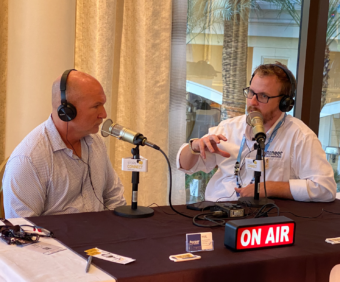
Tom Williams
Transcripts have been lightly edited for clarity and readability.
Intro: A production of Pioneer Utility Resources. StoryConnect, helping communicators discover ideas to shape their stories and connect with their customers.
Andy Johns: How does everything come together to give you a competitive advantage? That’s what we’ll be talking about on this episode of StoryConnect: The Podcast. My name is Andy Johns, your host with Pioneer. And I’m joined on this episode by Tom Williams, who is the CEO of Schurz Joint Venture. Tom, thanks for joining me.
Tom Williams: Hey, thank you, Andy, for having me.
Andy Johns: We are here at the epicenter of independent and rural broadband providers, here at the Calix ConneXions Conference in Las Vegas. And Tom will be a speaker here on the main stage on day two, and was nice enough to come by the podcast booth that we have here to cover some of the areas that he’ll be talking about then. But first, there’s a lot to get into here. You were a speaker last year. I want to get into some of the Net Promoter score talk, the multi-gig talk. You know, just somebody who is a strategic thinker in a lot of areas, particularly when it comes to competition. But I guess first, give us a little background. We don’t always do this with the episodes, but Schurz Joint Venture is a little bit of a different setup than some of the other ISPs that we’ve brought on. So give us just a quick overview of who Schurz Joint Venture is and kind of your role, how it all works.
Tom Williams: Yeah. So it’s interesting, I’ve been with Schurz Communications for the past six years as the chief technology officer for them. And technically, I’m still the chief technology officer for Schurz Communications. But what we have found is that unless you go out and attack the markets, you’re going to be in a losing state. And while the big guys Comcast, Charter and others, they like to call it “edging out.” What they’re really doing is they’re just overbuilding smaller ISPs in the area, and they’re taking our subscribers. It’s just going to happen, and it can be anywhere from 25 to 30%. And if we don’t start going and attacking these various markets, their markets and hurt them, then we’re going to be in a losing state. And our revenue is going to continue to decline. So Schurz Communications went out, and they got a little bit of money, and they’re going to be building and expanding around the existing markets that they have today. They also realized that there’s more that can be done that they just didn’t want to really get into from a financial standpoint. So they’ve moved into the idea of creating a whole new joint venture. They put some money in. Another private equity fund or an infrastructure fund, put some money in, and we create a whole new company, a completely separate company –
Andy Johns: Interesting.
Tom Williams: – from the Schurz Communications’ operations. And as a part of that operation, I’ll be the CEO of that new company.
Andy Johns: Excellent. It’s an exciting time then, to jump off and to kind of create something new. It’s exciting.
Tom Williams: It is exciting. And what we’re going to do, we’re looking at how we can be complete disruptors in the marketplace. And nothing against any of the other new entrants, there hasn’t been any real disruption going on. You kind of see the same speeds. You kind of see the same pricing. Yeah, maybe a little bit lower, maybe a little bit higher speeds, but it’s still basically the same thing.
Andy Johns: Sure.
Tom Williams: What we want to do is we want to come out and be disruptors. We want to send a ripple across the entire broadband market, and we think we have the right models. Not just from a speed and price perspective, but how we’re going to utilize services and automotive intelligence, and being able to self-provision, make life easier for our future subscribers. So that when they work with us on a day-to-day basis, whatever that may mean, they’re getting to us as quickly as possible and as easily as possible.
Andy Johns: Interesting. I look forward to following that as you’re putting it together. I know that you’re limited kind of in some of what you can say, but you touched on a lot of things there that I want us to get into. So the competitive part of it, I know is already something, you know, you’re not ashamed to be aggressive there. You know, you’re talking about fighting and, you know, hurting the competition. What are some of the ways that you guys have done that? Let’s talk a little bit about the past before we talk more about the future. You’ve talked about last year at your session about how that multi-gig approach kind of differentiates you guys. You talked about the customer satisfaction angle and how dramatically you guys improved your Net Promoter Score. Get into a little bit for us. How do you do that? How do you fight competition? And if somebody’s been complacent for whatever reason, how would they go ahead and start fighting competition the way you’ve talked about?
Tom Williams: Yeah. You know, it’s interesting. About three weeks ago, I live in one of the big C markets. I actually live in Atlanta. And I had a simple question that I needed answered. It was nowhere on the web. And I ended up calling customer service. And after 30 minutes of just sitting in their revolving automated system, I still could not get to anybody. Now, if you call any one of my systems, you have a prompt. It’s either do you need troubleshooting or service, or are you a new subscriber? And then when you press that button, you get a live voice. Completely different experience. And that’s one of the ways that we were able to change our NPS score. Over the last few years, it’s just gone through the roof in the way that we’ve been able to change it. So my message is staying local. Well, how can you do that? That’s really going out and finding different applications that our service technicians and our customer service reps and our technical support people can utilize to help service the customer without having to go outside. So then you ask yourself, okay, you can go out and reinvent the wheel and spend hundreds of thousands of dollars and build custom applications.
Tom Williams: Or you can look at the vendors that are out there. What have they put together, and how can you integrate that into what you’re currently doing today? That’s one thing we did with Calix. We brought them in, and they looked at how we did our operations, and they created managed services around what we needed. So now our customers, when they call us, we can react to any kind of router issues that are going on. We can see what’s going on in the network and be able to react to that. We get notifications before the customer knows that there’s an issue. All of those things change NPS scores, because now we’re actually able to help the customer before they call or when they call immediately. And our time to market, as far as – it’s funny, when you listen to our operations calls, we’re at same day, every single day, just about on both service and install. Which means we’re reacting to the customer faster, and it’s through these tools that we’re able to do that.
Andy Johns: Now to unpack a couple of terms that you used there. So when you talk about managed services, let’s go ahead and unpack that a little bit. For folks not familiar, some of the things you’re talking about, obviously manage Wi-Fi but but it goes well beyond that with some of the other services, either from Calix or other providers out there.
Tom Williams: Yeah. You know, we’ve really put a lot into the cloud. We used to have, for instance, a voice system that was a hard switch that was in our headends, taking up space, taking up power. We completely virtualized all of that with a company called Alianza, and that made our operations much simpler than what they were today. And that’s really what the key is, is going out and finding the right solutions that makes your operation easier without building custom applications just for the sake of building custom applications, because you feel like you have to have every single feature, as opposed to working with a company that will integrate the features that you’re looking for.
Andy Johns: And you said last year that that services like that, like the CommandIQ app and others really help you guys punch above your weight and make you seem like, you know, kind of the dichotomy there where you’re talking about staying local, but also wanting to act and operate like a much bigger company that lets you kind of punch above your weight to have those services.
Tom Williams: Yeah. And that’s, again, another place where you’re not reinventing the wheel. I would not launch CommandIQ, quite frankly, and I had deep conversations with Michael Weening, and I sit on the Leadership Advisory Board, and they made significant changes because of the feedback that was there. And now it’s a really great app, and an app that our customers can use. And you add on ExperienceIQ and ProtectIQ. Those are all areas that gives our customers more power over their own product that they’re acquiring from us.
Andy Johns: We’ve talked about the experience quite a bit, but we all also know that the speed is an important factor, too, even if it’s not the deciding factor that it was just a couple of years ago. How do you guys think about multi-gig? And I know you guys have talked about that XGS-PON and getting into, you know, 2.5 and beyond speeds. How are you guys thinking about that when you look strategically either at the existing services or the new joint venture?
Tom Williams: Yeah. It’s funny, just a couple of days ago, there was an article that came out that really made me laugh, and it was Comcast is launching two gigabit symmetrical service over their DOCSIS plant. And that really made me laugh because they made such a big deal and a big splash. And gosh, we’ve been doing over two gig for a while now. And the reality now that there’s routers and certainly the Calix u10xe that has a 10 gig port on it with Wi-Fi 6e, right, I can now go up to a 10 gigabit service. Now, of course, because of Ethernet overhead, you’re not going to get over maybe 8.3. But the reality is, is they’re jumping up and down because they can do two gig. Well, we’ve been doing two gig for years now, so way to catch up. You know, and they’re saying that they’re the innovators, and we’re not. So, you know, I think speed plays a really important part in all of this. But it’s really being local and having the applications to the customers, being able to level on various sources on top of broadband that are certainly more sticky, that will keep the customer with you, and providing great service because you’re local, and you’re not farming your calls off to other countries, for instance, which we know that they do. I think that’s how you can really be a winner in this space. And be able to take real share. And I said 25 to 30% that a big C will take when they come into your area. I’m saying we can go take 33 to 50% because of the way that we interact with our customers compared to the way that the big C’s do.
Andy Johns: Interesting. I like the approach there. Now and you just touched on it; I want to follow up on that. So the marketing budget and the storytelling – and obviously this being StoryConnect: The Podcast storytelling is a lot of what we focus on – that narrative that’s out there about, oh, the innovative companies like Comcast and some of those others. How can you see folks flipping that script, or is that something they even need to spend a ton of time and energy to be seen as the folks, like you just said, that have been offering multi-gig service for a while, even though, you know when some of the big guys do something, they may get a lot more of the headlines and make it a much bigger deal. A) is it important to flip that script? And then B) how do folks go about doing that?
Tom Williams: Yeah, definitely need to flip the script. I think we need to spend the time, the marketing time and the advertising time and even the press releases, and really talk about what we’re doing. Because we are doing some amazing things. Yet –.
Andy Johns: It’s true.
Tom Williams: – you rarely hear about it, and it’s certainly not in a, if you do, it’s not an exciting time kind of way. It’s more of a, hey, we’re launching X service and. You know, let’s get excited about what we do because what we do is so very important. It’s bringing information to people. And that information could be tragic. It could be happy. It could be sad. But it’s important to that user, and it’s really important what we do. So I think we need to talk about us more and what we’re doing as an industry and as fiber companies. And I’m not talking about Verizon and AT&T. I’m talking about this size, the tier twos, the tier threes, the guys that are gutting it out every single day in these networks to bring the best possible service for their customers.
Andy Johns: Last thing I had for you, if you’re, you know, like I mentioned earlier, if there are folks who have become complacent or maybe they just haven’t had to deal with a lot of competition before, if they’re looking at expanding into an area with some competition, or if a competitor is starting to overbuild them, what advice do you have for somebody like that who’s suddenly facing one of the – in whichever direction – one of the big telecom providers out there or cable providers, what advice do you have for folks in that circumstance?
Tom Williams: Yeah, that’s a great question. And I can tell you, of the six broadband networks that I’m responsible for under the Schurz Communications area, we’re getting hit by the big guys at every single one of them. You know, I think, and I’ve said it probably too many times, but staying local is so incredibly important. In our latest NPS, And I’ll say this on the stage on Tuesday, one of the interesting things, the number one line item was that my company’s local, that our customers saw as the value to us. And what’s even more interesting is that if they were given an offer for $50 less from one of the big Cs that was mentioned for this specific system, would you take it? And the answer was no. And that’s how much they find in the value of the product that we give. We’re reliable. We’re local. We’re transparent in what we do. And I think that there’s a value number to that, that the customers just, they want to stay with us. And what’s interesting is, is all the areas that we’re getting hit, they are not seeing the penetration growth that they thought that they were, because we’ve reacted to the pricing that they’ve done. And while not going completely under where they are, these promotional pricing that suddenly pops up, you know, 3 or 6 months later and being double and triple.
Andy Johns: Yeah. Funny how that works.
Tom Williams: Funny how that works. And their lack of transparency and bills. We just looked at a bill from one of the big Cs. I’ll keep them anonymous.
Andy Johns: Okay.
Tom Williams: And what was interesting was they had $58 of extra charges in different service fees in their bill. And that’s really telling. And I think people are tired of being bamboozled by these cable companies, and so the telcos.
Andy Johns: Somebody said, you know, they like to be local. They don’t want to be “yokel.” And I think that’s a big part of it is that – and I remember. And I know that I said that was the last question. But we may go just another minute here if you don’t mind.
Tom Williams: No.
Andy Johns: I heard folks say a couple of years ago, like, give me your value proposition without saying we are the local good guys. And folks had to, you know, had to offer the technology and had to offer, you know, the service level. But it feels like a lot of technology is caught up. So, you know, for the, especially with the smaller companies, I think there’s a temptation sometime to maybe get away from that local identity at times. But it seems like the pendulum has definitely swung back and that can be a real asset for them, as it has for you guys. Because it would have been easier just to kind of go back to the Schurz Communications, it would have been easier for you all to rebrand those all as one brand, but you made an effort to keep those with individual general managers and individual brand names for those networks across the country. That was an intentional step from you guys.
Tom Williams: It is. And actually, it’s something that the Schurz family is really proud of and the senior leadership team is really proud of is that we have these different brands. And we don’t just come in and make an acquisition, and then we change the the management out. And we don’t change the brands. We keep everything consistent. We just make some tweaks, and we help them. So from an identity perspective, we love that our identity is local branding. Names that the areas have known for years and years and years. And we love that.
Andy Johns: Anything else to add before we wrap up? Do we cover everything you wanted to talk about?
Tom Williams: Yeah, it was great. Thank you very much for having me.
Andy Johns: Perfect. Thank you so much. He is Tom Williams, the CEO of the new Schurz Joint Venture. I’m your host Andy Johns with Pioneer. And until we talk again, keep telling your story.
Outro: StoryConnect is produced by Pioneer Utility Resources, a communications cooperative that is built to share your story. StoryConnect is engineered by Lucas Smith of Lucky Sound Studio.