Share

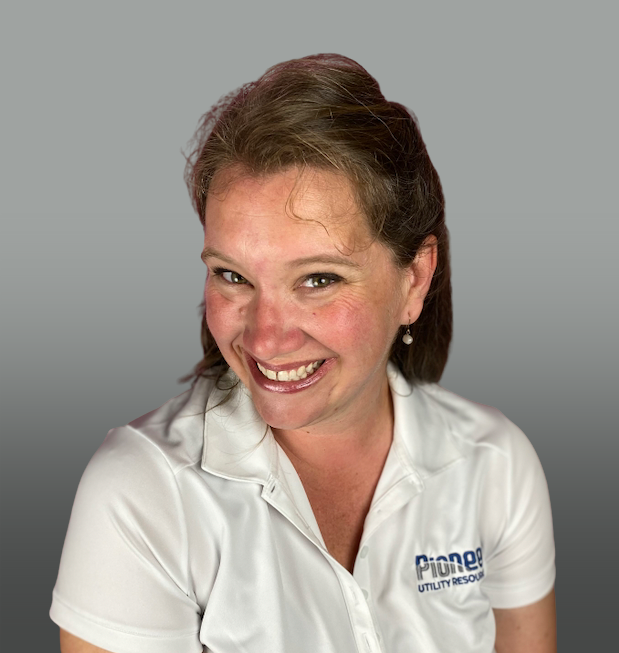
The broadband packages at SCTelcom don’t focus on speed. Instead, they highlight experiences like the connected family, high techies, home tech starter and a package for a simple and secure experience. Wendy Crenner shares how her team uses the power of narratives to connect with subscribers.
Wendy Crenner
Transcripts have been lightly edited for clarity and readability.
Intro: A production of Pioneer Utility Resources. StoryConnect, helping communicators discover ideas to shape their stories and connect with their customers.
Megan McKoy-Noe: How do you weave compelling narratives into your marketing strategy? That’s what we’ll be talking about on this episode of The StoryConnect Podcast. Hi, I’m your host, Megan McKoy-Noe, one of the storytellers at Pioneer Utility Resources, and I am joined by Wendy Crenner. She’s the director of marketing and brand awareness, which nice title.
Wendy Crenner: Thank you.
Megan McKoy-Noe: I have to say, at SC Telecom in Kansas, and we are podcasting from the Calix ConneXions Conference. So we’d like to say that any background noise that you might notice, it’s ambiance to set the mood for inspiration. Are you feeling inspired?
Wendy Crenner: I like it. I am very much, yes.
Megan McKoy-Noe: Oh, it’s wonderful. And we even have, this is amazing, I love Calix where folks just things, connections just happen. It’s a beautiful thing. So Justin Bell from Kanokla, which is close to you, I believe.
Wendy Crenner: Yes. Very close.
Megan McKoy-Noe: So he is here, and he’s actually taking some video from the side to help us get a really beautiful view of what it’s like to hear ideas from you, Wendy. So no pressure at all.
Wendy Crenner: No pressure. Nope.
Megan McKoy-Noe: No, no. But we thank you, Justin, for just adding another angle to storytelling. That’s what we’re all about, right?
Wendy Crenner: Absolutely.
Megan McKoy-Noe: So Wendy, thank you so much for joining us. And I have to say before we even dive into this, congratulations, right? SC Telecom won a 2024 Smart Rural Community Showcase award, which is huge. I mean, it’s amazing for developing a community-wide Wi-Fi coverage program to make sure that folks can connect to first responders anywhere in the community. Is that a good way to describe it?
Wendy Crenner: Absolutely, yes. We have some access points in public spaces and in a lot of our communities, they had little to no cellular coverage. So obviously that posed a very high safety security risk. So yeah, they are thrilled with the solution.
Megan McKoy-Noe: Well, it’s such a powerful service and something that I think a lot of folks can say, oh, we should we should check into that. We should do that. So, thanks for doing that. I know you’re going to be speaking about that in part just for making that kind of an impact in your community. And I think it goes back to what SC Telecom is and how much you believe in the power of community.
Wendy Crenner: Absolutely. It definitely falls in line with one of our brand values. Invest in our neighbors, and we really, truly believe that and try to live that every day.
Megan McKoy-Noe: I can tell. Well, you spoke on a panel about how SC Telecom harnesses the power of community and compelling narratives that you’re telling about your community and in your community, and you harness all that into your marketing strategy. Can you share the top ways that your team does this?
Wendy Crenner: Yes, absolutely. I think there’s many, many ways to approach that. But I think the first one for us is to get involved in your communities. You know, SC Telecom supports our communities financially, obviously, but we really strongly encourage our employees to dedicate their time. You know, if they have something that they’re passionate about within those communities, SC Telecom supports those. We also like to do in person events in our different communities. That’s a great way to interact. We participate in, you know, the local parades and the local 4-H celebrations. And to me, that’s really showing our communities that we care, and we’re building that trust with them.
Megan McKoy-Noe: Well, you’re present. You’re not just giving them money or whatnot.
Wendy Crenner: Absolutely. Which both are important.
Megan McKoy-Noe: They are.
Wendy Crenner: But, you know, sometimes I think organizations forget about the importance of employees’ time, and to, you know, devote time to something they are passionate about.
Megan McKoy-Noe: What are some examples of groups that your employees volunteer in?
Wendy Crenner: So we do blood drives. We also, we have smaller communities, and they have the 4-H kids. So we have a lot of employees that will volunteer their time to help clean up the grounds prior to the event. And then we also have some employees that have personal, you know, passions. We have one employee that’s very passionate about muscular dystrophy, and so we support him. You know, we allow him to take time to do what he needs to do to raise money for that. So I think all of those are really important, you know, to provide for your employees and your communities.
Megan McKoy-Noe: Sure. So you are identifying the passions of your staff and finding ways to align those with community initiatives and making it possible for them to spend more time in the community. And I think especially, you know, October is cooperative month, I get giddy about co-ops. So I think concern for community, we all get. But then how do you take that and turn it into a compelling narrative for marketing? Because sometimes we don’t like to toot our own horn, you know? So how can you make that tie? Bridge it from “Yes, we do amazing things in our community, and we’re seen in the community.” But how do we turn that into a good marketing strategy?
Wendy Crenner: Absolutely. And I struggle with that a lot.
Megan McKoy-Noe: We all do.
Wendy Crenner: Because, you know, you don’t want to feel like you’re tooting your own horn. But I think to take those stories and, like you said, turn them into how are you improving those communities? And so it’s not just about us, you know, we’re not just tooting our own horn. We’re promoting something that’s valuable within that community as well. So I think there is a fine line. We also do a lot of employee surveys. So we take that feedback, and we turn that into a story as well.
Megan McKoy-Noe: How? Wait how do you do that? We all do those surveys, but –
Wendy Crenner: Yeah, absolutely. Well, obviously we use the feedback to improve our services, but there’s a lot of times we get really great feedback, and it’s a great testimonial. And we can turn that into, you know, a story on our page. And sometimes we even reach out to those customers that have provided that feedback and get some more information, see if they’re willing to provide a little bit more meat to the story, I guess.
Megan McKoy-Noe: Can you give me an example of a story that came out of that?
Wendy Crenner: So we recently had a very rural deployment fiber build, and we get tons of stories about people. They did not think that it was going to be possible for them ever to get fiber internet. And so when we were able to provide that, and they see the benefits of that. And so she actually reached out and told, you know, she had a long thank you to us and our team. And so those are just really great, great stories, and you know, you’re doing what you’re supposed to be doing.
Megan McKoy-Noe: Well, it’s like a before and after shot. You know how you see the before and after for bathrooms or kitchens or whatever folks are redoing. It’s giving folks a before and after shot of fiber and broadband access, which is kind of fun visually. That leaves a lot of interesting ideas in my head.
Wendy Crenner: And how it can improve their lives. You know, if you’re someone that’s always had that, you don’t see –
Megan McKoy-Noe: You don’t get it.
Wendy Crenner: Yeah, you don’t get it until you don’t.
Megan McKoy-Noe: And now these folks got it. I’m telling you, Wendy, we could have fun. We could brainstorm. I know the listeners are like, “All right, Megan, calm down,” but I get excited about that. Well, and your campaign tagline, because I, you know, I get really excited, and I tend to spend a lot of time on folks’ websites and just see what they’re up to. And I got to tell you, it’s connecting deeper, which I thought was really nice. And then one of your messages says “Connecting people is your passion.” I’m not sure if that is one of your taglines or just a focus for that area. Another said you’re not just making internet better; you’re making neighborhoods better. Which I think is a really nice spin. So often we forget, right, that the focus isn’t on the wires. It’s not on the, you know, I’m trying to think of random Wi-Fi words and broadband access words, and they’re not coming to mind. But you know what I mean?
Wendy Crenner: Absolutely.
Megan McKoy-Noe: It’s not the gadgets, right? It’s the people, and what you’re making possible.
Wendy Crenner: Absolutely.
Megan McKoy-Noe: So I love that you are weaving that into your marketing messages. Why does SC Telecom focus on community strength in so much of your advertising?
Wendy Crenner: So you know, like I talked about, we really have a genuine commitment to our local communities. We live, work and play, you know, in these communities. Our kids attend the schools, in the communities. We run into our neighbor at church or at the grocery store.
Megan McKoy-Noe: And they hand you their bill to pay.
Wendy Crenner: Yes. And they have all these questions.
Megan McKoy-Noe: So many questions.
Wendy Crenner: So many questions. But so we truly want our communities to view us as a partner. It is a partnership, and we want what is best for our communities. And we know that by providing that connection, is the only way for our communities to continue to thrive and to continue to grow. And so that’s just really, really important to SC Telecom.
Megan McKoy-Noe: Yeah. Well, and I think you take it a step further, and we touched on this a bit with the way that you talk about your programs like on your website. But also you do that when you’re talking about how folks can sign up for service, which I really wish more people would do. And your broadband packages, they don’t focus on gigs. And I was talking to someone a couple of weeks ago and they’re like, “What is a gig? Who even cares?” It’s not about the gig. And I think in our industry we get excited because gig is a really fun word. It rhymes with things. It’s short, so you can make it really big on a billboard. But at the end of the day, it’s not telling me anything. So I just want folks to know your broadband packages, they don’t even talk really about speeds at all. Instead, they highlight experiences. So they have the connected family, high techies, home tech starter level. And I think my favorite might be the package for a simple and secure experience. I would like my life to have a simple, secure experience.
Wendy Crenner: We all would. Yes.
Megan McKoy-Noe: Why does it matter what you call your packages? Have you had some debates on this internally? You know, how did they evolve into that? And how have your members, your subscribers, responded to this shift, and how you talk about it?
Wendy Crenner: Sure. So a lot of the feedback and the way we decided to move towards the persona-based offerings is because of the feedback that, you know, the customer service reps and the technicians that are out there talking to the customers every day. You know, again, like you stated, speeds don’t mean anything. If someone had one gig or 100 mbps, they may choose 100 mbps just because it’s a bigger number. So we know that that doesn’t work. And to the few that maybe do get it, that speed isn’t enough. It’s about the experience. You know, when we get feedback, testimonials, they’re not saying “Thank you for my gig service.” They’re saying “Thank you for allowing me to work from home.” Or “Thank you for allowing my kids to be able to do their homework from home without buffering.” And so we feel like it’s just speaking their language. We’re making the experience a more personalized experience for them.
Megan McKoy-Noe: Wait, so you’re saying that we shouldn’t talk industry speak and jargon?
Wendy Crenner: Yes, that’s exactly what I’m saying.
Megan McKoy-Noe: But we don’t even realize we’re doing it sometimes.
Wendy Crenner: No, we don’t. And I think, you know, it’s just always been focus on speed and price, speed and price. And so, we did make this adjustment. We were going on about three months now, and it’s been really successful. I feel like it’s an easier – we don’t like to use the term sell – but it’s easier for our customer experience specialist to visit with potential customers. Because they can take a look at the package name and maybe the imagery that we put along with it, and they can identify with one of those.
Megan McKoy-Noe: I have to first point out that you said your folks are visiting with the customers. I think that’s huge. That’s the way that y’all talk about it.
Wendy Crenner: Yes.
Megan McKoy-Noe: And, you know, getting to know them. You know, I was just in a session with Alex Carter, and she was talking about questions to ask and how really good communication helps you. She was speaking on negotiating, but really it’s about connecting with folks. And one of the questions she said was, “What is your problem?” Like what problem are you trying to solve? And then “How can I help?” And that’s what you’re setting folks up to do. You’re asking them what kind of a solution, what’s your challenge? And then which one of these lifestyle kits can meet that challenge.
Wendy Crenner: Can fix that solution for you. Absolutely. And it really is. It’s just having a conversation with that potential customer, just as you and I are sitting here talking. Do you have children in the home, like you said? What’s your biggest struggle right now with your current service? Just very basic questions that, but you can also gain a lot of information if they come in, if they walk in. You know, there’s a lot of cues that you can take to kind of start personalizing that conversation you have.
Megan McKoy-Noe: So I’ve got to ask, you said you made this shift in your narratives with your packages about three months ago. What kind of training did you give your CSRs to make sure they understood the different levels?
Wendy Crenner: I love that question. We actually just did a really fun. So, of course, we’ve had handouts and gone through the whole “these are some great questions to ask” that type of training.
Megan McKoy-Noe: PowerPoints. Yay!
Wendy Crenner: Yeah. Everybody loves a good PowerPoint.
Megan McKoy-Noe: Mhm. We’ll talk about that later.
Wendy Crenner: Right.
Megan McKoy-Noe: So yes. So y’all did that.
Wendy Crenner: So we had an all employee meeting, and we did some role playing. And it was super, super fun. We had some employees dress up as a different persona. So you know, I may be a college kid or a young couple that is just starting out, those types of – and it was so much fun. You know, we had one employee that had a really good time with this and, yeah, it was fun. But it was an interactive way, and we feel like doing it that way, they’re going to remember. They’re going to remember those questions. Well what questions did I ask at that time?
Megan McKoy-Noe: Did you give them cue cards or anything?
Wendy Crenner: No, no cue cards.
Megan McKoy-Noe: You just threw them in there. Good luck.
Wendy Crenner: Just threw em in there. Yes, absolutely.
Megan McKoy-Noe: You’re Calix panel also tackled offers to attract new subscribers. And offers are a weird thing. Like, should we offer something like give them a discount when they’re starting or not? What’s going to convince folks to do this? So what kind of values based offers seem to work well for you all?
Wendy Crenner: So over the last year, like we’ve talked about, we deployed that public Wi-Fi smart town. And that is a true value based. It is, if you’re a subscriber, you get to join that. There’s no extra charge for that. We also make that available to guests as they come in, you know, if they’re going to visit and attend a football game or a baseball game. So that’s available for guests as well. But that value base, we have gotten great, great feedback from our subscribers. They love to be able, you know, we look at it as we want them to be connected no matter where they’re at. So in their home, obviously, we have that. But then as they, you know, move through their neighborhoods and in their downtowns. And so we think that that value based offer really sets us apart from the competition. We also feel like as an internet provider, your subscribers just expect you to keep them safe online. It’s just, you know, it just goes hand-in-hand. They just, they feel like you need to take charge there, and so we do. So our security protection comes with all of our packages as well. You know, there’s a lot of times they don’t know how to go about doing it. They don’t know how to protect themselves.
Megan McKoy-Noe: You just do it for them.
Wendy Crenner: Yeah, absolutely.
Megan McKoy-Noe: And then you tell them, “We’ve got your back.”
Wendy Crenner: Absolutely. Build that trust. Build brand loyalty.
Megan McKoy-Noe: What? It all falls into place. All right, one last question before I let you go.
Wendy Crenner: Absolutely.
Megan McKoy-Noe: Because I could talk to you all day, Wendy. I get excited, I tell you. But what advice would you give a utility pioneer who is looking for ways to strengthen their community storytelling?
Wendy Crenner: So I would say keep it real. Use real people, tell real stories. For us, when we use real people in our stories, those are our best engaged social media posts, organic posts. All the time. Your employees as well, use your employees in those. But I think just to keep it real and tell your story.
Megan McKoy-Noe: I love that so much, Wendy. Well, thank you for sharing your story with utility pioneers. She is Wendy Crenner from SC Telecom, and I’m your host Megan McKoy-Noe at Pioneer Utility Resources. And until we talk again, keep telling your story.
Outro: StoryConnect is produced by Pioneer Utility Resources, a communications cooperative that is built to share your story.