Share

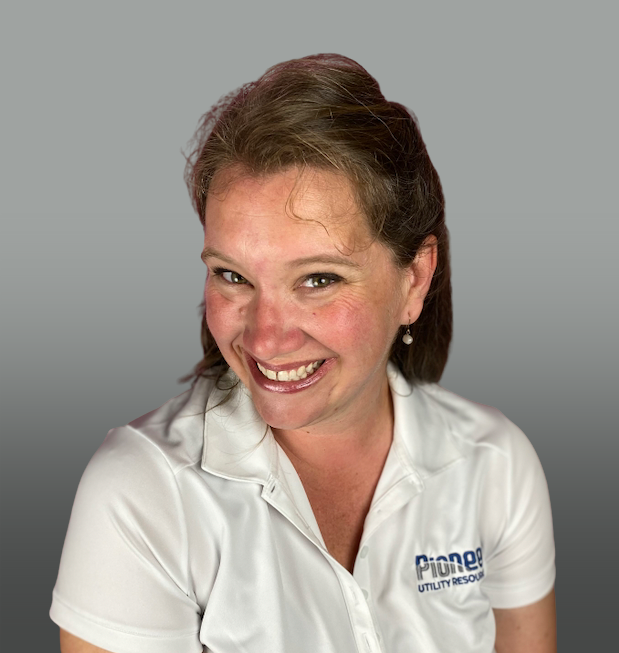
Do you have a local network of cooperative storytellers? From his dual roles as an economic development manager at People’s Energy and board member for Cooperative Development Services, Marty Walsh’s has a unique take on co-op education and how Utility Pioneers can turn the cooperative difference into shared storytelling opportunities to foster member success.
Marty Walsh
Transcripts have been lightly edited for clarity and readability.
Intro: A production of Pioneer Utility Resources. StoryConnect, helping communicators discover ideas to shape their stories and connect with their customers.
Megan McKoy-Noe: How can we weave the cooperative difference into economic development and staff storytelling? That’s what we’ll be talking about on this episode of The StoryConnect Podcast. Hi, I’m your host, Megan McKoy-Noe with Pioneer Utility Resources. I’m joined by Marty Walsh, the economic development and key account manager at People’s Energy Cooperative in Oronoco, Minnesota. Marty, thank you so much for joining us today.
Marty Walsh: Thank you, Megan, for having me.
Megan McKoy-Noe: Now, I just found out – and this is very exciting for me – that 2025 has been declared by the United Nations, the second International Year of Cooperatives, which is so exciting.
Marty Walsh: That’s very exciting.
Megan McKoy-Noe: Had you heard this?
Marty Walsh: I had not.
Megan McKoy-Noe: I know! I mean, I know it’s still 2024, but any time someone declares a co-op party, I am there for it. To celebrate that, we are talking at Pioneer about interviewing a lot of the cross sector co-op champions, both at telcos and electric co-ops, and then at other types of co-ops as well. So to kick us off, I wanted to ask you how many different co-ops you are a member of?
Marty Walsh: So I am technically a member of, I realize, two co-ops. So I am a member of REI, the largest retail co-op in the country, and then also of our local food cooperative, which is People’s Food Cooperative, which is sometimes confusing since we are People’s Energy Cooperative in the same community. It’s much worse when they get our calls than when we get their calls, but it happens a few times a week.
Megan McKoy-Noe: A few times a week. Okay.
Marty Walsh: Yeah.
Megan McKoy-Noe: Do you guys ever play into that, and have joint events? That would be fun.
Marty Walsh: We’ve never done joint events, but last year for co-op month, we both featured an article in our newsletter about the other People’s Co-op.
Megan McKoy-Noe: The “other.”
Marty Walsh: Yes.
Megan McKoy-Noe: I like it. Well, I’m curious, because of your role in economic development at People’s, not Food. Why do cooperatives matter for your economic development goal?
Marty Walsh: I think the biggest thing that the co-operative difference and being a co-op really matters for how we approach economic development is a traditional economic development organization, an EDO, might focus on the biggest projects landing the big fish, big industrial development, commercial development, property tax increases. But because we’re member focused, we can look at a much bigger picture, and it’s a little easier to look at what benefits all of our members. Sometimes that might be a project that lands outside of our service territory, and we’d love to get the load growth. But if it can mean 50 or 100 new jobs that benefit our members, that’s still really important to us. And so we have some priorities that we focus on, but it gives us a much broader picture. The same working with startups and small businesses. If one of our members is interested in starting a business, we can make sure that they get the resources that they need. Again, even if that resource isn’t right in our community or right in our service territory, because it’s about the member’s success, not just how many kilowatt hours we sell.
Megan McKoy-Noe: Ooh, I really love that the member success. We talk about making life better that that’s what cooperatives do – meeting those needs. But we don’t talk as much about focusing on member success as well, which I really like. Now, Marty, one of the reasons that we asked you onto the podcast today is that in addition to your economic development role at People’s Energy, you are also a board member for Cooperative Development Services, a group focused on sustainable cooperative development in Minnesota, Wisconsin, Iowa. I was hoping you could tell me a little bit about the work that you do with CDS.
Marty Walsh: Yeah. So CDS is a great organization that I was introduced to in a prior economic development role. It’s been around for decades. Originally based out of Wisconsin, moved to Minneapolis and Saint Paul because of staffing a long time ago, and it has done incredible work to support the cooperative movement and kind of the sectors that feed into that. So there’s a lot of local foods, processing work and small farm work that goes into that as well. And it’s an independent organization, doesn’t really get – it applies for federal grants, but it’s not a line item, legislative funding or anything. And what is most impressive to me is that CDS is truly for all cooperatives. And I have learned so much from my fellow board members. So I’m the treasurer this year, but on the board, there’s –.
Megan McKoy-Noe: Congratulations.
Marty Walsh: Thank you. It’s very, very difficult to sign my name four times a year. There are representatives from ag co-ops, from financial co-ops, from grocery co-ops, from grocery co-op co-ops. But when I say ag co-ops, both producer co-ops and consumer co-ops. So currently CHS and Land O’Lakes both have a representative on our board of directors. And we’re intermittently have had or are looking to have housing cooperatives, worker owned co-ops, telco co-ops, and that really broad spectrum. But we all have those same cooperative principles driving us. It has been really interesting to understand what does the cooperative difference mean truly, versus just being a nice place to work and a good business?
Megan McKoy-Noe: Yeah. Because I think sometimes we think that we talk about like onboarding staff and sharing our story every, you know, October, and it’s really focused on, oh, co-ops are great. And we don’t really think about the bigger picture of how cooperatives and the cooperative movement is sustaining America. I mean, there are now I think USDA has updated it from 29,000 to 30,000 cooperatives across America, different types of cooperatives. Which is a really a huge part of how communities are enabling themselves to make life better for them through co-ops. Because you’ve been in this unique position, you know, sitting with folks from the largest co-op in the nation, which is CHS, and folks like Land O’Lakes and the credit unions and all the different types of co-ops that you’ve been exposed to through your work on this board. Can you talk to me about how you’ve seen other types of cooperatives really showcase the cooperative difference, and maybe some things that utilities can learn from them?
Marty Walsh: I think that one concrete example, just to toot CDS’s horn as an organization a little bit more. You mentioned again, the basis is Iowa, Minnesota, Wisconsin, but it really is growing as a national organization because cooperatives cooperate. And there was a recognized need that sometimes there are charitable needs for co-ops, that it’s not super easy for them to hit. Whether they’re structured as c6, a c12, a c3, whatever. And also that in fundraising and things of that nature, sometimes it can be difficult to work across state lines. And so we have at CDS, the Cooperative Development Fund of CDS, which is the 501c3 that local co-ops, and we’ve had a lot of housing co-ops and grocery co-ops use this, can use that c3 status as a fiscal agent to apply for grants or accept charitable donations when they’re still getting started, and they haven’t fully formed themselves yet. But also, it’s been great for disaster response and emergency response. And so we’re again, cooperating across cooperative sectors. It’s very common out west to have resident-owned community cooperatives, which are what we would call manufactured home parks, where the community owns its the land underneath it. And there’s recently been a few instances of wildfires really tearing those communities apart.
Marty Walsh: And CDS, the Cooperative Development Fund, was able to step in, collect donations from co-ops and individuals across states. And you can’t generally solicit for donations across state lines – in certain states, you can’t – and step in and really quickly and very almost free provide that funding back to those resident-owned communities. So they are working with that, working with grocery co-ops. And I know I think Illinois, Kentucky and Massachusetts right now, we get very thorough board reports, and there’s a lot to digest. So just that cooperative impulse to cooperate with others. Locally, where I think that – an electric utility can see that is just by reaching out to your cooperative members. You have probably more than you recognize. So we have primarily ag co-ops on our lines, but some are fuel co-ops, some are producer co-ops, some are consumer co-ops. And saying, how can we help you? How can we do the work we’re already doing for our members and just share it with your members? So right now, working with one of our large ag co-ops, talking about some of the rebates we did for them. We’re going to write up this story for our newsletter, probably anyway. I’ve written it up for a report anyway.
Marty Walsh: Why don’t we just give it to that co-op? Let them stick it in their newsletter, and ideally, we have a lot of overlapping members who can now reach back to us and say, “Hey, I saw that you did this for our grain elevator. Could you come out to my place and do that same energy audit?” And even if they come back and say, “Oh, I’m not in your territory, is there somebody else?” Well, we’ll connect them to our neighbor co-op or even the IOU if we have to. But we can reach out and say, “There’s probably, there’s probably some way that you could also do this at home.” And so we’re looking at more and more ways to do that. And we know that some of our members are more likely to pick up the newsletter from their dairy co-op or from somewhere else, or just in the local newspaper. And if we can share, “Hey, here’s how you can be involved in your co-op. Here’s how you make a difference by being involved.” The more people that we have involved telling the story, the more likely the story is to get to our members, which is who ultimately needs to hear it.
Megan McKoy-Noe: Oh, Marty, I really love this idea. And, you know, so my background is with electric cooperatives. And at my co-op, we had a group of communicators for disaster response from different groups in the community, right? So we had folks from the city, from the county, the newspaper, you know, a whole bunch of different types of cooperators talking about how we could communicate effectively during a disaster. And hearing you talk about working with the other types of cooperatives for shared storytelling reminds me of the same kind of a group, but for cooperative response and storytelling. So just imagine if you reached out, as you said, and just, I guess the first step would be identifying any cooperatives that you serve. And then finding out who their storytellers are. So would be reaching out to People’s Food Cooperative and saying, “Who is your storyteller, and how can we make that connection throughout the year?” Because you’re right, some people aren’t going to want to read their bill insert, say or the magazine, but they might read the cooperator that they get from their, you know, their ag cooperative. So I love that idea. How many cooperatives do you serve? Do you know?
Marty Walsh: So that I am well aware of, we have three primary. So we have a large grain elevator cooperative that has, and they offer agronomy services and all sorts of things. We have a – they have half a dozen locations through our service territory. We have a natural gas co-op, an LP co-op, that was also one of our site hosts for an electric vehicle charging station. Because they see themselves as an energy provider also, and they own a gas station. I suppose we do have a couple of Cenex stores also. So that’s part of the cooperative network. And then we have a cooperative dairy processing facility that makes dried milk and other similar products. And so, again, mostly in that ag space. But then we have People’s Food Co-op is in a neighboring community that we don’t serve. It’s served by a muni, so we still know them. But we know that many of our farm members are selling produce to them. So there’s also that feature and that probably comes from economic development and understanding that it’s a network. And, you know, for instance, well, we only have a couple of, a certain brand of gas station on our line. And we don’t have their corporate headquarters. We do have some of their biggest vendors. And understanding what that supply chain looks like and how the broader regional economy impacts our bottom line as a cooperative and our members.
Megan McKoy-Noe: Sure. And as you mentioned, with People’s Food Cooperative, you know, you have members of People’s Energy who are farmers supplying produce, right? I think nationally, 38% of food cooperatives, groceries, they get their food organic, local. I think the number is 260 farmers provide, for the typical the average cooperative, provide the food there. So they do have really strong connections to your farming members. So what if you had a really good experience with an energy efficiency audit and rebates given to one of your farmers to help them, then giving that story to the folks at People’s and letting them showcase that story. Because it’s a story their members are interested in. They want to know that the farmers are using energy efficiently and might kind of tip them off about the great work that People’s Energy is doing. So I really like looking for those opportunities, being aware of the co-op network. And that’s one of the really big things I wanted to ask you about. You’re in economic development, but you have this really unique perspective because of your work with CDS on the Cooperative Development Services board. So I’m going to ask you a question that normally I would ask someone that is in communications or that is an executive assistant or in HR. With your passion for cooperatives, I really want your take on this. How can you weave the cooperative difference, that story, into onboarding efforts for utility staff?
Marty Walsh: That is something that we’re thinking a lot about in how we’re telling that story. And oftentimes, this is part of what started yours in my conversation a while ago, when we hear cooperative difference, we think about the warm, fuzzy feelings of working with great people. And that’s what we talk to employees about. And it’s true that the business model of a cooperative probably tends to attract people who are more interested in that type of workplace, i guess you could say. But if we’re going to be honest with ourselves, there is nothing inherently warm and fuzzy and great place to work as a cooperative, as a place to work. We were still employed by a corporation to work there. And I think we’ve all hopefully had the chance to work at some place that has a great owner, has a great board of directors. That’s been a great place to work that hasn’t been a cooperative. We have to go a little bit further in saying, “What’s the cooperative difference as a place to work?” And I know, I know. How I think the best way we can approach that is, is talking a little bit more about how would it be different if we weren’t a cooperative. And sometimes that might be easier again, if we understand other cooperatives.
Marty Walsh: So especially, and that’s true, you know, for our longer time employees as well, right? That if they’ve been a billing clerk or a line worker or whatever for 30 years, this is the only way that they know to be done. Maybe they have a friend who works at the muni down the road. Maybe they used to be, you know, at the IOU. But oftentimes, if they’re a long time employee, this is the only thing they know. And it can be easier to say, you know, look at this grain co-op. Look at this other cooperative and see how they did it. Or explicitly say, you know, if we were an IOU, we would do it this other way, but we don’t. And here’s why. You know, our members ask us to have a concern for our employees. They like having the same employees around the whole time. They like having well educated staff, especially because cooperatives were generally smaller than the alternative utilities they might deal with. And so that’s another way that it manifests itself, because our members tell us to treat our employees really well. And that’s very important. But we are serving the member there and doing what they want.
Marty Walsh: But to me, the biggest thing and the biggest opportunity, the lowest hanging fruit is, is by looking at what other companies would do in the same situation. And again, that might come up as a cooperative in a different sector. One last thing that I’ll throw in, because I don’t know where else I would throw it in, but I want to talk about is, is we often talk about cooperatives in different sectors – not often, but more so. So we have electric and telecom and banking whatever. But there’s also the orientation of the ownership of the cooperative. So is it a consumer member? Is it a producer member? Is it an employee member? Those are all different types – or a worker owned co-op. Those are all different things that are out there, and there’s probably some other even smaller sectors. But worker owned, producer owned, consumer owned, those are the main pieces of this. And the more that cooperative specialists, cooperative communicators, people who are responsible for carrying that cooperative message can understand about those finer details, I think the better we can tell our story and why the cooperative difference is more than just a marketing line. It’s the reality of everything we do.
Megan McKoy-Noe: Ooh, I really like that. We have a session that we developed years ago called “Why Co-ops Are Cool,” but it goes into the main types of cooperatives and then some hybrids. My favorite is a brewery cooperative in Texas. But there’s a lot of different types of co-ops out there. And just being aware of that. We do training for all of pioneer staff, just so that our team knows about the different types of cooperatives that are out there. And we also weave in our co-op principles and how Pioneer, as a communications co-op, follows through on each one of those principles. What does People’s Energy do really to educate folks on that bigger picture? I know you said y’all are working on it, but have you developed any kind of training yet to talk about the bigger network and that orientation?
Marty Walsh: We try and work it in at least once a year into our general communication strategy. So it’s some feature of a CEO message or a newsletter. But as we’re looking at our strategic planning and our communications for our annual meeting, things like that, meeting our member where they are and kind of bringing that member focus around in the context of what it means to be a cooperative. The governance, the education that we provide to our members and that they expect our staff to have. It is very much ingrained in what we do. I don’t think that we always put a name to it as well as we could maybe. But I think we’re moving in that direction very strongly.
Megan McKoy-Noe: Well, and you know, 2025 is going to be a great time to focus on that since it is International Year of Cooperatives.
Marty Walsh: Yes.
Megan McKoy-Noe: Yay! It’s not the first one. You know, they did this in 2012. I was around back then too. But I’m very excited. Not that you can tell. So and we’re trying to talk about that now and really get folks thinking about this and how you educate your staff and your members and build your co-op network now, before we get into the International Year of Cooperatives. So one last question before I let you go, Marty. Do you have any tips for utility pioneers who want to connect with other types of co-ops so that they can work together in 2025 and beyond?
Marty Walsh: Just ask. I think that the idea of cooperatives cooperate. I mean, it’s way up there in our principles, and it’s like seven key things that we do. I found that to be pretty genuine. I don’t think there’s a lot of people who use the co-op name falsely, and generally when they – I know of one that really isn’t truly a co-op, but they call themselves one. But it’s because they want to aspire to the ideals of a co-op. And so usually, we look at the history of rural electrics. They were there because there wasn’t an investor reason to be there. If that has emerged and the people don’t want to be cooperating, they’ve probably moved away from the co-op model by now, and they’re doing something different. So if there’s a co-op you know, of, I can almost guarantee with absolute certainty they want to cooperate with you. And they want to cooperate and coming up with ideas. And, you know, probably you might not realize that you’re like the big kid on the block. And they are afraid to approach you as an electric cooperative. Right? We’re utilities. We’re established. We’re dominant. And they might not think that we have time for them, for their little, you know, 50 member, 100 member vegetable co-op. You have to reach out and say, “Let’s be part of this together.”
Megan McKoy-Noe: I love that. It’s a good challenge to give to everyone tuning in to the podcast. Just reach out, understand how you’re probably viewed in the community, in the co-op community as well, and take that first step. So thank you so much for sharing your story with utility pioneers. He is Marty Walsh from People’s Energy, and I’m your host, Megan McKoy-Noe at Pioneer Utility Resources. And until we talk again, keep telling your story.
Outro: StoryConnect is produced by Pioneer Utility Resources, a communications cooperative that is built to share your story. StoryConnect is engineered by Lucas Smith of Lucky Sound Studio.