Share

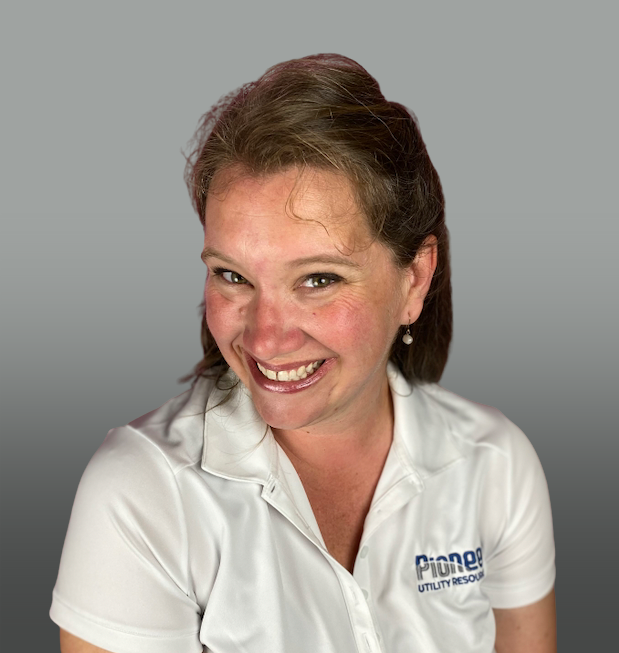
As Utility Pioneers, we want to say yes to everything. But often, saying yes to one thing means saying no to something else. Brianna Wall shares how she sets deadlines, takes time before accepting new tasks and weighs the benefits of a project to better manage her time.
Brianna Wall
Transcripts have been lightly edited for clarity and readability.
Intro: A production of Pioneer Utility Resources. StoryConnect, helping communicators discover ideas to shape their stories and connect with their customers.
Megan McKoy-Noe: When is it okay to say no? That’s what we’ll be talking about on this episode of The StoryConnect Podcast. Hi, I’m Megan McKoy-Noe, one of the storytellers at Pioneer Utility Resources and your host today. I am joined by Brianna Wall, manager of marketing and member relations at Oklahoma Electric Cooperative. Brianna, thank you so much for joining us.
Brianna Wall: Thank you so much for having me. I’m excited to be here.
Megan McKoy-Noe: Oh, this topic, “When is it okay to say no?” This is very near and dear to my heart. Now, in addition to your job at the electric co-op, you offer time management, branding and design advice on your website, creative-cues.com. I’ve been a fan of yours for a very long time. You know this.
Brianna Wall: Thank you.
Megan McKoy-Noe: And you wrote about the power of saying “no” on your blog. And as utility pioneers, I don’t know about everyone else listening, but I know I want to say yes to everything. I’m very sad at the idea of saying no. Why is that a bad idea?
Brianna Wall: Well, it’s not so much that it’s a bad idea. So I will start out by saying I haven’t always been good at saying no. And when I say no, what I mean is to new opportunities, to the way I spend my time. So my love language is quality time. So I think that means quality time with those that I love. So the time that I get with my family is in the evenings on the weekdays and during the weekends. And there are, as other co-op communicators know, who are in charge of community events and serving on chamber boards and all these different things that can zap all of that time, if we let them. So I try to be very, very intentional about protecting that time for me. And everyone’s motivated by something different. That’s what motivates me to say no, is if I start noticing I’m losing out on that time with my family or with whoever that I need to keep going, then I’m going to start saying no to everything. So I try to avoid getting to that point so that I can say yes to some extra things every once in a while. But for the most part, events, things like that, meetings that happen after hours on the weekdays or on the weekends, it’s an automatic no, usually. But there are events and there are things we just have to do. I mean, we can’t get out of it. It’s part of our job, which is fine. But the good part about that too, is a lot of us get to decide that part of our job. So we can commit to as much as we want to or as little.
Megan McKoy-Noe: Sure.
Brianna Wall: But the extra things, the extra opportunities that we get. That’s when I say no, it’s to the extra typically, if that makes sense.
Megan McKoy-Noe: It does. It does. I had a really good conversation with a friend a couple of weeks back, and he was not going to a conference that I was very excited about. And I ended up not going to that conference as well because I was sick and my daughter was sick, which happens. But he said he wasn’t going because he had limited himself to a certain number of days away from his family. And he said his wife and he had talked about it, and he works at an electric co-op. And he said, you know, we decided this is the number of days that I could be away. And I have already allocated these days throughout the year, so I can’t come to that conference. And I thought that was really smart. It’s about having a balance. And he looked at it as the entire year and allocated his time that way. So a pioneer –
Brianna Wall: I love that.
Megan McKoy-Noe: Yeah, it was smart, and I hadn’t thought about that because I always want to say yes and go and see everything. And I used to travel. I mean, Brianna, when you and I met maybe ten years ago, it was when I was traveling a lot. And because I didn’t want to say no to anybody. I love seeing folks. And I think it’s important to know that saying no to something doesn’t mean you don’t care about the opportunity.
Brianna Wall: Right.
Megan McKoy-Noe: It’s striking a balance. Right? So at Pioneer, our team has a saying that we’ve started using a lot to help us with this. Because we do tend to want to say yes, but “Every yes is a no to something else.” And I saw that in your blog post too, and I was like, oh, it’s not just something we say. But it’s something that we have to keep repeating in team meetings, like if we’re going to add this, we have to say no to something else. Because we’re never done. There’s always something more for co-op communicators. We could always do more. Communicating is one of those weird things. It’s not like when I worked as an accountant, right, which I knew there was a start and end to my day. It’s not like that with communications.
Brianna Wall: No.
Megan McKoy-Noe: So it’s so important to know that – it’s like to put a limit on your time and to take care of yourself and be intentional. So I’m curious about what questions you ask before agreeing to a new commitment. For you, you already mentioned family time. Are there other questions that you ask when evaluating the requests that come in on your time?
Brianna Wall: Yes. So one of them is the question that you asked “What will I be saying no to if I commit to this?” That’s probably the first one is what am I going to be saying no to, and how much do I value that which I’ll be saying no to? If it’s no to a coffee date with someone, that’s probably, we can reschedule that. It’s probably doesn’t need to happen right then. But if I’m going to be saying no to maybe chaperoning my child’s field trip, and I really want to be there for that type of event, I don’t want to say no to that. So really that’s the first question kind of in my filter, my filtering process. So I never commit to anything on the spot. If there are opportunities to chair committees or plan an event or attend an event or whatever the case is, I almost never commit on the spot. I’m like, you know, let me give me a second. I’m going to think about it, and I’ll get back with you. But I do love in your example where he told you why he couldn’t come to that event.
Brianna Wall: And so I think that’s powerful because if you just tell somebody no. I mean that. You kind of sound like a jerk. Or you could. We don’t want to do that. So, yeah, I mean, just a little insight. I mean, you don’t have to tell your whole life story, but just a little like, “No, you know, I’m trying to be better about my time management, so I’m going to opt out of this” or whatever the case may be. But I also ask, “Will saying yes to this, get me closer to my big goals?” So every year I try to try to define some goals that I want to complete that year. And if saying yes will help me get there, then great. I’ll figure it out. And it might be worth saying no to something else. But if it’s just going to deter me or distract me or I don’t really need it to feel fulfilled, then I’m probably going to say no. So another question I ask is, “Is this an opportunity for me to do good, or will it just make me look good?” And because that speaks to the heart, because one of the reasons I used to say yes to so many things is because I thought, oh, this will look great on a resume. You know, I’ll put this on Facebook, I’ll brag about it. I’ll look awesome.
Brianna Wall: And so I care a lot less about that now. But early in your career when you’re trying to build up your resume or when you’re trying to prove yourself to an established team that you may be part of as a new person or something, then saying yes to some of those opportunities might be necessary. But I’ve been at OEC now for 17 years almost, so I did that. I went through that where I just said yes to everything. I mean, I’m running in 5Ks. I don’t even like to run. But, you know, I’m doing things I don’t want to be doing just because I want to look good to that person who asked me or whatever the case may be. So now I want to be sure that I’m actually able to do good with the time that I have and the energy that I have, resources, rather than just make it all about me. I mean, which is easy. And I think that’s our default, but it’s just in a continuous effort to try to be better, try to grow, just try to take the focus off of me and make sure that I’m able to do something, at least for somebody else.
Megan McKoy-Noe: Well, and you know, you’re speaking about this from like a personal brand point, but I think a lot of this you could also relate to the tasks we’re asked to do as communicators. Right? So it’s not just you deciding if you want to spend time with your family this weekend or run another one of those 5Ks. But it’s also, you know, on our team, we have talks and say, okay, we’ve been asked to write a post about this, a news release about that. And also we want to have this new program that we’re launching, and we want to say yes to everyone coming to our team and asking for help telling their stories. I mean, my job title is brand storyteller. My whole job is to tell the stories of other people on our team. But there’s not always enough time. There’s never enough time to tell all of the stories at once. So I think it’s also good to try to, it’s not just about, you know, is this going to look good for me or whatnot, but what can we say yes to now and what can I say yes to next month?
Brianna Wall: Right.
Megan McKoy-Noe: Right?
Brianna Wall: I actually have a separate blog post about this. It’s called “What’s Your Deadline?” And I spoke about this also at the Connect Conference as part of my time management. So this is one of my favorite questions I have learned to ask when it’s work related. So when someone emails me, Hey, can you create this? Can you post this? Can you get this in the magazine? Whatever a communicator is faced with. I always, always, always reply with, “Sure, when do you need it?” Because I used to think, Oh, I’ve got to do this right now, and I’m going to stop what I’m doing. And I’m going to complete this for them right now. When in reality, they probably didn’t need it right then, but no one had established those deadlines. So as I worked more and more with our magazine and everything was on a deadline, I kind of got into a routine of asking people, Yeah, I can complete that for you. I can make that for you. When do you need it? And if I’m working on something else, a magazine deadline, whatever the case may be, a higher priority item. And if they say I need it right now, I’m like, I’m sorry. I’m on another deadline right now. I can do it tomorrow, next week, whatever. But I always approach this specifically by setting very clear deadlines on the front end, and that has helped a lot in trying to organize all those projects that come. And obviously, like if your CEO emails you or asks you to do something right now, I mean, don’t tell him no. Or her no.
Megan McKoy-Noe: Yeah.
Brianna Wall: Be smart about it. But it is okay to clarify, “Hey, when do you need this? I’d be happy to do this. Do you need it now? Can it wait until next week? I’m on another deadline.” But that’s something I think we can all relate to because we do manage so many different projects that just make sure each one has a deadline. When they’re thrown at you. And either you’re establishing them or the other person is, but make sure it’s clear. And that you can actually handle it in that timeline, because there have been several times where, what’s that saying, “A lack of planning on your part does not constitute an emergency on mine.” I’m sure we’ve all wanted to say that.
Megan McKoy-Noe: Oh, no, I don’t know what you’re talking about. I’ve never wanted to say that.
Brianna Wall: This has helped, though. This has definitely helped just by responding. It usually comes in an email like, “Hey, can you create a door hanger for our vegetation contractors?” Yeah, great. Not today. When do you need that? And they’re great. I mean, it’s worked out really well.
Megan McKoy-Noe: Well, and that’s an issue where you don’t have to say no, but it’s okay to say not right now.
Brianna Wall: Right.
Megan McKoy-Noe: Again, it’s about boundaries for your time. We can’t – I mean, some of us might be magicians, I’m not sure.
Brianna Wall: I’m sure there are.
Megan McKoy-Noe: But for those of us – I’m sure. I mean, I adore utility communicators. Many of them are magic. But for those of us who can’t just, you know, snap our fingers and make a campaign happen. Letting folks know that it’s not magic and that there is time involved and how much time it takes. Because we’re seen so often as the fun department. The, you know, they’re not really doing anything or whatnot. And if you set those deadlines, it lets them realize the time that it does take to do our jobs. So I really like that. Before I let you go, do you have any final advice for utility pioneers that are struggling to manage their time?
Brianna Wall: I would say again, kind of going back to setting deadlines and being clear, that has been the the biggest help for me is just to make sure. Because when we do have the skill sets we have and everyone at the co-op knows it and everyone at the co-op needs it, you’re going to get a lot of asks to create a lot of different projects and a lot of different works. And it’s really up to us to master our schedules and our calendars and our to-do lists so that nothing falls through the cracks and so that we can also a lot the right amount of energy to whatever it is we’re working on. So really just kind of mastering your calendars, your schedules and being so clear on deadlines. I think that would be that would be the biggest thing.
Megan McKoy-Noe: Well, thank you so much for sharing your story with utility pioneers. We’re going to add a.
Brianna Wall: Thank you for having me.
Brianna Wall: No, are you kidding? Again, we could just talk all day about this stuff because I think it’s something that a lot of us struggle with, and we don’t talk about as much as we should. So I appreciate you sharing your approach, and I’m hoping it helps other folks. I know that it has helped me. We’re going to add a link to your website when we post this podcast at pioneer.coop/podcasts so that folks can get more tips from you on time management and branding and ideas. It’s always fun to see what you are sharing with folks. She is Brianna Wall at Oklahoma Electric Co-op and founder of Creative Cues. And I’m your host, Megan McKoy-Noe at Pioneer Utility Resources. Until we talk again, keep telling your story.
Outro: StoryConnect is produced by Pioneer Utility Resources, a communications cooperative that is built to share your story. StoryConnect is engineered by Lucas Smith of Lucky Sound Studio.