Share

From community coffee chats to branded coolers for football teams, James Ratterree from WAVE Rural Connect shares fresh ways his utility is building the broadband story into their Arkansas community.
James Ratterree
Transcripts have been lightly edited for clarity and readability.
Intro: A production of Pioneer Utility Resources. StoryConnect, helping communicators discover ideas to shape their stories and connect with their customers.
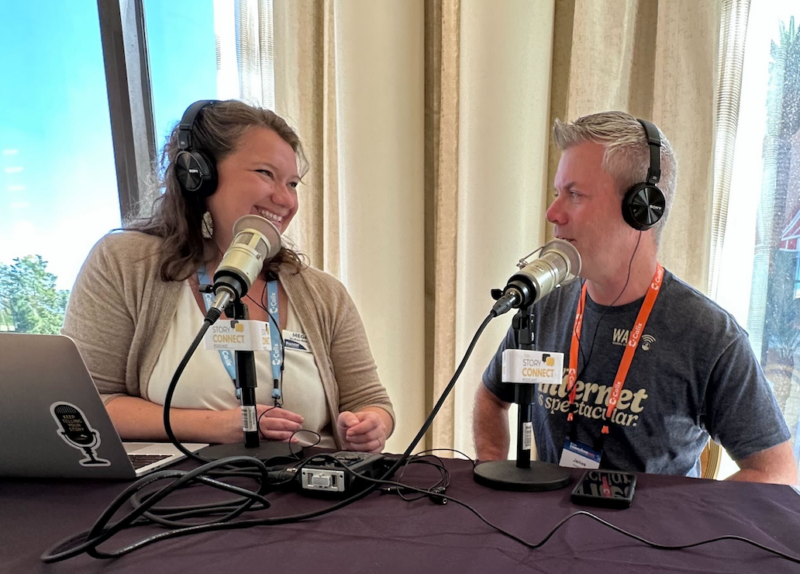
Megan McKoy-Noe: How can you build your story into the communities you serve? That’s what we’ll be talking about on this episode of The StoryConnect Podcast. Hi, I’m your host, Megan McKoy-Noe, one of the storytellers at Pioneer Utility Resources. And I am joined by James Ratterree, the marketing coordinator at WAVE Rural Connect in Arkansas. James, thank you so much for being with us today.
James Ratterree: It’s great to be here. Thank you.
Megan McKoy-Noe: I should say we’re recording live at the Calix ConneXions Conference in Las Vegas with 2,000 and more broadband storytellers. We’ll call any noise that you hear in the background ambiance. How does that sound, James?
James Ratterree: Sounds great to me.
Megan McKoy-Noe: Okay. So, I am sipping coffee as we talk because I’m a big fan of caffeine, and I heard about a fun coffee program that WAVE Rural Connect started, I think, this spring when it wasn’t quite as hot as it is right now. Could you talk about how you started serving coffee with your story in Arkansas?
James Ratterree: Sure. The idea came about when we were actually doing one of our first non-member build outs. It was for a town called Charleston, and they had sought funding, and we agreed to match and ended up winning that bid.
Megan McKoy-Noe: Congratulations.
James Ratterree: Yeah. So, we’re excited about it. They’ve been begging for it. So, they were one of our first build outs. And the idea was, how do we get out there and communicate to people who we don’t already have their information from the co-op side?
Megan McKoy-Noe: Right.
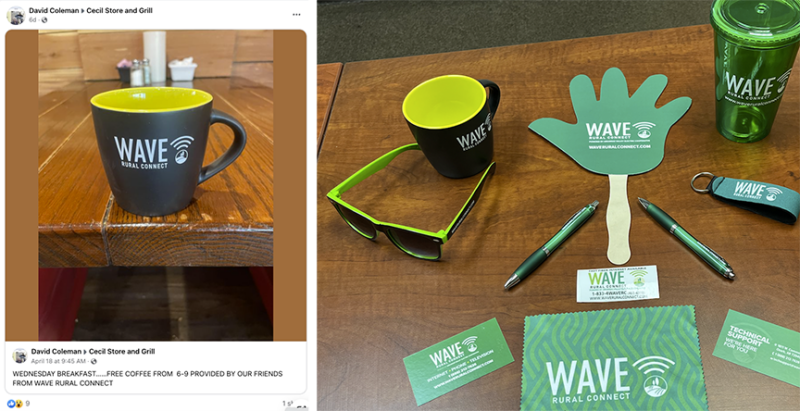
James Ratterree: So, we got out – there’s a couple of coffee shops in town. You know, one is kind of a breakfast place. The other is just pretty much coffee and go enjoy it. And we decided, “Have a cup on WAVE.” And you know, each week we’d pick one of the coffee shops and buy everybody’s coffee from like 7 a.m. to 9 a.m. And so, we just, whatever they totaled up, we’d pay for it. But the idea is we provided them with WAVE mugs that had our logo on it. We’d occasionally go out there and answer questions, and we really started that at the beginning of the year in the winter, and carried that on until late spring, when it started getting kind of hot, and there were fewer people, you know, going in there for a coffee in the mornings.
Megan McKoy-Noe: And I should ask, when you say you provided them with mugs, who did you give the mugs to?
James Ratterree: Oh, we gave that to the actual coffee shops.
Megan McKoy-Noe: And how did they feel about getting these mugs in?
James Ratterree: They were excited because, you know, they said the biggest problem they had were people were trying to run off with the mugs.
Megan McKoy-Noe: Oh, people fighting over swag. I like this story.
James Ratterree: And, of course, we gave those same mugs away because we had some like specifically for Charleston when we did theirs, we actually had some with the Charleston Tigers, which is the high school mascot on there. We gave those to Ford dealerships, to the school so that teachers had them even, you know, had some giveaways for kids and things like that.
Megan McKoy-Noe: And you tied it in with their community story.
Megan McKoy-Noe: Correct.
Megan McKoy-Noe: Which is so important.
James Ratterree: Yeah. The high schools are very important in these small towns.
Megan McKoy-Noe: Sometimes we forget about that. We get excited about making swag for our company, but it’s not about us. Right? So y’all have been doing some other really exciting things. I’m a coffee fan. So, I heard about what you all are doing there, but how else are you trying to bring yourself into your communities? Bring your story into the community and make it part of the community?
James Ratterree: Well, I’m not trying to sound like we’re beverage crazed, but we also this summer leading into football season. So, there’s a lot of the, I guess you call them training camps, spring training. What does high school call it? But, you know, they’re out there in the heat. We had a very hot summer this year, and we decided to donate the big igloo coolers. And we took the coolers and put the mascot, team name, logo on them and donated them to both the band and the football teams for several schools in our area. And sometimes we don’t even cover the city they’re in, but we know tour membership goes to those schools.
Megan McKoy-Noe: So, you put their mascot on these big igloo coolers. Is your logo somewhere as well?
James Ratterree: Yeah, and it’s not terribly prominent. It’s just provided by WAVE. We don’t even put our logo on it. It’s about just being part of the community and showing that we care. And because, I mean, our people work there. They go to the stores there. When we wear the shirt and we go into lunch, we have to answer questions about WAVE.
Megan McKoy-Noe: I remember what that’s like. When I was at a co-op, an electric co-op, I had people I’d go to dinner, and they would just slide me their electric bill. And I’d be like, “Oh, you want me?” “Well, you’re going to the office tomorrow anyway.”
James Ratterree: Yeah, I sometimes get the electric questions, and I give them this baffled look and I say, “You know, you should call…” And I give them the support number.
Megan McKoy-Noe: So, you’re talking about your employees are in the communities that WAVE serves. And I should say also WAVE Rural Connect, y’all are part of an electric cooperative.
James Ratterree: Yes, Arkansas Valley Electric Cooperative Corporation, which is really long to say, but everybody knows it as Arkansas Valley Electric. Or the old timers will say, REA.
Megan McKoy-Noe: Okay, I like that.
James Ratterree: Rural Electric Authority.
Megan McKoy-Noe: Yeah, respect. So how many members does the co-op have versus WAVE Rural Electric? Where are you all with subscribers right now?
James Ratterree: I’m trying to remember. I think our membership is right around 50,000 because we have a, you know, obviously you have chicken houses and lights and things that have meters and those are like closer to 70,000. Our serviceable membership for fiber is right around that 50,000 number, and we’ve got 25,000 members, or right at that, turned up now.
Megan McKoy-Noe: Wow.
James Ratterree: We will finish our build up, build out, I should say, next year. So, our last substation to turn on is at the end of the year. And it’s our most complex one.
Megan McKoy-Noe: You leave challenges just for fun at the end. Right? So, I noticed that you have a fantastic shirt on, and I’m going to make sure we put a picture of the shirt front and back because I made them take pictures of both on the website at pioneer.coop when we post this episode. But talk to me about how your story, you know, what message your shirt has and how your story is changing. Now that you do see the end in sight for your build out, and you have half of the electric co-op consumers or members are now subscribers to WAVE Rural Connect.
James Ratterree: Yeah. So, I think it really starts with the idea that we wanted to continue that member service attitude through WAVE. I mean, we’re a for-profit subsidiary, but there’s no reason to treat people like you’re some big company wanting a profit. Continue that co-op way of member service support. And so, whenever we do sign ups, obviously we have things online, but we know there’s a lot of members. Our age group is 45 plus, really is our heaviest group. And so, we go out and do sign up events. Whenever we open a new substation, we bring a trailer out there. We give away t-shirts. This time around, we’re doing mugs as well.
Megan McKoy-Noe: I’ve heard they’re quite popular.
James Ratterree: They are. And then the, you know, koozies things like that. We change it up for each one. But this latest t-shirt we give away is a, you know, we do giveaways for the members, and they have the WAVE logo on there. And it’s kind of a nice give away for them. They get to pick their size, and that’s a pretty straightforward one. And then our shirts that we wear as the actual members of the team have messages on them. So, the one I’m wearing today says “Our internet is spectacular,” on the front, and the back side –
Megan McKoy-Noe: That’s the best word, by the way. “Spectacular.”
James Ratterree: It’s nice and long. It goes all the way across the shirt.
Megan McKoy-Noe: It is. It is. So “our internet is spectacular.”
James Ratterree: Yes.
Megan McKoy-Noe: And on the back?
James Ratterree: “Spectacular internet for all.”
Megan McKoy-Noe: Oh, see using that word again. I love it.
James Ratterree: Another shirt says “The wait is over.” Because that is our number one question. When are you coming to me? So if I’ve heard that once, I’ve heard it all the time.
Megan McKoy-Noe: So, it’s a lot of your messaging. It’s the story that you’ve been building has been about the timeline. Like the wait is over, which it reminds me of, like when you have a large outage in the restoration efforts are going on. One utility had a shirt that said, “Last one on.” Right. Just to kind of celebrate that. It reminds me of that, kind of celebrating that the wait is over. Everyone’s available or able to subscribe if they want to, but that also means that this kind of storytelling is shifting. Talk to me about this.
James Ratterree: Before into it. The other thing the wait is over is you’re waiting a lot to download things on the old services.
Megan McKoy-Noe: Good job.
James Ratterree: I’m clever sometimes.
Megan McKoy-Noe: You’re clever all the time, James. Come on. So, I like that. So, they are. The wait is over. You’re increasing the speed, which makes it spectacular.
James Ratterree: Correct.
Megan McKoy-Noe: I’ve heard. So how do people respond when they get these messages, and they’re finally able to sign up? I love the idea of bringing it to them and to celebrate when a new substation comes up.
James Ratterree: I mean, I think it’s not so much about celebration as relief, you know? I mean, I’m astounded at when I go out in the country, and I hear people paying, you know, $100 for five megabits, and they tell you you’re lucky if it’s working half the time or to get one megabit. And our gigabit is less than that. I just I’m stunned every time I hear that, you know. And people that are modern, and they don’t have to be older people living on farms, even. They’re out there, they don’t have home internet because it’s so bad. Why pay for it now? And they all have to drive somewhere on their cell phone four miles away. And that’s the story you hear. We’re talking about stories. That’s the story you hear from them is that they’re just ignored in a lot of ways. You know? I mean, you can’t get something cheaper, or you won’t bring us something better. And that’s, like I said, the co-op way comes through. They did that in 1939, bringing power to people who didn’t have it. And we’re doing it with internet now.
Megan McKoy-Noe: I love that. So then what is the reaction then? You know you’ve got the wait over. People are excited or relieved. I think you said, that’s the better word. So how does the story change for you now as the marketing coordinator, what are you looking at for next year?
James Ratterree: Well, we still have build outs happening because we have RDOF funding and ARC funding, which those are government funded programs to help bring internet to area outlying areas.
Megan McKoy-Noe: Congratulations.
James Ratterree: Yes, there’s plenty of places we circle around in our territory because back in the day there was nothing there but farmland and therefore no houses. And then they sold it off and plotted it out. Or we’re nearby towns that are served by other electric services, usually for profits. And they have no interest in getting into the internet game. And so, we will get funded for them. And that’s going to be some of our things going on. But the next big move is to, I mean, it’s going to be upsell, but it’s for people that are, you know, really hitting their limits. That’s the one thing. And that’s good thing about being here at Calix is they’ve got that data and software to help us kind of see that like, “Oh, this customer is, they’re kind of struggling, and they’re probably not said anything because they were used to bad internet before. They don’t complain.” So, let’s go talk to them and say, “Hey, we can make your service even better.”
Megan McKoy-Noe: I love that you’re already thinking about that, because using data, especially data that partners like Calix can help you find in your storytelling is critical. Really, you can’t just use the same story for everyone.
James Ratterree: Right. And it really, it’s going on now. But we’re really early in our Marketing Cloud journey with Calix. So, it’s helping us a lot because you have to remember co-ops are not for salepeople. They’re service providers, and here they had to be turned into salespeople.
Megan McKoy-Noe: Solutions. You’re helping people find solutions. That’s what we like to say.
James Ratterree: Yeah, because unless they have a problem, there was no reason to contact the customer. Problem was either with service outage, or you didn’t pay your bill, which that’s not the fun one, you know. And so, if you can come into them with, we’re solving a problem for you. We’ve noticed you’re – you know, if we come in and say something delicately like, “Hey, we’ve noticed you’re having service issues. Would you like us to help you improve your service? And here’s how.” You know and try not to be creepy big brother away either, you know.
Megan McKoy-Noe: Well, but that, I think, goes back to where we started, which is building your story in the community and becoming a name that they trust. Because the WAVE Rural Connect brand is still fairly new, right? I know that y’all are part of the co-op, but you’re also trying to establish your own story in the community. So, I love the idea of events where people, like subscriber events, where everybody comes out, and lets out a sigh of relief that you’re finally there, which is great. I really love the idea of getting involved with high schools, and I think more people really should take advantage of that, because that’s where the future is.
James Ratterree: Yes. And really that’s one of the big reasons we’re doing it. You go back to COVID when everybody’s going doing schooling and working from home and having to drive to libraries to sit in a parking lot at 10 p.m. to finish homework. And it’s, you know, that was one of the things that I wish, I could have, should have, would have. We could have been doing this two years earlier because we would have been serving people at that time, instead of being brand new at this.
Megan McKoy-Noe: That’s okay. That’s okay. We all learned a lot of lessons during Covid, so it’s fine. What other ways are you trying to build your brand in the community besides the coffee, and then the igloo coolers at the schools? Anything else that you found that works really well that other people could learn from?
James Ratterree: It’s well, it’s again about being in the community, like you said. And one of our things is we talk to our service guys that drive our branded trucks because we use a lot of contractors to help us during this very busy build out time. But, our guys, we say just, you know, if you got downtime, you’re in an area for a service call and you finished it. Just go sit in the parking lot or have a coffee somewhere. Because that joke I alluded to earlier about you walk in with a WAVE shirt on, people start asking, “When’s it coming to me? Do you serve me? Can you serve me?” And it’s just be out there and be seen. I mean, if you’re going to have downtime, make use of it. And, you know, we’re not sitting there demanding that people always be like, you know, on the clock because, you know, service, you just can’t be. You’re serving somewhere super rural, and you might have, some days they may have a call where they can’t stop for anything because they’re in north of Clarksville. And then they’ve got to drive over to Piney and then, you know. But if they got downtime, we’re like, think of yourself like a rolling billboard. Just be seen in the community, especially if it’s new.
Megan McKoy-Noe: So, for part of that, you have the shirts that – is that what they wear? Our internet is spectacular shirts when they’re out and about?
James Ratterree: Sometimes, we’ve got 3 or 4 branded shirts out there. Of course, we’ve got polos, and it depends on what they’re doing for that day. A lot of our guys, you know, the service techs, of course, they’re crawling around under buildings and whatnot, so you never know what kind of shirt they’re going to have on, but they could be covered in dirt.
Megan McKoy-Noe: I’m just saying they’re walking sillboards.
James Ratterree: So, we’ve got several different shirts we’ve done over the years and that they wear. We don’t spec, you know, dictate to them what they need to wear per se. Because this, a lot of our guys will bring a tech to an event because you get the inevitable questions on the first day that – you get the one guy who knows everything about internet and is trying to catch you out. So, I hand them over to them.
Megan McKoy-Noe: So, do you, since they are your walking billboards in the community whenever they have downtime – and I love that idea. Trying to make them make use of their time and be there, be seen. A lot of our story is just about being seen in the community. Do you give them any – I’ve seen some people do cards where they can, you know, have some information at their fingertips. So even if they’re not the right person to ask, they know some of the basics. Have you all done anything like that?
James Ratterree: Somewhat. It usually it’s just tech support cards they carry around. They’ve carried literature with them. Most of our guys do, and our contractors that, you know, door hangers and little fliers. And we also have shirts that I forgot about these. I can’t believe I forgot about them because it was an idea of one of our techs to put QR codes on there.
Megan McKoy-Noe: On a shirt?
James Ratterree: Yeah, the QR code takes you to the website. And so, people can just scan it while you’re standing there, and they go to our WAVE website to learn details about it.
Megan McKoy-Noe: That takes walking billboards to a whole new place. What is the call to action on those?
James Ratterree: I really, we just have the WAVE Rural Connect logo on there, and then it’s just the QR code to find out more about WAVE. And we just decided to try it out as a lark, and it’s working pretty well.
Megan McKoy-Noe: So, are you tracking the number of people clicking or, you know, scanning that QR code and coming in?
James Ratterree: Actually, not on the shirts, not directly. It’s the same QR code we use for our general marketing to kind of see clickthroughs.
Megan McKoy-Noe: Oh James. James. We use different QR codes for every single thing that folks are clicking just to track, because it’s interesting to see what works and what’s most effective. So, are there any other things that you all are doing in your community that you’d like folks to think about, to really bring your story in?
James Ratterree: Not really right now. I mean, it’s quite a bit we’re doing.
Megan McKoy-Noe: I know this is a thing. I get excited when I hear about what you all are doing with WAVE Rural Connect.
James Ratterree: I think that’s the big thing is because it’s chatter is probably outside of just advertising, I bet it’s even surpasses the advertising is just chatter in the community. So, the more they see activity, I mean, just the lines alone going in the polls. Okay, the line is in front of my house, does that mean I get it tomorrow? Well, no, we’re still building out so.
Megan McKoy-Noe: Well, I love hearing about the coffee in the communities you’re going to, which I’m sure will pick back up when it’s a little cooler outside, which takes a little while in Arkansas for things to cool down. The shirts are fantastic. I’m excited about seeing, you said you were going to wear a new one tomorrow that says the wait is over, so I’m excited to see that one. And I love the idea of celebrating every step along the way. So very good. Well, unless, do you have any other tips that you want to give folks before I let you go on to the next session at Calix?
James Ratterree: I think really The, you know, StoryConnect Podcast is everything’s about storytelling, whether you’re a marketer or not. And I think if you can think of it that way, everyone’s got a story and understanding the customer story. It’s not just us telling, you know, ours. It’s experiencing yours as the customer.
Megan McKoy-Noe: I love that James, and I could not agree more. Well, thank you so much for sharing your story with utility pioneers. He is James Ratterree, marketing coordinator at WAVE Rural Connect. And I’m your host, Megan McKoy-Noe at Pioneer Utility Resources. And until we talk again, keep telling your story.
Outro: StoryConnect is produced by Pioneer Utility Resources, a communications cooperative that is built to share your story. StoryConnect is engineered by Lucas Smith of Lucky Sound Studio.