Share

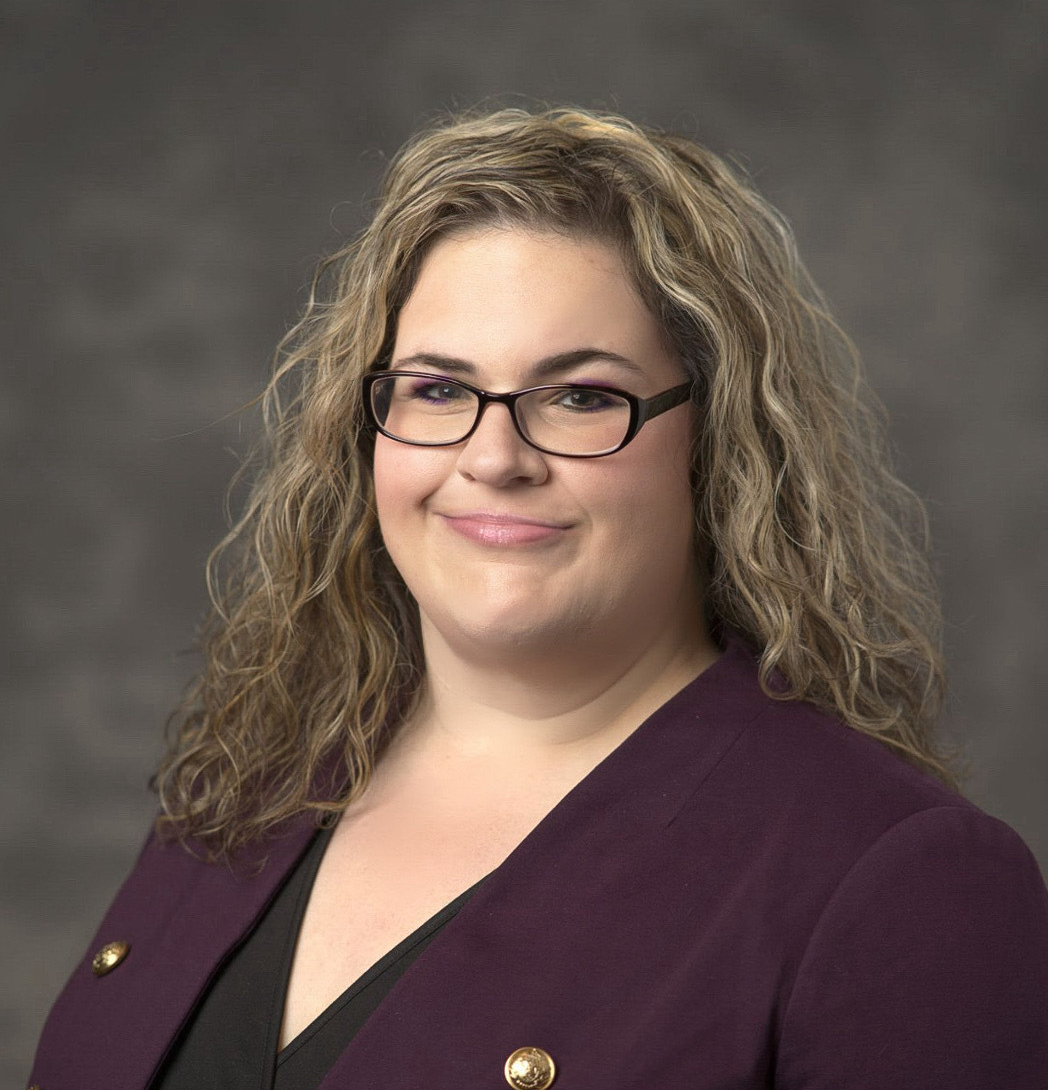
Dig into the psychology of marketing with Pioneer’s Sarah Lancaster to learn how using archetypes can help your marketing create more meaningful connections with your target audiences.
Sarah Lancaster
Transcripts have been lightly edited for clarity and readability.
Intro: A production of Pioneer Utility Resources. StoryConnect, helping communicators discover ideas to shape their stories and connect with their customers.
Megan McKoy-Noe: How can archetypes guide your brand storytelling? That’s what we’ll be talking about on this episode of The StoryConnect Podcast. Hi, I’m your host, Meghan McKoy-Noe, one of the storytellers here at Pioneer Utility Resources. And I am joined by Sarah Lancaster, Pioneer’s director of accounts on our member solutions team. Sarah, thank you so much for joining us today. Now, I should say Sarah and I get to see each other all the time, but normally we have folks from our membership or other industry leaders on the podcast. But Sarah is doing something really interesting with utility pioneers. So we’re going to break the mold a little bit today to let our listeners hear directly from Sarah about this because it is a lot of fun ideas. So as part of that, you have been working on archetypes. So let’s talk about archetypes a little bit. What are they, and why do they matter?

Sarah Lancaster: Absolutely. So in the 1940s, Swiss psychologist Carl Jung developed a set of common personality archetypes, and there are 12 of them. There’s the innocent, the sage, the explorer, the hero, the magician, the rebel, the lover, the jester, the everyman, the creator, the ruler, and the caregiver. So Jung believed that these were innate, hereditary personality traits that resonated with people. They also had a part in influencing behavior and turning into behavioral patterns. So marketing is all about connecting and predicting customer behaviors. So knowing your brand archetype is vital in how your customers see you. Brands need to connect with their audience in a deep and meaningful way, right? So to build on authenticity, loyalty, and trust. Knowing those brand archetypes, that provides a framework based on human psychology to help with your company and help build a worthwhile and valuable relationship.
Megan McKoy-Noe: Oh, I like this. So we’re getting brainy with it, and really trying to think because a lot of the time we get caught up in as storytellers, we’re told, oh, you’ve got to communicate about this, and you’ve got to get that. And we’ve got to be at this event and whatnot. And you just kind of get a checklist like, yeah, okay, we’re here, we’re here, we’re here. But you forget to think about why are we here? What message, you know, how are we perceived? How do we want to be perceived? And use that to really support your campaigns? So I love that y’all are really thinking about that and trying to think about the psychology of the campaigns and the word choices and even the color choices that you use. So when I learned about the archetypes from y’all, because we had a nice internal discussion about this too, I learned that the archetypes are really grouped into four areas. There are 12 different archetypes, but they have four goals, really. Some of them are focused on seeking a better future. Another set is leaving a legacy, providing structure or pursuing connection. Those are kind of the four different goals across the archetypes. So seek a better future, leave a legacy, provide structure, pursue connection. What goal trends from those four have you really seen from the utility pioneers that you support?
Sarah Lancaster: Absolutely. I love this question. And so among utility pioneers it is usually two and a mixture of the two. It’s a better future and leave a legacy. That’s been consistent throughout. And it tracks right, like with the cooperative world and the utility space. Utilities are bringing fiber fast internet to areas that have been unserved or underserved. So they are seeking a better future, and they are building a legacy, right? So that their customers then have tools and access to telemedicine, telehealth, remote work, education, entertainment at their fingertips. If you have a relative, you know, on the East Coast and you’re on the West Coast, you can connect with them and play a game or FaceTime or whatever it may be. So our utility pioneers, they truly are seeking a better future and leaving a legacy for future generations.
Megan McKoy-Noe: I like that, and it’s kind of fun to see where folks fall, because it’s a big, a broad spectrum for these archetypes, 12 different ones. I’m curious why are colors tied to specific archetypes? Because when I look, and it looks like a wheel, and we’ll share this on pioneer.coop/podcasts for folks that want to see this to get an idea. But it’s kind of like a color wheel for 12 different shades of colors going all the way from your blues, shades of green, yellow, orange, two reds, and then purple and then starting all the way around again. Why are there colors that are tied to those specific archetypes?
Sarah Lancaster: Absolutely. So, you know there’s been many studies about how people engage with color and what it means and how it makes you feel. So it’s natural that with each archetype, there’s a color associated with it. So there is a wide array of colors for each archetype and each quadrant, as I call it, right? So specifically for the colors associated with seeking a better future and leaving a legacy, those colors are blues and greens. So those colors resonate with trust and calm and reassurance. So our utility pioneers, they are trusted providers, whether that is power or internet. They are reassuring that, hey, you know, we are bringing you fiber. It’s going to be great. This is why it’s important, the reassuring right? And they’re bringing a sense of calm like, hey, you may not have that connection today, or if there’s a storm that comes through and you have an outage, We’re bringing you that sense of calm. So those colors resonate perfectly with those two specific quadrants’ archetype goals.
Megan McKoy-Noe: I’m wondering, you know, when you think about all of that, that’s a pretty broad scope of directions where you can go. As you said, a lot of our folks are really focusing more on, you know, caregivers, creators, innocent, sage, explorers, kind of that area. But I’m wondering if you – when you’re talking to folks about this – are you encouraging people to use a different archetype to fuel specific campaigns? Or do they have to stick with one archetype forever or just for a certain period of time? How does that work?
Sarah Lancaster: So you could. You could pick one. But what we have found is that you’re not just one. You’re a mix of different ones. So the main thing here is keeping your audience in mind. If you have a specific campaign, what’s marketing 101, what’s your target audience? Okay. What archetype is going to resonate with that target audience, or what you perceive, or how they perceive you? Right. Always, always, always go back to your audience first and foremost. And then over time, just like you and I and those listening, we change over time, right?
Megan McKoy-Noe: No.
Sarah Lancaster: Yes we do.
Megan McKoy-Noe: I stay the same. (laughs)
Sarah Lancaster: So your brand is just like that. It’s going to change over time. Like our utility pioneers who decided to get into broadband in 2020, they’re completely different than they were before that, right? Like they evolved over time. So it is natural just like us as humans, for your brand to evolve over time. You will not be the same archetype your entire, longevity of your company. It just won’t happen.
Megan McKoy-Noe: Yeah. So I like that. So it’s more informing you. It’s kind of a brainstorming tactic too. You’re thinking, all right, so this is how we feel. This is the message that’s going to help us go in that direction and meet the audience and how we want our audience to feel about us, right. So that’s nice. And it’s just a good reminder especially, you know, we’re midway through the year. Folks are looking ahead at 2025. So to think about what your goals are going to be in 2025 and how you can use archetypes to kind of get you there and strengthen your storytelling, is fun. Now, when I was looking at the archetypes, Sarah, out of all 12, I have to admit. I feel a little bit like a rebel, but also an explorer. And especially through my job and then through things that I enjoy to do with my free time and with my daughter, I’m more of a creator. It’s hard to pick just one. Which archetypes do you personally relate to?
Sarah Lancaster: I love, this may be my favorite question. So you and I are also Enneagram ones, right? So I can absolutely be a rebel when pushed. But day in and day out, I mostly identify with being a magician, which the brand associated with the magician is Disney. I want to help folks give a transformative experience, not just a product. Account managers, we are relational by nature. We’re not transactional. We want to help make a difference and make dreams come true, as cheeky as that is. But also empower others to know that that is possible, and what better space to do that than in the utility space?
Megan McKoy-Noe: Oh, I love that. I can see you with a hat and a wand right now.
Sarah Lancaster: I want a wand. Let’s make that.
Megan McKoy-Noe: I know. You should have a wand, a member solutions wand. I think it’d be great. So. Yeah. So just think about those. And again, those 12 archetypes. Caregiver, ruler, creator, innocent, sage, explorer. What are the other six?
Sarah Lancaster: Jester, ruler, lover. I’ve got to pull up my graphic.
Megan McKoy-Noe: I know.
Sarah Lancaster: Every man, caregiver as well. Got those.
Megan McKoy-Noe: Okay. So it’s just good to think about that for the next year. Think about what you want to say, how you can get that message across, give you a fresh perspective on what you’re doing. So Sarah, I’m going to ask you one last question. Because this is all, you know, psychology 101 kind of thinking through all of this. But on the podcast, we always remind folks at the very end to keep telling your story. How does knowing your brand’s archetype, or archetypes, help tell your story?
Sarah Lancaster: Absolutely. So knowing how you see your utility and how your customers see you, that’s only going to help you tell your story, but it’s also going to help you tell it in a meaningful way that resonates. And that’s at the end of the day, that’s what we’re all about, is making those connections. So absolutely, I encourage anyone to do this exercise. Do it one-on-one with yourself, but also go back to your team and do it. Because it will be amazing what you get back, and then you can have a conversation around that, and to help you connect with your audience.
Megan McKoy-Noe: Oh, I love that. Well, Sarah, thank you so much for sharing your story with utility pioneers. She is Sarah Lancaster, and I’m your host, Megan McKoy-Noe. Both of us are from Pioneer Utility Resources. And until we talk again, keep telling your story.
Outro: StoryConnect is produced by Pioneer Utility Resources, a communications cooperative that is built to share your story. StoryConnect is engineered by Lucas Smith.