Share

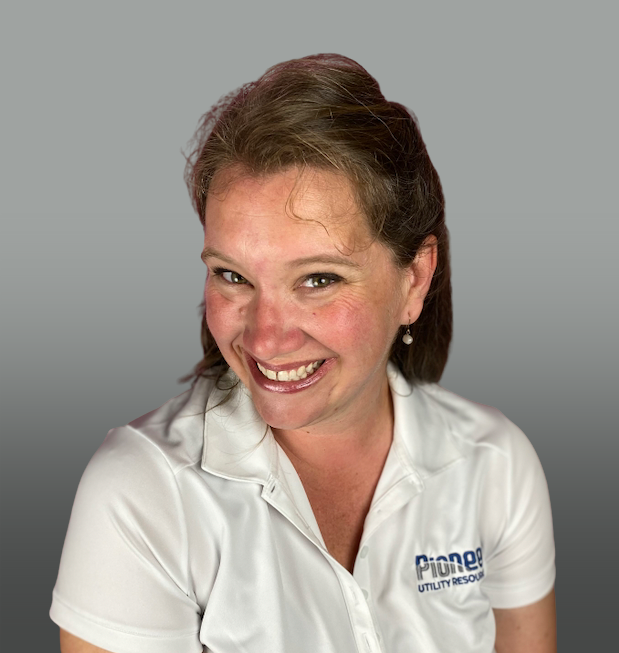
How do you boost your take rates and cut churn after you’ve built broadband? OEC Fiber’s Erin McKnight shares her storytelling tactics, including a three-tiered marketing approach by zone and her subscriber stories series. Tune in for fresh ideas!
Erin McKnight
Transcripts have been lightly edited for clarity and readability.
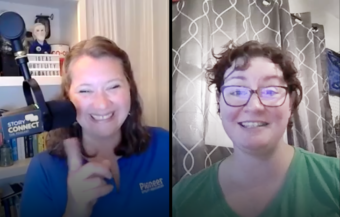
Intro: A production of Pioneer Utility Resources. StoryConnect, helping communicators discover ideas to shape their stories and connect with their customers.
Megan McKoy-Noe: Building on broadband: how do personal, targeted stories translate into sales? That’s what we’ll be talking about on this episode of The StoryConnect Podcast. Hi, I’m your host, Megan McKoy-Noe, one of the storytellers at Pioneer Utility Resources. Now, right now, utilities across the nation have received grants for broadband projects over the last few years. But what comes after you have built out your system? We’re asking utility pioneers across the nation for tips on how to increase subscriptions, build loyalty, maybe even add some AI tools to the mix to help you get it all done. And so to talk about that today with us, I am joined by Erin McKnight, a copywriter and media specialist for OEC Fiber in Oklahoma. Erin, thank you so much for joining us today.
Erin McKnight: Thanks for having me, I appreciate it.
Megan McKoy-Noe: It’s always exciting to learn from you. But just to get us started, tell me a little bit about OEC Fiber. Where are you? How many folks are connected, and what percentage of your service area is built out? I think you’re almost or right at 100%, right?
Erin McKnight: Yes, we are 100% built out, but we’re continuing to grow. It’s a little weird. You know, we started with an electric co-op, and then we had members come to us and say, “We don’t have access to internet.” You know, our office is in Norman. It’s the third largest city in the state, and the University of Oklahoma is there. There were people in the city limits that could not get internet.
Megan McKoy-Noe: How is that possible? This makes no sense Erin.
Erin McKnight: Yeah. It’s crazy. And they’re coming to us going, “We need internet.” And so from that request, from members, you know, OEC Fiber was born. We started doing fiber to the home. And everyone who has our electric service can get fiber now. But we’re continuing to grow into other areas where we don’t have electric service. The demand is that high.
Megan McKoy-Noe: So I’m hearing that you’re overachievers. I love that about your team.
Erin McKnight: Yes, that’s definitely one way to put it. Yes.
Megan McKoy-Noe: Well, and how many folks have you connected right now?
Erin McKnight: We have a little over 38,000 connected right now.
Megan McKoy-Noe: Okay.
Erin McKnight: We’re doing about 100 installs a week, so we’re on track to hit 40,000 by the end of summer.
Megan McKoy-Noe: Yay! You going to have a pool party or something?
Erin McKnight: Well, we’re going to be hitting a big milestone on the electric side as well, so there are plans for a big combined party at this point, but they’re all very hush hush. Nothing is finalized, so I can’t.
Megan McKoy-Noe: Come on, I won’t tell anyone.
Erin McKnight: I will say food trucks are involved, which is always a hit with our crew. You say food trucks, and they are there.
Megan McKoy-Noe: Mhm. Mhm. I can see that. That is very exciting. I can’t wait to hear about this hush hush, very exciting food truck bonanza that might or might not be happening in Oklahoma at the end of the summer. Very cool. So you’ve had a lot of success. 38,000 folks connected to broadband is huge when you look at the number of connections that folks have done across the country and other builds. So that’s like cheers for reaching that. I’m curious what kind of a take rate do you have, and are you building that into your marketing goals?
Erin McKnight: Yes, we are building that into our goals. We currently have, it’s between 42 and 43% take rate. I can’t remember the exact decimal on that right now. It seems like it changes every time I look at it. But we do have a goal of reaching 45% by the end of the year on the marketing side. So we’re slowly creeping that up there.
Megan McKoy-Noe: Yeah. And what kind of churn are y’all seeing with folks leaving, coming back over the last year? And has that impacted your storytelling, your marketing tactics?
Erin McKnight: Over the last year, the churn has hovered right around 1%.
Megan McKoy-Noe: That’s not bad.
Erin McKnight: Now we are in, some of our territory is a university town, so you’re going to have lots of students moving in and out. So it makes that number a little bit harder to really calculate for us because of that. It’s a very unique situation.
Megan McKoy-Noe: Sure.
Erin McKnight: But as far as storytelling, for that to try and help prevent that, we’re doing lots of added value and education for our members and subscribers. So let’s teach you how to, you know, upgrade your computers. So that way, that old computer that you’ve got from the 90s that’s still running on Windows 95 can actually function because it’s not going to utilize that gig speed that you just signed up for. And I see you laughing, but we have had people call with that issue.
Megan McKoy-Noe: I just – the memories, the memories of old tech and email.
Erin McKnight: The sound that is forever ingrained in our brain when we turn it on. But you know, things like that. How to create a more secure password. And then going to businesses, how they can protect their customers and their information. So doing lots of education and added value has been huge for us as far as retention. Our big focus is service excellence, whether that be customer service, IT, whatever it is, our goal is to lead in service regardless of the area it’s in.
Megan McKoy-Noe: So you mentioned Windows 95. Great year. And some of the work that you’re doing helping businesses, commercial accounts, make sure that they have secure networks there. But you also serve a lot of college students, right? So do you have, I’m assuming they don’t run Windows 95.
Erin McKnight: No, I haven’t I haven’t run across anyone that does. If they are, I really want to know how that happened.
Megan McKoy-Noe: Right. But they have different needs, right, as college students. So what kind of outreach are you doing to those subscribers?
Erin McKnight: For education outreach there, we talk a lot about reliability. And then also, you know, the co-op story because a lot of them have no idea what a co-op is. You know, I know when I was in college, going to show my age a little bit here, the web portal, upload of papers was in its infancy, and I was working in a school computer lab, uploading a paper. And suddenly the internet went down and lost an entire 15 page paper that was due the next morning.
Megan McKoy-Noe: And the trauma has stayed with you till this day?
Erin McKnight: Yes it has. So I never want anyone else to have that panic. Yes, we talk about you don’t have to worry about not being able to turn in an assignment because your connection is lost. And then you educate them on the history of the co-op. We’re here because you asked for it. It is a service that is needed.
Megan McKoy-Noe: I’m going to ask you something that will, might make you sad, Erin. So please, please know that I love you. But do they care?
Erin McKnight: Some of them do. It’s actually been really surprising. We get, I’d say probably a 40/60 split on that when we start talking about the history. We don’t spend as much time when we’re focusing on younger demographics, like college students on that. But we do throw in little bits of it and link to larger stories and see that quite a few of them actually do go and explore that. You know, they don’t know that, you know, it started because a bunch of farmers, I believe it was a group of five farmers in this area, got together to form what has become Oklahoma Electric Cooperative, and now we have OEC Fiber because of that. You know, it is a service that people need in this day and age, you have to have Wi-Fi. If you don’t have Wi-Fi, you can’t do the vast majority of things in life.
Megan McKoy-Noe: Oh, I just thought of a fun tagline.
Erin McKnight: Okay.
Megan McKoy-Noe: Got Wi-Fi? Thank a farmer.
Erin McKnight: Okay, I’m stealing that just so you know. I’m going to go ahead and write that down. Where is a piece of paper?
Megan McKoy-Noe: I mean, that’s interesting to try to make that connection for college students. You know, we’ve heard that people don’t care about the history as much. But then I was talking to a co-op educator, Cathy Statz, a couple weeks ago, and she said, young people love co-ops. They just don’t know it yet. But there are a lot of things that sync up with what we believe, and the general feeling that a lot of folks have right now, that ability to have a role, to have a voice, that it is locally-owned. There are a lot of things that seem true with younger college students and members right now, so I like that y’all are weaving that in. I was not expecting that, but I love that, so. Now, Erin, you are a writer.
Erin McKnight: Yes.
Megan McKoy-Noe: Which means that it is your job to find stories. So you talked about sharing the co-op story, but I’m wondering what other kinds of stories set your co-op, OEC Fiber, apart from the competition. And I know that’s a little bit of a loaded question, but do you tout service? Do you tout speed? Local teams? Do you have testimonials that you highlight? Where are the stories at? What works?
Erin McKnight: There’s a lot of ways that we go about getting stories. We talk about service all the time. We’ve actually, just yesterday found out that 405 magazine, we got voted best ISP provider for the third year in a row in our area.
Megan McKoy-Noe: Look at you. I thought there was some extra shine.
Erin McKnight: Yes, there’s there’s all sorts and some other awards that have come in recently because of not only the internet service that we offer, you know, the reliability that fiber has, but just the service in general. Customer service is ingrained into everything we do from people who are out in the field to who you talk to on the phone, to people like me that you probably wouldn’t know from Adam, but you see me in the shirt in the supermarket, and you’re going to stop me and ask me 5,000 questions.
Megan McKoy-Noe: I love that you’re acting like this hasn’t happened to you before.
Erin McKnight: Oh, no. Never. No, I don’t get asked every time I go to church. What are you talking about? But no, it’s focusing on that customer service and the fact that we are local. There are a lot of providers in the area where there is not an office you can walk into and talk to someone face to face. We still have that.
Megan McKoy-Noe: So, and I hear people say that all the time. Well, we’re local. We say that we’re local. But how does that translate into your storytelling? Like what imagery do you use? What kinds of stories are you telling that underscore the fact that you’re local?
Erin McKnight: We actually have done what’s called a subscriber stories series, and we continue to do stuff periodically where we go talk to both businesses and individuals who have our service, and they talk to us about the changes it has made. You know, this is what stuff was like before. This is what it is now. This is how it has impacted my life or my business for the better. And we’ve even talked to, you know, some nonprofits and done videos so they can cross promote. And then every November, we do a Small Business Saturday and a Giving Tuesday series. We reach out to businesses and nonprofits that we serve, asking them if they would like to be a part of this little feature. And we’ll put together like a little blog and a mini marketing campaign that can redirect people to this as like an added value for them. And just pointing back to we are in the communities that we serve. And this is how much we care. We’re going to show you how wonderful our communities are because we’re that proud of where we are.
Megan McKoy-Noe: So like for Giving Tuesday, you’re highlighting places that folks can give in your community?
Erin McKnight: Yeah. For example, there’s one that we did a whole story on last year, and then featured in Giving Tuesday called SunHive Collective, which is for individuals with special needs, either physical or mental disabilities that have aged out of school. And a lot of times, once they’re out of school, all those added supports disappear. But this is a place where they can go and continue to have those supports, continue to connect with people on a day to day basis. We actually for their very first year, we donated a year of service to them to help them get off the ground because there was such a need in the community. And so we, you know, did a whole story on them and highlighted them for Giving Tuesday as well and said, “Hey, here’s just one place that you can go and give back if you feel so led to do so.”
Megan McKoy-Noe: I love that. So you’re making these mini campaigns. You’re sharing it on your social, I assume. Where else are you sharing these stories?
Erin McKnight: They will be in social. They’re on our blogs. We’ll occasionally have videos that go up on YouTube. We’ve done little mailers to go with the campaigns, with QR codes that link to the stories. It’s appeared in the co-op newsletter. We blast it pretty much everywhere we can.
Megan McKoy-Noe: So you would have a mailer that you design and make for one of your community partners, and they can help, like work with you on where it gets mailed or you guys do that?
Erin McKnight: We actually did a broad mailer, so we would talk. We talked to multiple institutions. Basically anyone that we reach out to that would be a good fit. You know, you do have to vet some places a little bit. Unfortunately, that is the nature of the beast. And then anyone who responds back and gets us, you know, the little bit of information that we need, we include them in a write up. It may just be a short paragraph about each one, and then we have a mailer for all of them that links back to it.
Megan McKoy-Noe: I like that. I would love to see an example of that and share that, because I think it’s a really nice way to build those, the ties and the community. Build love as it is for you. So how else do you get testimonials? You mentioned subscriber stories, which I think is super, super cool because I like alliteration. That was an email that was going out? You do too. An email or was it social posts, podcasts, like how was it getting out there?
Erin McKnight: As far as how we got the subscriber stories?
Megan McKoy-Noe: How did you share them?
Erin McKnight: How do we share them? We did social campaigns that linked to either a co-op news story, which is the magazine newsletter that goes out or to a story on our blog. And then, sometimes if they were willing to be on camera, we would do like a little video interview with them and put that up on our YouTube channel and share that across socials. You know, because video is huge, that’s going to get a lot more view for them if they’re willing to. But not everyone’s comfortable with that. And that’s okay.
Megan McKoy-Noe: So how, you mentioned, finding these stories, where do you find them? Are you asking people for reviews on a regular basis? Are you getting them from like, Google reviews, Facebook reviews, or out in the community talking to people? Where are these stories coming from?
Erin McKnight: They come from a variety of places. When we first launched the subscriber story idea, we did do a plug for it. You know, we put out a social campaign going, “Hey,” you know, “do you want to share your story?” You know, if you’re selected, you can get like a I think it was a $25 bill credit, you know, something like that, just to start getting people in. You know, it was a very new concept. We weren’t sure how well that was going to fly, but we got a ton of submissions of people wanting to talk about the difference that having that connectivity has made for them. And then, you know, being out in the community at various events, we’re very involved in the Chamber for all the communities we’re in and people just coming up and talking to us, just telling us stories. And then, you know, someone coming back to me if I wasn’t there going, Erin, I’ve got someone you need to talk to.
Megan McKoy-Noe: Those are the best. Most of the time.
Erin McKnight: And reaching out to them. Like, people are so excited to have the opportunity to connect and enhance their quality of life.
Megan McKoy-Noe: Well, but is that true still today? I know that when folks first got broadband access, they were like over the moon excited. You know, the big question everybody got was, when is it going to be here? When can I get it? When can I get it? They’ve got it now. How do you keep that excitement? Sustain that now that they’ve got it, and they’ve had it for a year or two?
Erin McKnight: It goes back to that service that we talked about. We’re going to reach out to you and make sure that everything goes okay. I mean, we’ve got tons of analytics on our side as far as how the network is performing. And our subscriber support team, when there’s alerts that, you know, someone may be running a little bit slow or something, looks like it’s not functioning at the highest level, whenever they don’t have an inbound call, they’re calling that individual and saying, “Hey, I want to make sure everything’s going okay with your service. Is there anything that you need help with?” And just those little touch points like that, that’s reignites that spark. People are so amazed that we reach out to them proactively because we think there may be an issue.
Megan McKoy-Noe: Yeah. No kidding. That’s huge, and I haven’t heard of other folks doing that. So I love that y’all are not just monitoring how everything is working, but flagging problems, potential problems, and then reaching out proactively. That’s wonderful. Do y’all have any referral programs built into your marketing strategy too, just for folks telling friends to sign up?
Erin McKnight: No, we haven’t had to do any referrals or promos or bundles or anything like that at this point. Because like I said, it’s that service and reliability. You know, the power of connection. We lean hard into that. And, you know, we’ll do everything we can to make the service the best it can be.
Megan McKoy-Noe: Yeah.
Erin McKnight: You know, there may come a time that at some point, just because of the saturation in the market, we have to do some little promos or something like that. But, you know, we want to make sure that we’re as transparent as possible with everything that we do.
Megan McKoy-Noe: Yeah.
Erin McKnight: Because if you can trust who you’re getting the service from and not, you know, get those surprise bills in the mail and have to call every six months to a year just to try and get your bill back to where it was, that’s going to build that loyalty. It’s going to build that trust because you know that you’re being taken care of.
Megan McKoy-Noe: Yeah. No, I love that. Now personalization is king when it comes to marketing. And you were already mentioning some of the education that you all have done, really targeting where people are at different stages of their lives to make sure that they know how to use technology, which is great. But how else is OEC Fiber using targeted storytelling to attract and then convert subscribers in the zones that you serve?
Erin McKnight: We use a lot of demographic data based on zip codes. There’s so much data out there. So we will go and look at what’s the demographic in that area as far as age, tech usage, number of devices that tend to be connected per home, you know. Kids enrolled in school in that area and figure out, okay, so this is the main demographic in this area we want to target. How are we going to tell this story to them? You know, if it’s an older neighborhood, for example. If we’re going into a neighborhood, it’s all 65+, kids are gone talking about being able to have the kids play video games without, you know, freezing and buffering and getting boned by the noob that just hopped on because your connection went south is not going to work.
Megan McKoy-Noe: Nope.
Erin McKnight: At that point, we can focus on value because they’re starting to look at things very differently. Here’s the value of the service you’re getting, and the fact that you can choose your package and change it whenever you want to. If you find that this doesn’t work for you, we’ll help you find one that does.
Megan McKoy-Noe: I like that. And then you also, you and I were talking offline a bit about the different stages that you’ve been in different, in each zone that you’ve been approaching, and that you have some storytelling built around that. Not the specific personas that you’re serving, but the stage of, you know, if you’re just launching in an area, or if you’ve been there for a while. Can you talk about I think you said there are three tiers that you use for storytelling?
Erin McKnight: Yes, we have three main tiers in our campaign strategy, and then we have additional ones that we throw in as need arises. We are going to do a general blast campaign to all zones that has a very basic messaging, and that kind of covers our base. That makes sure that when we’re going into those new zones, people know who we are. But then it’s also reminding some of those people who’ve been there for a while, “Hey, we’re still here.” And then we have, you know, what we call our zone targeted campaigns. And that’s where we look at, okay, here’s a zone that has low ROI and looks like we could really use some extra help there.
Megan McKoy-Noe: Sure.
Erin McKnight: Boosting that ROI. There’s still a lot of people that haven’t signed up. Let’s figure out who they are and send messaging just to them.
Megan McKoy-Noe: I like it.
Erin McKnight: There’ll be a mailer campaign that goes just to those zones each month, and it changes every month which zone we’re going to.
Megan McKoy-Noe: Yeah, just targeting where you’ve got a low take rate and more potential there. I like that a lot. Okay, and then what is the third? I’m excited.
Erin McKnight: And the third one deals a lot more with retention, focusing on that churn rate. That’s the providing additional value. That’s where those education pieces come in. You know that’s where we’re teaching you about things that are coming up. We’re going to explain the difference between an outage and scheduled maintenance. So you know what on earth that email we’re sending you, letting you know that you’re not going to have service between midnight and 3 a.m. tomorrow means. So that way you’re better educated, and you have a better understanding of everything that’s going on.
Megan McKoy-Noe: Okay. So that’s a great example. So furthering the education component focusing on value, third. So I like those three main tiers of storytelling that you all have developed. I love the way that y’all showcase and other folks showcase stories at events. So do you have like big sign up events in your community or maybe gaming or speed events if they aren’t in the older set and do have children at home where folks can see how different upgrades can make life better?
Erin McKnight: We haven’t done anything where we’re taking like our gear out there and showing people. It’s more, “Hey, we’re going to come be a part of the community.” You know, there’s a big 4th of July event. We’re going to come out, you know, with swag and giveaways. Here’s glow sticks for the kids, hats. You have to have hats and pins, or they’re going to run you out of town.
Megan McKoy-Noe: Always.
Erin McKnight: But we’re also there just to talk to you and answer questions. You know, we’ll have an iPad or something there where we can look at things and help troubleshoot. Or if someone wants to get signed up and they’re, you know, afraid to talk on the phone to somebody, but they’re struggling with the online sign up. Okay, let me help you. We’ll walk through it together. So it’s more that when it comes to signing up events out in the community, we haven’t done a specific okay, come sign up for service, and we’re going to grill a bunch of hot dogs. It’s no, we’re here just to be a part of the community. But we’ll help you with the other stuff too.
Megan McKoy-Noe: Gotcha. And how are y’all adding broadband labels to the mix? Have you guys talked about this yet? It’s very exciting.
Erin McKnight: It is exciting and terrifying all at the same time. Luckily, our partner NISC is taking care of a lot of that for us. They’re doing a lot of it on the back end, so we aren’t having to spend as much time focusing on making sure we meet all the regulatory standards there. We can focus on telling that story. And I am starting to percolate ideas of how can we actually use this in a campaign? What’s a way that we can make this boring chunk of information fun?
Megan McKoy-Noe: Do you want to hear what I was talking to someone about yesterday?
Erin McKnight: I would love to hear it.
Megan McKoy-Noe: Having boxes of fiber cereal that you’re giving away at a community event, and then you have the broadband label on the side and just –
Erin McKnight: That’s actually around where I was going with it. I picture someone, you know, on a mailer looking at a box that has our logo on the side and just going staring at the nutrition label and then having it, you know, expanded out. And it’s the broadband label. So, yeah, stuff like that. Just make it fun.
Megan McKoy-Noe: Make it fun. You got to make it fun.
Erin McKnight: Exactly.
Megan McKoy-Noe: So one last question before I let you go. And this comes from other conversations you and I have had about AI, because I know you’re a fan. I’m a fan. We are responsible fans, I should say.
Erin McKnight: Yes.
Megan McKoy-Noe: How are you and your team using AI, artificial intelligence, to help create content or personalized experiences for your target audiences?
Erin McKnight: I use it a lot to help refine things and generate additional ideas. You cannot trust AI to write everything for you. I don’t care which version of it you use. It will lie to you.
Megan McKoy-Noe: And it will smile while doing it.
Erin McKnight: Yes, it will smile. You know, you’ll see all the little smiley emojis and the little glittering hearts as it lies to your face. But it’s just another tool in the toolbox, you know? Got afraid of Grammarly when it came out to help, you know, with all of your editing, but yet now you have stuff like ChatGPT and Claude and all of these other programs that are generating things for you, and people are scared. There’s no need to be scared. It helps you refine those things. I love taking something and going, you know what? I’ve got the message here, but I know it’s not hitting the audience I want it to, and I am stuck. I have spent the last three hours looking at two sentences, and I am out of ideas. You’re laughing because I think you’ve done that.
Megan McKoy-Noe: We’ve all been there. Yep, yep. No, we have all been there. We’ve all hit that wall, and you’re just spinning your wheels and wasting time, and you’re just. You just can’t do it.
Erin McKnight: That’s where, you know, AI comes in. You know, I’m like, okay, “Will you please give me this many versions of this text geared towards this audience, and it’s going to go on an email or go on social media.” And most of the time I’m not going to use exactly what they give me, but it’s going to give me just enough to find what I need. And that’s where AI comes in is. We’re going to use that as a refining tool because we are limited by our own knowledge and experiences, but that can help throw a slightly different lens on it for us.
Megan McKoy-Noe: Yeah, I love that. Well, Erin, thank you so much for sharing your story with utility pioneers. She is Erin McKnight at OEC Fiber, and I’m your host, Megan McKoy-Noe at Pioneer Utility Resources. And until we talk again, keep telling your story.
Outro: StoryConnect is produced by Pioneer Utility Resources, a communications cooperative that is built to share your story. StoryConnect is engineered by Lucas Smith of Lucky Sound Studio.