Share

How much of the publicly-shared interactions with utility staff is trolling versus investigative reporting by concerned citizens who have a right to hold the utility accountable? We’re talking to Ryan Hall about “Getting Out of the Gotcha Moments” at NWPPA’s Northwest Innovations Conference in Idaho.
Ryan Hall
Transcripts have been lightly edited for clarity and readability.
Intro: A production of Pioneer Utility Resources. StoryConnect, helping communicators discover ideas to shape their stories and connect with their customers.
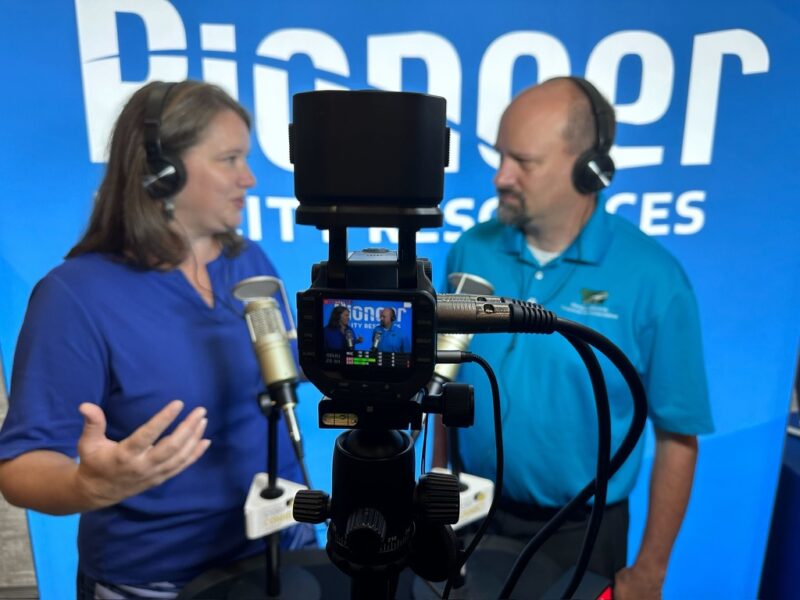
Megan McKoy-Noe: Getting out of gotcha moments. That’s what we’ll be talking about on this episode of The StoryConnect Podcast. Hi, I’m your host, Megan McKoy-Noe, one of the storytellers at Pioneer Utility Resources, and I am joined by Ryan Hall. So exciting to have you, sir. He is the communications director and editor of Rural Montana Magazine for the Montana Electric Cooperative Association. Ryan, thank you so much for joining us today.
Ryan Hall: Well, thanks for having me. I’m excited to be here.
Megan McKoy-Noe: Well, this is exciting because we are together at NWPPA, the Northwest Public Power Association’s NIC Conference. So innovations in communications across the northwest, we’re talking about the latest trends and what people can do to really get ahead of the game and know how to better connect with their communities and not mess up along the way, which is why they brought you, which I’m really excited about. You’re going to be speaking with us today. Your topic is called “Getting Out of Gotcha Moments,” right. And so I’ve got to start by asking you just for a good foundation, what’s the gotcha moment you’re talking about? Because I have an eight year old, there are a lot of gotcha moments that could happen.
Ryan Hall: There are. I’ve got three boys in the house, I understand.
Megan McKoy-Noe: Yep. Yeah.
Ryan Hall: There’s a couple different things that we’re talking about. First and foremost, it’s First Amendment audits, which we can kind of define a little bit there. Yeah. And then also social media. When can you delete it, when shouldn’t you delete it. Those type of things as well. Because it’s really easy to get caught in a gotcha without even meaning to when you start taking control of your social media.
Megan McKoy-Noe: So the gotcha is just something unexpected, something that maybe isn’t the normal day to day communication and interaction with your members.
Ryan Hall: It’s more or less someone trying to get you to go viral by saying or doing something you shouldn’t.
Megan McKoy-Noe: This is still post-pandemic. We don’t use phrases like go viral lightly on the show, Tyan. So it’s when folks want to get you saying something you shouldn’t. And we have heard about this happening more and more often. And this is, I mean, folks could have done this for years, but really, this is kind of a new thing over the last few years or the last year even.
Ryan Hall: Yeah, it’s really come recently, and I’ve looked for trends and tried to figure out why. And it sometimes is tied to politics, sometimes it’s tied to trying to get somebody out, whether it’s a board member, or it’s a city or government thing. But more it seems that people are just trying to get views. Because if you can go and you can get people to act stupid and say things they shouldn’t say and get really fired up on camera, and you can get views, then you can make money off of those views.
Megan McKoy-Noe: So, Ryan, you’re saying it’s like America’s Funniest Home Videos utility pioneer edition?
Ryan Hall: Yeah. Unfortunately, yes. Yes.
Megan McKoy-Noe: Just checking.
Ryan Hall: Yeah.
Megan McKoy-Noe: It’s exciting. So it’s on the rise. How often, I’ve only heard of it happening recently to one person, and it was a big moment. How many of these surprise gotcha moments have you heard about lately?
Ryan Hall: That one may or may not be the main example of my talk, actually.
Megan McKoy-Noe: Yes.
Ryan Hall: It’s actually happening a lot in the government sector, so we’re lucky that it hasn’t come over to the cooperative and the muni-sector yet. But counties and city governments, it’s happening a lot there. Police departments, those type of things.
Megan McKoy-Noe: Don’t do a gotcha at the police department. Come on.
Ryan Hall: What people like to do is go in and say, “Hey, I want to see your entire police log from the last 30 days, and I want it right now.” And they’re trying to get the secretary to start yelling at them about how ridiculous it is so that they can post that video. And that’s really what this is. So a First Amendment audit is when someone comes in and asks something they believe they have the right to under the First Amendment.
Megan McKoy-Noe: Sure.
Ryan Hall: The cooperative example I use is I walk into your cooperative and I say, “I want to know your CEO’s salary.” And so that is public information.
Megan McKoy-Noe: That’s okay. We should say like it is okay to ask for the CEO’s salary when your community owns the utility, you know. So it’s not something that we’re trying to hide, are we?
Ryan Hall: That’s part of the problem, and we’ll get into that. It’s something we shouldn’t be trying to hide, let’s call it that. Because a lot of municipals and cooperatives have these. I’m going to call them archaic policies that you have to wait 30 days, and then you have to come to a board meeting, and then we’ll give you the CEO’s salary.
Megan McKoy-Noe: So hoops, lots of hoops that they have to go through, or I guess with the Olympics just happened. So lots of hurdles they have to jump.
Ryan Hall: Exactly.
Megan McKoy-Noe: And then they land in water in one hurdle, and then it gets just a mess, and you’re like, “No, it’s all part of the thing. You have to run this track.” You don’t. You shouldn’t have to. We should make it easy.
Ryan Hall: These policies were set up pre-internet for most of them, and it made sense. But now I can sit down and Google the form 990, and I will have the CEO’s salary in 13 seconds. And so rather than make this big thing where we’re saying, no, you can’t do this, and you have to do that, and you get them on video. And you can say, “I pay this utility every month, and they can’t tell me what we’re paying our CEO?” But here I go online, and here it is. We have to change the way we think and be more cooperative with our members so that we can we can handle these things without giving them those viral moments. I tell people it’s like a locked car. If someone wants to get one of these moments, they’re eventually going to. But if you can lock your car and not give it to them right away, they’re going to move to the next car and find an easier target. And so it’s the same thing as if you can be like, “Oh, of course, here’s the CEO salary, no problem.” Then they’re going to go find somebody else that might get a little more defensive.
Megan McKoy-Noe: So it’s kind of like taking a vaccine shot by updating your policies and thinking ahead about what is the information that people might ask for by looking at these examples. Like there was one example in California where they came in filming their cruise, which from outside the fence, which is totally fine, it’s public property, you know, they could do that. And the cruise got really upset and cussed them out and used certain finger signs. It went viral, right. So instead of, I guess, the best thing that you can do, really to inoculate yourself is to talk to your staff, to update your policies, right. What else should people be doing to protect them – not even protect themselves, but just update for the viral age?
Ryan Hall: It’s just being aware. That’s the way I see it. It’s not protecting. It’s how to make people aware.
Megan McKoy-Noe: Okay.
Ryan Hall: And it comes down to training. So you have to train your folks of what is readily available. If someone comes in and says, “Hey, I want to see the credit card statements of the CEO for the last seven years,” which they can do. That’s when you have that 30 day. Oh yeah. That’s when you can have the 30 day Freedom of Information Act request and say, “That’s going to take me a while. We’ll get to you in 30 days. Come pick it up.” That’s when it works. When they come in and say, “I want the CEO’s salary.” You shouldn’t make them go through that FOIA and all that time. So training them what is available, how long it takes, that type of stuff, is your first step.
Megan McKoy-Noe: Now you’ve done more training like this. I know you spent a whole day with folks doing training at the Northwest Public Power Association’s annual meeting this year, right? So what kind of training have you seen folks put into action at their utilities?
Ryan Hall: I’ve seen a lot of different things. And part of it is this, you know, they’re sending folks to that was an all day pre-conference training, and we had, I think it was 12 or 13 people that took an all day. They sat through a mock media interview that was set up to be gotcha. We have people coming here. I’m being asked to go to different utilities. There are a lot of great trainers on this subject out there. I encourage bringing it in, and now in the post-pandemic world, you can do it by Zoom, so it’s a lot cheaper. You don’t have to fly somebody in. You don’t have to set up a whole day. I’ve done trainings on this with boards in an hour over Zoom. So there are a lot of options out there to have people come in. But a lot of it is just conversations. You don’t have to have a professional trainer come in. You sit down and you say that this is what is available when someone comes in. This is how we handle it. We don’t get defensive. This is the stage at which you go get a manager. You don’t start with that because that’s what they want. They want to have the manager come and be that guy. If they can catch the CEO yelling at them, that is the goal they’re looking for.
Megan McKoy-Noe: That’s fun. So to make sure that everybody has this information handy and that all of your staff because you never know. It could be line workers that are being filmed and trying to, you know, ask them questions. It could be somebody at the front desk. With a lot of our campaigns and a lot of programs that we have, utilities will have talking points for staff. Have you seen someone with just like a little business card that has the talking points, our CEO’s salary, is this. You know, if someone wants more information about this or this, then this is our policy for that. This is the person they can call. Just something that all staff can have handy after a training. Have you seen that happen?
Ryan Hall: Yes I have. We encourage that. So I actually tell them to have two cards at everyone’s desk. And one is to have exactly that. The readily available information, how long it takes to get the not readily available information, and at the bottom it says breathe and stay calm.
Megan McKoy-Noe: Oh, I love that.
Ryan Hall: So that’s the first card. The second one is your social media policy. So when you see that comment online and you go, I’m going to take care of that comment, you read that media policy and go, does it violate to the point where I can delete?
Megan McKoy-Noe: Yeah.
Ryan Hall: And so they both are there, and both of them stay breathing and stay calm. Because that is I think the key to any interaction is to relax. Take your time with it. No one’s got a clock on you, and that is how you stay out of trouble.
Megan McKoy-Noe: Okay, breathe. Stay calm. Co-op on. Is that? Yeah. Okay. So that’s what you can do beforehand.
Ryan Hall: Right.
Megan McKoy-Noe: Which is great. And hopefully all of our listeners to The StoryConnect Podcast and everyone that is coming to the NIC will say, “Okay, this is what we need to do,” but hindsight is 2020. Yes. So what do you do after a video or a social media post that someone puts out there after something has started to spread online? Do you meet those half truths with reality and just say this is what really happened? Or do you ignore it? Like what’s the gauge there?
Ryan Hall: You drink? No, I’m kidding.
Megan McKoy-Noe: No, no, no.
Ryan Hall: I’m kidding, no.
Megan McKoy-Noe: That’s later tonight.
Ryan Hall: No, but, and it kind of depends on the situation. There is no blanket statement for that. But generally what I would say is you correct what you can, but recognize that the genie is out of the bottle. And unfortunately that is the truth. I have an example in another talk that I do – not the one today – that I believe you’ve seen where we’ve got Prince Harry that is obviously flipping off a crowd. Well, then that was shot from one angle. But from the side, he’s actually got three fingers up, and he was talking about his soccer team three-peating. But to give you an idea, that first one that was allegedly one finger had over 49 million views last time I gave that talk. The correction had 14 million views because it’s not as fun to share the right story.
Megan McKoy-Noe: No.
Ryan Hall: And so you get your information out there, and I think what you do is you target your people. You don’t worry about the mass reaction. When that video that you’re talking about with the trucks and the linemen went viral, you’re not going to fix the people who saw that in New York and Pennsylvania. And you shouldn’t try. What you need to do is you need to put on your social media and corrections what should have happened, what’s going to happen in the future, how you’re going to handle this? Invite people to come look at the trucks. Invite people to stand where that person did, and show that we don’t mind you being here and inspecting our stuff. Do that type of thing and handle it locally. Handle the people that matter. Your members, whether it’s a municipality, whether it’s a county, whether it’s a co-op. Handle the folks that are your customers, your members, and show them what you’re doing to correct it and do your best you can on social media to correct it that way. But realize that the mistake is going to be far more reaching than the correction. And unfortunately, that’s just the error we live in. Because I share the funny stuff; I don’t share, you know, the calm correction. I think we’re all that way. You know, you look at the videos that we share to our friends, and it’s not the calm, relaxed and correct things.
Megan McKoy-Noe: I wish it was. The world needs more calm, relaxing, sharing, I think. But yeah, that’s not reality.
Ryan Hall: No.
Megan McKoy-Noe: No. All right, well, one last question before you go. What is the one thing that publicly owned utilities can do? You know, we mentioned training, but is there anything else they can do to prepare for a First Amendment audit?
Ryan Hall: And again, I think it’s talking to your people. It really is. I mean, I know we went back to that, but it’s just letting your people know that it’s okay. I mean, that’s the big thing is that we talked about it several times, but that’s really where we come back to is people think they can’t give the information out. You know, we have been trained and ingrained throughout life that salaries are protected. And that’s not information we share with people. I don’t tell people what I make. You don’t tell people what you make. But when you come to CEOs of public utilities and things like that, it’s on the form 990. And if it’s publicly available, we should give it with a smile instead of being upset and angry. And I think people are doing this because they’re afraid of getting in trouble. So I think the CEO has to come out and say, “Here’s the card. It’s got my salary on it, and it’s okay. Everything on this card is okay to tell people. Do it with a smile, and let’s serve our members.” And I think that’s the best thing you can do is empower them. You’re not going to get in trouble for answering these questions.
Megan McKoy-Noe: Okay. I love that. Empower your employees to share because it’s part of your story as well. And if you do that, hopefully you won’t go viral. I like it. All right. Well, thank you so much for sharing your story with utility pioneers. He is Ryan Hall from the Montana Electric Cooperative Association, and I’m your host, Megan McKoy-Noe at Pioneer Utility Resources. And until we talk again, keep telling your story.
Outro: StoryConnect is produced by Pioneer Utility Resources, a communications cooperative that is built to share your story. StoryConnect is engineered by Lucas Smith of Lucky Sound Studio.