Share

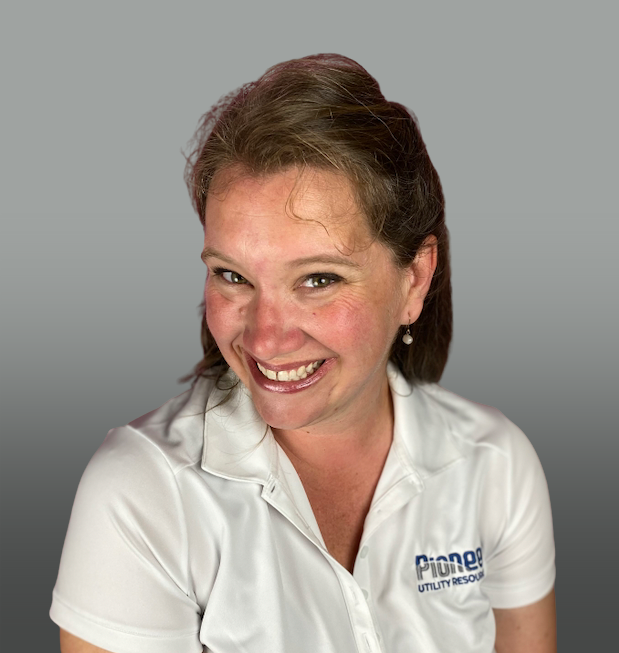
Want to help consumers feel comfortable with broadband possibilities? Build co-op living rooms in your community! Crystal Johnson-Smith, of Prince George Electric, shares how her co-op turned ideas from the past into education opportunities for her community’s future.
Crystal Johnson-Smith
Transcripts have been lightly edited for clarity and readability.
Intro: A production of Pioneer Utility Resources. StoryConnect, helping communicators discover ideas to shape their stories and connect with their customers.
Megan McKoy-Noe: How can you help consumers understand new technology while sharing your story? That’s what we’re going to talk about on this episode of The StoryConnect Podcast. Hi, I’m Megan McKoy-Noe, one of the storytellers at Pioneer and your host today. I am joined by Crystal Johnson-Smith, vice president of human resources and member engagement at Prince George Electric Cooperative in Virginia. Now, Crystal works on staff recruitment, retention and communications for the co-op and for RURALBAND Fiber Internet, the co-ops broadband subsidiary. Crystal, thank you so much for joining us today.
Crystal Johnson-Smith: Thank you, Meghan. Thank you for having me.
Megan McKoy-Noe: Now, you have been in the electric industry for 15 years, starting as a recruitment specialist at an investor-owned utility. You focused a lot of your career there on diversity and inclusion efforts before joining the co-op world two years ago. We’re very happy to have you. And I’m just wondering, how does building a diverse workforce impact and benefit utility communications?
Crystal Johnson-Smith: I think that it’s very important. I think that when organizations, especially utilities, can identify a diverse workforce, it often helps or minimizes misunderstanding or miscommunication to different people of different demographics. Communication breakdowns often happen when assumptions are made that a certain group will understand the message because previously who they communicated to before did. In fact, we’re seeing where diversity is important, and some of the things that we implemented at the cooperative is, you know, the use of social media. And making sure that we communicate in various different forms as well as we want to make sure that we represent the community that we serve. And by having a diverse workforce, it helps us be more innovative, creative and also think about how can we better communicate to our members.
Megan McKoy-Noe: And I love that your position has both HR in it and member engagement in the title. This just such an interesting mix up, but it makes sense when you think about how the way that we communicate is impacted by the folks that are doing the communicating, right? So it’s just exciting. Now, I’m curious about what challenges are facing utilities like Prince George Electric as you try to connect with consumers in 2023?
Crystal Johnson-Smith: Some of the challenges that we have are typical in a rural community. Definitely from a workforce standpoint, getting individuals that want to continue to reside in these rural communities and also come and work for us and reflect the community that they are. When I think about in the past, right, and probably how our parents communicated, it was more of a transactional process. You called if you had a question or if your bill was high. But now we really see that consumers want to be engaged. They want to have the information with the more innovative technology. I mean, you can sit at your desk today and turn down your thermostat. So as more innovative, smart meters and other things become available, members do want that engagement. And they do want the real time information, and not the surprise when the bill comes.
Megan McKoy-Noe: No surprise. It’s in 2023.
Crystal Johnson-Smith: No surprises. No surprises.
Megan McKoy-Noe: Yeah, the expectations have definitely shifted a lot over the last few decades. Especially the last three years, expectations have radically shifted.
Crystal Johnson-Smith: Yes.
Megan McKoy-Noe: I love that. Now, when we met a couple of months ago, we had this great conversation. It’s why we asked you to join us today. You told me about a special space that your team built for member engagement and broadband benefits education. You mentioned the REA Circus and this co-op kitchen efforts from the 1940s and the 50s. And then you shared how your co-op took those examples from the past and turned them into ideas for broadband education. So could you share with us what is the RURALBAND Education Center?
Crystal Johnson-Smith: Sure. You know, when I first, and I cannot take credit. That was from my CEO at Prince George who thought of the idea. We brainstormed. We talked about what we wanted the space to be, and it was really important. I will tell you, going back over history, right, just like if you’re a parent or anyone who’s listening, you know, they always say, not anything is new under the sun. Like there’s no surprises, right? And so really taking the same thought and mindset back in the early 1900s when refrigerators came about. Washer and dryer, dishwasher, you could go and touch and feel. And what we found or even back then, people became more comfortable, right, with using the modern technology, looking at the convenience of it. You know, I couldn’t imagine what it was like not to have a washing machine, but we took that similar concept and that mindset to create these cooperative living rooms, also known as our Education Resource Center. And we wanted the communities to be able, the residents, to come in and be able to answer questions about their broadband services. Get familiar and comfortable with smart TVs, their Roku stick, you know, all of these technologies, Alexa, and how you can have them turn on your lights for you and, you know, do a lot of those things that are innovative as well as utilizing some of the equipment or technology that they currently have.
Crystal Johnson-Smith: We know every home doesn’t have a smart TV, but there is a lot of advantages by having broadband that they will get to enjoy and experience. So it’s been a great experience. We’ve launched two of these Cooperative Living Room Education Centers in Surrey County, Virginia. And that was really important because that area was completely unserved. And so it was a great model to have a community, a county, be able to come in. And yes, they’ve been wanting Internet, but to see all that, the Internet really has to offer. Probably dispel some myths, but also help them feel in an environment that they can ask questions that they may have to ask to their grandkids. Well, now you can come here, and we have someone on staff that will walk you through how to set that up, in addition to our fiber field optic techs that also help our members when we sign up.
Megan McKoy-Noe: So I was going to ask you how you would pick a location for this. And it sounds like you have now two locations. But the first one, you said you put it in an area that still was not served, right? Were you in the process of building out your network in that area? And then what did the timeline look like? Like how long before you were able to sign folks up did you launch your Cooperative Living Room there?
Crystal Johnson-Smith: So with our first location, we actually did it at the end once we came in and made fiber available to the home. So it was kind of the ceremonial aspect. Okay, it’s now available, right? We can run the fiber. We can make it accessible. But if people or residents don’t feel comfortable about the technology, essentially you’ll have a lot of homes that are passbys that don’t take the service because they still have questions. And this allows them to be able to ask certain questions. Once I sign up, you know, you’re not just on your way. Hey, let’s show you how you can use that and be a better informed consumer. Our second location is done differently. We actually launched that to kick off our project in Dinwiddie County. And so we’re doing the reverse. We’re doing it ahead of time. And that also serves as a different purpose. This would not be possible without support from the county administrators, the board of supervisors, legislation, state funding, body grants. And so I’m seeing the difference in this one being truly, truly informative, our Education Center because we haven’t. We are starting the project. It will go through 2024. This is allowing the community to come in and ask questions. Our most common question is, of course, when will I get service?
Megan McKoy-Noe: One question everybody has. When are you coming? When you come coming?
Crystal Johnson-Smith: Yes. And the benefit of this, especially in that community in Dinwiddie County, is they actually talk to a live person. You know, they’re not in some of the larger ISPs. You know, you’re calling someone in a whole other state or someone. These people are actually talking to people face-to-face, you know, as well as speaking to someone that’s local that understands the demographics and the location.
Megan McKoy-Noe: Well, I was going to ask about that. You talked about filling these cooperative living rooms, these education centers, with a lot of the technology that you would have in a home that’s connected to broadband. But what about the staffing? Do you have just one person there? Do you have a couple folks there? And are they from your staff? Are they volunteers? Or is it kind of part of their job to staff the living room for a certain number of hours each week?
Crystal Johnson-Smith: Yes. So we have been very fortunate. We have recently hired a fiber sales representative that is responsible or wants to be out and staff this. He is also a resident of one of the locations because he moved there. He relocated from another part of Virginia, so he made Dinwiddie County his home. And he does take appointments as well as dedicated two days out of the week to answer questions for walk-ins. I do want to also mention when you asked, Megan, the question about how are these locations picked. One of the important things in working with the county administrators, we did not want to pick a building – or the county owns the building. We wanted a location where there is already foot traffic. These people are already coming in for any other services. At Surry, it’s a Parks and Recreation Center. So you have families coming in. We didn’t want to put it in the side of the county that no one goes to, and then we want to educate them. So in conversations that I’ve had when we were selecting both of these locations, that was some of the criteria. We want people to come and talk to us. So we tried to make that as convenient as possible.
Megan McKoy-Noe: So you found a location that was already a destination with high foot traffic in the community and an area that wasn’t being served yet, but will be, either now or soon by RURALBAND. So, I like that. Now, it doesn’t – a project like this, I can only imagine, it doesn’t happen all at once. Y’all have been doing this for a couple of years now. You have to build a really strong foundation of community support and partners. You mentioned a lot of folks like the county administrators and different legislators that have offered support, but have you found any champions in your community for these community living rooms? Some members that are excited about it and get folks to come in and visit it too?
Crystal Johnson-Smith: Yes, we have. So there’s not been a kind of traditional ambassador plan or program that we have. But you have to remember, if we’re in these communities and they’re already in a area where there’s a lot of foot traffic, the residents have done that for us. I mean, they are the most I mean, a lot of times the people that come and stop by, it’s because they’ve referred someone else, right? So they came in that that community is kind of those ambassadors that go out and say, “Hey, if you have questions about RURALBAND, they’re at this location. Stop by and go see them.” Again, the counties that we serve also have put our information, our time and hours, in their communication as well. But really, I would have to say a lot of it is word of mouth in these communities.
Megan McKoy-Noe: And do y’all have any community events, regular events, that take place in these living rooms?
Crystal Johnson-Smith: Yes. So we have had the opportunity. Before we had a launch in Surry County, we did have a town hall meeting, and that essentially open up to the community. We marketed. We wanted people to come in and ask for project updates. We provided that information. We also had a member services staff on site. So if someone had a question about their application or where they were in the process or I haven’t heard anything back, that was real time. And some people may have not signed in the right place or maybe didn’t complete the application, we were able to give them that instant feedback. So that’s been very helpful, and that’s pretty consistent. We recently had one for Dinwiddie County, and so we were able to provide updates on the project. Sometimes those are difficult messages because timelines, delays, things that come up in a fiber expansion project. That you do your best to anticipate those, but there are sometimes that – sometimes things come up that are out of your control. But we really use those as opportunities to reassure the community and the residents that we’re still committed to bringing fiber to their area.
Megan McKoy-Noe: Have you had or thought about having any gaming tournaments in your community, living rooms, anything to get the gamers kind of involved in this space? Because it seems like it could be a nice little – I don’t know.
Crystal Johnson-Smith: You know what? I will take note of that. That does. I mean, we have not, I will be honest, that has not come up. We do have a kids corner, and we call it our Future RURALBAND Member, but we haven’t had any competition type of thing. We may have to consider that.
Megan McKoy-Noe: I’m just throwing it out there. I know. I know a couple of folks that have done that. Yes. What is in your Future RURALBAND Member section for the kids?
Crystal Johnson-Smith: So it’s really cute. So they have like their little table. Essentially, we wanted again, a space where we know that there’s working parents that come in and not to have to come to a space, especially community space, when they already have their children and feel like they can’t come in and actually discuss and have questions. So they get to be occupied. They have their own kids TV. They have an iPad. We have an Xbox. We have some things to keep them engaged so that their parents or grandparents or whoever can speak to someone on staff, and they are also entertained too.
Megan McKoy-Noe: And do you ever have folks come in that just want to use the bandwidth for work and just say, I’m just going to, like in coffee shops, you know how you always have those lingers there that are using the the Wi-Fi? Have you all noticed some of that? Folks that just really enjoy the service and hang out for a little while to get some jobs done?
Crystal Johnson-Smith: Yes. So we have often one of the things that comes, or is discussed, is people want to hold their meetings or have people come into the Education Center. And we’re open to that. They have to work with, of course, the county and kind of their time frames. But we really want people to utilize the space and to feel comfortable with the equipment and the technology. So, yes, we’ve had requests. Some of them have been like renovations in that building, so people, yes, often want to migrate to that.
Megan McKoy-Noe: Makes sense. So it’s nice. So it’s not just a sales space. It’s a place where you can find answers, but also you feel comfortable. And that’s the goal, I guess, to get comfortable with the technology. So I like that. Before I let you go, is there anything else that you want folks to think about as they look for ways to build a stronger, more connected community?
Crystal Johnson-Smith: Yes. So one of the things that’s a great way to end this. I thought about, you know, how can we build a stronger, more connected consumer? I think that we have to educate whether you’re on the electric side or the broadband working at our subsidiary RURALBAND, we want to make sure that we educate. We know that the requests from consumers are not like times before. They are really wanting more information. They’re wanting to understand their billing, their rates. What does it mean, you know, how is fuel impacting my bill? Also, I also look at it as a part to engage them in that process, because a lot of times if you’ve been educated or informed, you feel better or knowing where your dollars are going, and how they’re being spent. And lastly, I would say definitely empowering them. I think someone that has been educated, been engaged, they feel empowered. It takes back a little bit more control that, you know. Yes, while my bill and my rate may be this, I can include some of the technology to maybe reduce some of my usage. Or know during this time of the day, maybe lowering my thermostat. Learning all types of energy efficiency things. So I think that it’s important that we remember, the trend is not going back to the way it has been. It’s moving forward and the utility, our broadband ISPs, really need to keep that in mind. It’s not changing. People want real time, instant information and the better that we can manage that and communicate that, I think we’re going to have really engaged members as well as future ambassadors about what we have or what we have available.
Megan McKoy-Noe: I love that. I love the idea of creating empowered members, like giving them a sense of control over things. I mean, that’s what cooperatives are all about. We’re partnering with them, and by communicating about all of those options that are available to them, you can help make that partnership more powerful. So I love that. Well, Crystal, thank you so much for sharing your story with our family of utility pioneers. She is Crystal Johnson-Smith, vice president of human resources and member engagement at Prince George Electric Cooperative. And I’m your host, Meghan McKoy-Noe at Pioneer. Until we talk again, keep telling your story.
Outro: StoryConnect is produced by Pioneer Utility Resources, a communications cooperative that is built to share your story. StoryConnect is engineered by Lucas Smith of Lucky Sound Studio.