Share

Oregon experienced a harsh year for wildfires in 2024, as 1.9 million acres burned. In response, cooperatives across the state teamed up to develop shared wildfire resources. Download your free wildfire communications toolkit from Pioneer!
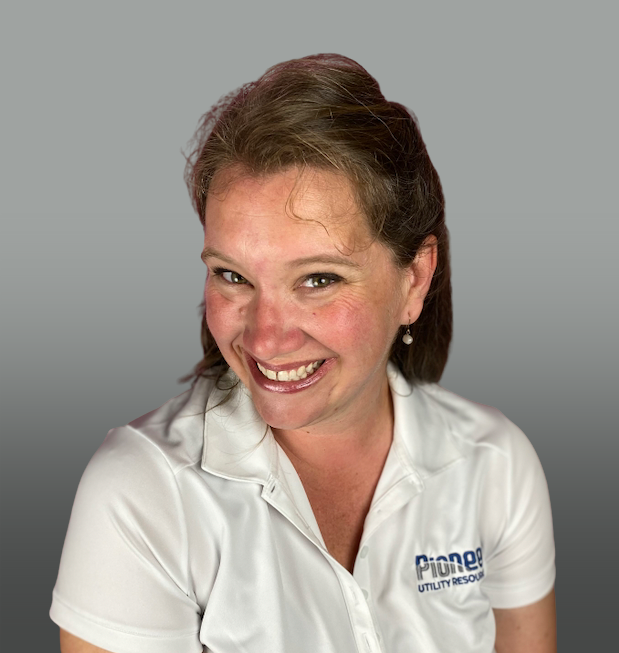
Kelsey Bozeman
Transcripts have been lightly edited for clarity and readability.
Intro: A production of Pioneer Utility Resources. StoryConnect, helping communicators discover ideas to shape their stories and connect with their customers.
Megan McKoy-Noe: Wildfires. Are you ready to douse a crisis? That’s what we’ll be talking about on this episode of The StoryConnect Podcast. Hi, I’m your host, Megan McKoy-Noe, one of the storytellers at Pioneer Utility Resources, and I am joined by Kelsey Bozeman, communications specialist at Coos-Curry Electric Cooperative in beautiful Brookings, Oregon. Kelsey, thank you so much for joining us today.
Kelsey Bozeman: Yeah, thank you for the opportunity.
Megan McKoy-Noe: Of course, we always have fun together. And I should say we are at the Connect Conference. We are in Kansas City, Missouri with a few hundred of our co-op and public power friends. So if you hear any noise in the background, it’s ambiance. It’s idea swapping. It’s excitement around every corner. It is Connect folks, and we have so much fun sharing ideas. And I wanted to talk to you about some of the fun stuff that you’re doing at Coos-Curry Electric.
Kelsey Bozeman: I’d be happy to share.
Megan McKoy-Noe: Yay! All right. Well, 2024 was a record breaking year for wildfires in Oregon, which is yay! You know, it’s good to want to have things heat up in some ways, but not so much others. Y’all had 1.9 million acres that burned, which is just –
Kelsey Bozeman: It’s unbelievable.
Megan McKoy-Noe: It’s insane. It was like every week there was something else new coming up. But what I love about cooperatives is what you guys did in response. So over the last year, I think you told me cooperatives across the state of Oregon teamed up to help each other to be ready when this happens again. Right. So what can you tell us about how co-ops across the state of Oregon developed shared wildfire resources?
Kelsey Bozeman: So that’s a great opportunity to talk about. So we are still currently working towards getting more shared resources, and it’s developing as wildfires are becoming more prevalent in our region.
Megan McKoy-Noe: Are you saying it’s catching on? Yeah.
Kelsey Bozeman: I like a little pun.
Megan McKoy-Noe: Yeah. Well.
Kelsey Bozeman: But with that, you know, the climate is ever evolving, not figuratively and literally. But we are working together to kind of figure out what that’s going to look like. You know, there’s multiple facets to it. You’ve got your wildfire mitigation plan that you need to be talking about to your members. You have now PSPS, which is a whole.
Megan McKoy-Noe: Well, and we should say that’s an acronym that we all are coming to love and be terrified of – public safety power shutoffs. Oh, I’m sure everybody at home was saying that along with us too. PSPS. It’s not like a P.S., I love you. It’s a P.S., we really do love you, but P.S. we’re turning off your power.
Kelsey Bozeman: Yeah, it’s interesting. I heard at a different event. They were talking liability instead of reliability sometimes. And so keeping our members safe is obviously, you know, our first priority. And it’s, you know, it’s something you don’t really want to do is shut your members’ power off.
Megan McKoy-Noe: No, they don’t tend to appreciate that, which is why telling the story is so important around wildfire communications. Now, I was on y’all’s website, and you have a wildfire mitigation whole section on there, which I think a lot of folks are thinking about doing now. It had great statistics and resources for members. It had your whole, a lot of your plan there, which I thought was impressive too. And I know you said it’s still evolving. Yeah, but you’re still coming into it with something. Can you tell me when you created the page and how you prioritized the stories that you’re sharing there?
Kelsey Bozeman: So it was a combined effort. You know, our wildfire mitigation plan comes from our operations. It’s very strategic. It’s, you know, we’re closers, and you know how our settings are going to be. And working with member services and communications, we were able to really like bridge that gap and talk in the same language.
Megan McKoy-Noe: Yeah.
Kelsey Bozeman: And so, with the wildfire mitigation plan getting updated with more information about PSPS, that’s when we took the opportunity to connect and work on that and start telling the story from Coos-Curry’s perspective and how we want to protect our members. You know, we really don’t want to ever turn the lights off, but we’re going to do what we can. We’re going to look at whether there’s different factors, whether that’s humidity or temperature, and make the best possible decision for our membership. So that, you know, we can keep them safe in an event.
Megan McKoy-Noe: Yeah. And there’s a fine line there when you’re communicating about public safety power shutoffs too. And you don’t want to accept the blame for anything that happens either.
Kelsey Bozeman: No. We don’t want to be the spark of ignition.
Megan McKoy-Noe: Right, you don’t want to be the spark, but you also don’t want folks to blame you for being the spark either.
Kelsey Bozeman: Yeah.
Megan McKoy-Noe: It’s tough.
Kelsey Bozeman: It’s an interesting mindset. It’s something we’d never considered in the past. You know, we always wanted to keep our members having the ability to protect their property, have their wells, and have their pumps on. And so there was a whole educational component of that, too. We went out in the communities in some of our most rural areas and just had sit down conversations and talked about if we ever did have to do a PSPS, what that would look like. And, you know, Oregon’s amazing in sharing resources like we were talking earlier so I could just call up a neighboring co-op. There’s a couple great ones.
Megan McKoy-Noe: There’s so many great ones.
Kelsey Bozeman: They’re here at the conference, too. Yeah.
Kelsey Bozeman: And kind of hear their lived experience with it.
Megan McKoy-Noe: Now you’ve been lucky. You haven’t had one hit recently.
Kelsey Bozeman: Correct.
Megan McKoy-Noe: But last year you had two that were on the edges of your service territory. They were getting close.
Kelsey Bozeman: Yeah. So you’re talking PSPS or fires?
Megan McKoy-Noe: No, the fires that were coming in.
Kelsey Bozeman: Yeah. So they did threaten our transmission lines almost. But it was definitely something that, you know, kept us mindful. Like, what if something happened to us? How will we be prepared? How will we talk to our members?
Megan McKoy-Noe: And you have to get ready now before the flames start to rise or creep towards you. You’ve got to have everything ready because it is such a delicate story to tell.
Kelsey Bozeman: Definitely.
Megan McKoy-Noe: And you’ve got to get that education in your community in advance. I noticed also, and I don’t, it wasn’t like linked in your navigation. That you know me, I started digging into websites, I get very – I geek out.
Kelsey Bozeman: My word is sleuthing.
Megan McKoy-Noe: I know, I know. Okay, so I’m a sleuth, and I found a public safety power shut off page on your website, which I haven’t seen a lot of utilities do. I think folks are going to start adding those in now, and it’s something that you can share when you need to. It’s public, but it’s just not linked anywhere yet.
Kelsey Bozeman: Definitely. So we sorry. I interrupted.
Megan McKoy-Noe: No, no,
Kelsey Bozeman: We had sent that page out specifically to the members that were going to be impacted originally, so that, you know, we could get a feeling for how they’re feeling about it. You have to be very careful in how you are communicating it, because we don’t want to. We don’t want to scare our whole membership. There are areas that will never be impacted by a PSPS.
Megan McKoy-Noe: I like that. So it was a custom. It was a page on your website. It’s live, but you can share it specifically with areas that might be impacted by it. How did you share that? Was it an email? Was it text?
Kelsey Bozeman: A constant contact blast with a direct link. And what was great about that we were able to track who actually opened it. So then you know, I love data.
Megan McKoy-Noe: Me too. Sleuthing. Sleuthing.
Kelsey Bozeman: Sleuthing. So we could say, you know, this area is definitely understanding what’s going on. They have questions. You know, we all opened an opportunity for them to provide feedback to us, too, because we’re learning through this experience as well.
Megan McKoy-Noe: Nice. I love that. Now telling folks that you are turning off their power voluntarily. It’s a tough story to share, as we’ve said. Pioneer just in May because May is Wildfire Awareness Month. A lot of folks are getting ready for what will hopefully be a wet season. Fingers crossed. Not hurricane. You know, but not fire.
Kelsey Bozeman: No wind, please.
Megan McKoy-Noe: No wind. No massive wind. Yeah. Anyway, we’re hoping it’s a smooth, smooth summer. I think that’s a song. But, just in case we debuted a free wildfire communications toolkit, you can get it at pioneer.coop/wildfire. And it includes email templates, newsletter articles, social media posts, and infographics. Everything that you can put out before anything happens or the emails are kind of like what you used for folks that might have to have a shut off.
Kelsey Bozeman: Yeah.
Megan McKoy-Noe: You know, we have a draft of that ready. What other tools do you think folks need to have ready before a fire approaches their area?
Kelsey Bozeman: So okay, there’s fire, and then there’s PSPS. Let’s talk PSPS a little bit.
Megan McKoy-Noe: Sure. Break it up.
Kelsey Bozeman: So I think there’s two types of communications you need. You need your internal communications with your team. You need to have a game plan. So we have like a 16 page document that outlays everything we’re talking from what that messaging is going to look like, who’s going to get the messaging, how we’re going to tell our board, how we’re going to tell our employees. And then that’s when you roll out the external messaging.
Megan McKoy-Noe: Oh, I see.
Kelsey Bozeman: Because it might say it’s a PSPS. We might never, ever share anything. We are just geared up, ready to go in case there is one.
Megan McKoy-Noe: Yeah.
Kelsey Bozeman: So you have to start that internal dialogue before you can start communicating with your external. And then you talk wildfire. And that’s a whole other gamut. And I think that one is always going to evolve. Have your crisis communications plans. Follow your templates. There’s some great resources here at the conference, too, for crisis comms, where you can pick up.
Megan McKoy-Noe: Well, again, we learn best when we learn from each other. That’s why I love getting together like this at Connect, getting together at the NIC. We’re going to be in Montana this fall.
Kelsey Bozeman: It’s amazing.
Megan McKoy-Noe: I know. So any chance you get to share ideas and hear what other people are doing, it’s always a powerful thing. So one of the things that you shared that I thought was really interesting was community partnerships. We were talking about this and you said you have some education that you do on your defensible space before wildfire season. And that’s not something that I’ve heard a lot of folks talk about before. Can you share about it?
Kelsey Bozeman: Yeah. So we’re fortunate in our area. We have a great forestry agency, [Coos Forest Protective Association]. I’m going to get the acronym wrong right now.
Megan McKoy-Noe: No, no, it’s fine.
Kelsey Bozeman: But anyways, they go after grant funding, and they have resources that can actually help our members where they might do assessments for defensible space. So it’s sharing those resources of our community partners. Getting them hooked up with their local fire departments to make sure they’re safe. And if there ever is an event where, you know.
Megan McKoy-Noe: Well. And I like defensible space. You’re talking about making sure they’ve gotten anything that might catch fire away from the house. If it’s wildfire season, anything that’s dry and having like, pruning things back and just being aware of where your blind spots are.
Kelsey Bozeman: Yeah, right. Definitely. We also coordinate with our local community agencies as best as possible, emergency managers and fire departments, fire captains, even, you know, your local police department because those people are going to be out there protecting your members while you’re trying to do your messaging.
Megan McKoy-Noe: Well, I heard someone talking earlier today, and I thought it was really smart. They embed a line worker with their local county government officials that are going out clearing the roads. They have a line worker with them.
Kelsey Bozeman: I need to steal that idea. That’s awesome.
Megan McKoy-Noe: Well, no, it’s admire and acquire, right. So I love the, and I appreciate the, idea of having one of your line crews who is assigned to go out with the fire marshal, right. Or with one of the fire teams, because if they come across a live wire situation in the middle of a wildfire, they’re there to help. And they can help advise them, and you don’t have to wait, and you don’t want to wait during a crisis.
Kelsey Bozeman: Oh, definitely.
Megan McKoy-Noe: So, yeah.
Kelsey Bozeman: We are actually really gearing up some of our first responder training right now just to talk about, like if there is a car hit pole, if there is an emergency, if you see a line down, there’s sparking, all of the above. And so, yeah, hearing that idea is a really cool opportunity that I think I want to [inaudible].
Megan McKoy-Noe: It all plays off of each other. It’s all about education.
Kelsey Bozeman: For sure.
Megan McKoy-Noe: Now, you mentioned this briefly. I think you said a 16 page document internally for your wildfire and crisis communication planning.
Kelsey Bozeman: Yes.
Megan McKoy-Noe: Which is a lot. And we talk a lot about on the podcast about community storytelling. But internal storytelling before a crisis hits and during a crisis can be just as critical. So how did you develop your internal wildfire plan, and what should utility pioneers think about when they’re working across departments to develop a plan?
Kelsey Bozeman: That’s a great question. You really need to focus on the phasing, I think, and the preparedness. I think of that document specifically as like a roadmap. So if all of us were gone, they could pick this document up and say.
Megan McKoy-Noe: We’re not going anywhere. Kelsey.
Kelsey Bozeman: We’ve got this. But, you know, having the different phases of the event and what you’re going through in the moment, being able to identify who you need to talk to, what that messaging might look like, and how you’re going to get it out to the public. Just a roadmap.
Megan McKoy-Noe: Well, and I thought it was really clever. You said that you sat down with folks from different departments and you worked on your vocabulary, because everybody had different ways of explaining what was happening. And you’re talking about the same things, but they’re using a whole different set of words for it, and you’ve got to figure that out before there’s a crisis.
Kelsey Bozeman: We have so much industry jargon.
Megan McKoy-Noe: Oh, I love jargon. You’ve heard about my jargon jar, right?
Kelsey Bozeman: No.
Megan McKoy-Noe: It’s like a cussing jar. But, you know, when someone uses jargon, you have to put, like, money into the jar and be like, “Y’all, we can’t use that.”
Kelsey Bozeman: We need an acronym jar, too.
Megan McKoy-Noe: Oh, no, I don’t think there’s a jar big enough for that. Again, public safety power shut off, PSPS, we love you. I really want someone to have that.
Kelsey Bozeman: PSPS, we love you.
Megan McKoy-Noe: So. All right, one last question before I let you go. And thanks for taking the time in the middle of the conference to talk to us about this. It is something I hope folks are thinking about now. But if a utility has not developed a wildfire preparedness strategy, a communications plan for this internally and externally, what do you think they should tackle first?
Kelsey Bozeman: Talk to your neighbors. Talk to other co-ops around you. See what they’re doing. Everyone has such a different nuanced view. And if you can take pieces and start developing from that, I mean, I even, I guess my mother in law, she has a house in Hawaii, and she gets PSPS –
Megan McKoy-Noe: Oh, that’s a nice mother-in-law.
Kelsey Bozeman: Right? She has PSPS in Hawaii, and I’m like, “Send me your emails.”
Megan McKoy-Noe: Sleuthing, sleuthing. Discovery.
Kelsey Bozeman: But just start looking around. Learn what other, learn from others. That’s the best advice I can say. Talk to them. Get, you know, hear the good, the bad and the ugly.
Megan McKoy-Noe: And the beautiful.
Kelsey Bozeman: And the beautiful.
Megan McKoy-Noe: We want the beautiful in the world as well.
Kelsey Bozeman: Hopefully, you get a beautiful outcome out of it.
Megan McKoy-Noe: PSPS, we love you. All right. Well, Kelsey, thank you so much for sharing your story with utility pioneers. And for folks who aren’t in a state like Oregon with these kinds of resources handy, remember that you can go to pioneer.coop/wildfires for a free communications toolkit to get you started. And if there’s something in there and you’re like, “Oh, I wish you had this too,” drop us a line, let us know. We’re a communications co-op, we’re always here to help out however you need us. She is Kelsey Bozeman at Coos-Curry Electric Cooperative, and I am your host, Megan McKoy-Noe at Pioneer Utility Resources. And until we talk again, keep telling your story.
Outro: StoryConnect is produced by Pioneer Utility Resources, a communications cooperative that is built to share your story.