Share


Think engineers don’t understand the role of utility communicators? Better check your math. At the Georgia Marketing, Member Services and Communications fall conference a panel of three electric co-op CEOs — all engineers — explained how they see communications filling knowledge gaps and building relationships.
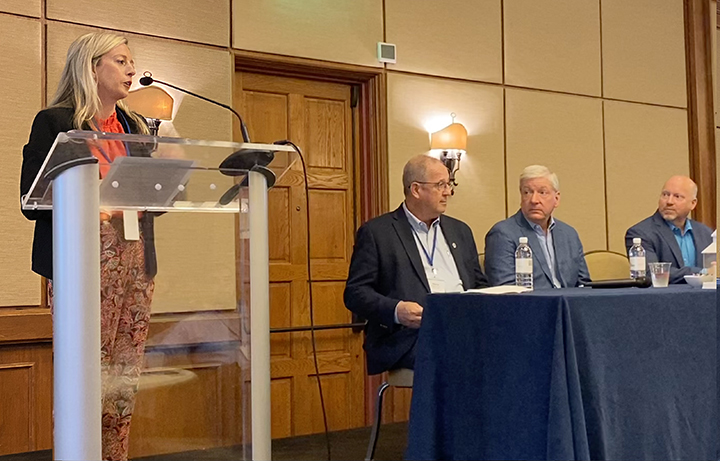
Georgia EMC Vice President of Communications and Member Services Lindsay Bridges led a panel discussion about the future of the electric utility with Sumter EMC CEO Rene Smith, Okefenoke REMC CEO John Middleton and Coastal Electric Cooperative CEO Chris Fettes.
Shifting power supply and reliability were top-of-mind for all three utility leaders. Staff succession planning and keeping the co-op culture alive with a growing staff turnover rate ranked as high concerns, too.
In Georgia, 47% of the leadership staff at electric co-ops in the state will be eligible to retire in the next five years, and several other critical roles in operations, accounting and administrative services are nearly as high. Utilities are experiencing a more transitional workforce, fighting to both attract and retain staff.
“We never had to market for recruitment before,” Rene says. “Now we must market ourselves.”
“Workplace culture is key,” Chris says. “Embrace the team you have and show the value of the co-op’s team approach.”
To strengthen your co-op culture, the leaders advised:
2. Build Relationships with Elected Officials
As regulatory changes impact power supply, all three CEOs echoed the need to build stronger relationships with elected officials.
“Outages are a chance to tell your story,” Rene notes. Sumter EMC texts local officials as part of its power restoration efforts.
How important is communications to the health of the utility?
“We are a product of our community,” Chris says. “You need support from your members. Make sure they know who you are. We forget to brag about ourselves.”
Coastal Electric Co-op has a strong presence in local high schools, providing electric vehicle projects and donations.
“Perception is reality,” Rene adds. “Tell your members you’re in their corner, fighting for them. We’re here because we have a heart for service. But do we tell them that?”
“We’ve got a good message to tell, but we have to tell it over and over and over and over again,” John reminded communicators.
“We do so many good things, but we’re not great about talking about it,” Lindsay says.
To tell your story in the community:
Knowing what you need to do and actually having the time to do it are two very different things. Luckily, Lindsay asked the CEOs about the best way to communicate the return on investment for utility communications.
“The world has changed,” John admits. “I was a late comer to seeing the value of communications. But I’ve learned we must dedicate adequate resources. Communicating takes effort, resources and management support to make it happen.”
“The value of sharing isn’t just the message,” Chris adds. “It’s becoming a trusted source in the community. People want to know what’s going on, and that’s measurable. Communication builds relationships. Care, trust? That’s your ROI.”
“Remember, we all want the same things: energy security and a healthy environment,” Rene says. “Our marketing has to convince the community we can be trusted. If you communicate, members appreciate.”
“Collaboration and templates are key,” Chris says. “Lean on each other. That’s what co-ops do, right?”
We couldn’t agree more. Use Pioneer’s Inspiration section to see how your peers are meeting future challenges with cooperation.
We loved connecting with Utility Pioneers in Georgia. Here are highlights of everything we learned at the conference.
 Join us at StoryConnect, an annual gathering of marketing professionals designed to help communicators at rural broadband providers and electric utilities discover and refine their corporate storytelling skills. The next story-first conference is April 8-10, 2024, in Hood River, Oregon.