Share


Pioneer’s free guide, “How to Talk About Raising Rates,” shares peer perspectives to help you see the impact of different types of rate increase communication plans. Delaware Electric Cooperative Manager of Strategic Communications and Engagement Jeremy Tucker, CCC, shares his rate increase campaign experience in the guide. Here is his story.
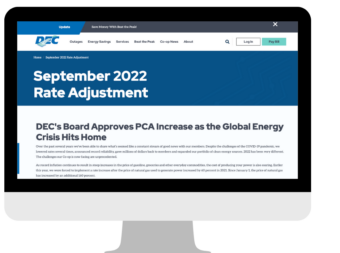
 In February 2022, rising natural gas prices forced Delaware Electric Cooperative to raise energy rates by about 9%. Then, in July 2022, we were forced to announce a record 18% increase in rates for our members as the price of natural gas continued to skyrocket.
For more than a decade, DEC had prided itself on offering the lowest electric rates in Delaware. Our members became accustomed to stable rates. We knew communicating a record increase would be a significant challenge.
We developed a communications campaign that was transparent and included five major pillars: explain the need; show stewardship; educate members; offer control; and expect complaints.
We needed to effectively communicate to our members the factors behind increasing electric costs. We tied energy price increases to inflationary pressures our members were already facing. We were also open about how the conflict in Ukraine was wreaking havoc on the price of natural gas, which is used to produce the majority of the power our members use. We tried to strike a somber tone and empathize with members who were already facing the steepest consumer price increases in generations.
Secondly, we needed our members to understand what DEC was doing to save money and to cushion the blow of higher natural gas prices. As they tightened their belts, we wanted members to know we were doing the same.
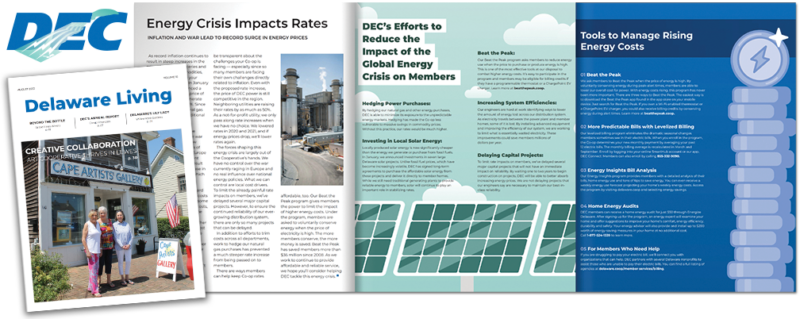
We offered members energy tips and provided them with numerous ways they could lower their electric bills or, at the very least, make them more predictable.
We built new rate messaging into our Beat the Peak program, helping members understand that the program gives them some control over the rising cost of energy.
Finally, with rates going up by roughly 30% year-over-year, we needed to be prepared for high bill complaints that would almost certainly accompany the return of winter. We built out a campaign for January that offered members tips to reduce their heating costs and helped them understand how even just a few bitterly cold days can cause huge increases in their monthly bill.
It wasn’t going to be enough to simply get through the rate increase, we needed to be ready for issues that would result from much higher rates.
We were pleased with the response from members, which was overwhelmingly understanding and appreciative of DEC’s transparency. Only two members showed up to the public rate hearing, and they attended in support of the co-op. Additionally, our ACSI score for the year only dropped from 90 to 89 — we had expected a more significant decrease.
Co-op leaders credit the communications campaign for this feat. By educating members and the media about why rates were going up, we helped to stem widespread criticism or unrest. We also spent a great deal of time educating all employees about the rate changes and helping them to understand how to best communicate with members during a difficult time.

When times are tough, our greatest strength is cooperation among cooperatives. Pioneer teamed up with Utility Pioneers across the nation to create a guide, “How to Talk About Raising Rates,” to help you craft a rate change communications plan. The guide breaks down rate change storytelling into three phases: research, communications planning and rate rollout.
In addition to peer perspectives, the guide shares ways to connect with staff, a research list to help you make the case for the change and examples of rate change communication pieces.
Get your copy:
That’s why our co-op was created. Reach out to hello@pioneer.coop or schedule a meeting with our member solutions team to start planning a strategic rate increase storytelling plan.