Share


 Last week a hundred utility storytellers gathered in the Great Smoky Mountains for StoryConnect, a beloved conference for utility and broadband communicators where writing, photography and storytelling take center stage.
“This year’s conference was beyond wonderful!” wrote Tallahatchie Valley EPA Communications Specialist Shelia Tubbs. “Each segment was packed with so much information. I enjoyed the variety of topics and more breakout sessions to choose from. I didn’t think anything could top last year, but you did!”
Networking events got high marks, including the ‘Say What?’ group activity, treetop walks at Annakeesta Mountaintop Park, and game night. Attendees even (mostly) appreciated the dad jokes which started each session.
“So many new great ideas gleaned from this year’s StoryConnect conference,” Singing River Electric Co-op Manager of Public Relations Lorri Freeman says. “I learned a ton about storytelling, fiber marketing and much more!”
If you missed the event or want to look back fondly on what you learned, here are snapshots from our four top-ranked conference sessions.
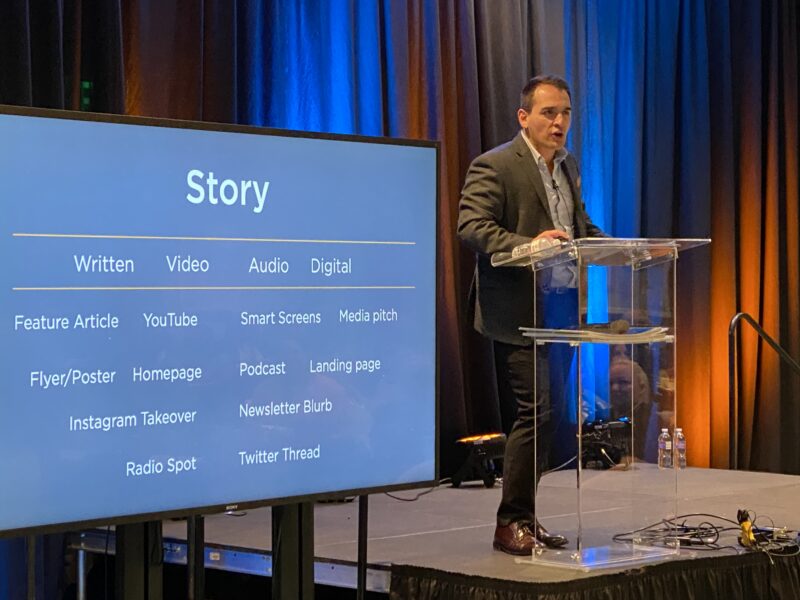
University of Tennessee Content Marketing Manager Brian Canever may have been our last conference speaker, but he ranked first with many attendees based on evaluation scores. During his session, Start with Your Story, he challenged Utility Pioneers to stop focusing on specific channels (social versus newsletter or radio) or tactics. Instead, always start with an interesting story (he shared a fishing story to set the mood).
Once you know what you want to talk about, refine your story elements. What will grab attention? Who’s your main character? What problem do they face? Introduce a guide with a call to action to help them find success and avoid failure. (This story formula is outlined in the book “Building a StoryBrand” by Donald Miller.)
Next, study your audience and find out what matters to them.
“Understand what they do and don’t expect from you,” Brian says. “Once you know them, give them what they need and surprise them with thoughtful creativity.”
Finally, craft your story for specific platforms. Don’t send people to where they’re not looking. Don’t do your story a disservice by sharing it in the wrong place or fitting it into every place.
The self-described Argentinian-New Jerseyan storyteller ended his session with a series of prompts to help attendees refocus their storytelling:
Learn more about his storytelling approach at briancanever.com.
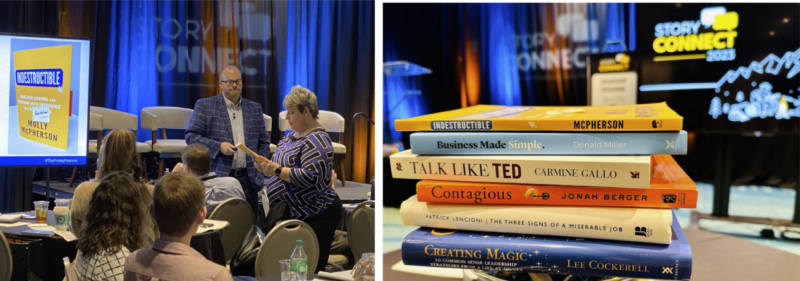
“Part of being a leader is not just telling a story but also creating stories,” SEMO Electric Cooperative and GoSEMO Fiber CEO/GM Sean Valslyke told attendees. His session, Leaders Tell Stories, focused on the need for stronger internal communications.
“Do you know what happens when we make stories instead of just sharing stories? Those stories go home,” Sean says. “My story focus is inside the organization, because if I get the stories right inside the organization, guess where those stories go? They go home. If you don’t have your in house [communications] in order, it’s hard to get your [community stories] in order.”
He asked a series of volunteers to read sections from leadership and marketing books. Each quote told a story about why internal communications and authentic storytelling play critical roles in business success. (Volunteer readers got to keep the books!)
“Do you as communicators make sure your team feels appreciated?” Sean asked the audience. “That is your number one job as a communicator. Never forget who you serve. You serve your co-workers because they rely on you to share their story.”
 Every new hire at his utility gets three books and a journal with this handwritten note from Sean:
“You just need to do six things to be successful here:
“That’s my story when I sit down and talk with a new employee,” Seans says. “If you forget your internal audience, you’re going to lose every time.”
He also touched on the fragility of digital reputation and the power of stories to restore them.
“Our mission is to tell stories. Why does it matter?” Sean says. “You, as storytellers, matter so much to your organization. If you don’t hear that from your managers, I hope you look in the mirror and say, ‘I make a difference.’”
Want to hear more from Sean? During the pandemic he started The Friday Feature, a weekly video booster to keep negativity out of people’s heads. You can watch all 155 (and growing) stories on YouTube, or follow him on LinkedIn.
Why should a consumer care about your story? Brand Storyteller Megan McKoy-Noe kicked off the conference by challenging attendees to lead with why.
To demonstrate, she shared the Golden Circle concept from Simon Sinek’s book, Start with Why.
Imagine a target, with reader engagement at the center. Many people write about what we do (the poles, wires and fiber, for our industry). To get closer to your audience, you could write about how we do it (safe, reliable, affordable, fast). But to catch a reader’s attention and trigger engagement, start your story with why we do it. Then (and only then) will a reader take the time to learn more.
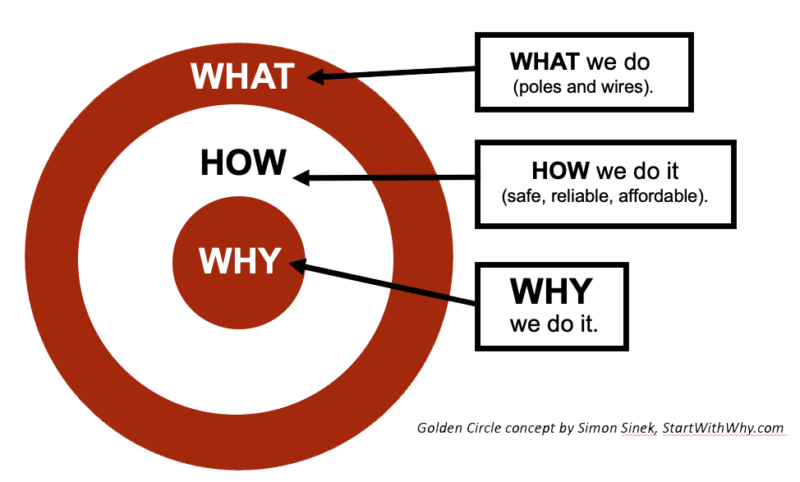
Instead of starting a story with your name or what your utility does, always stop and consider why a reader cares. To illustrate the power of starting with why, Megan showed a mix of old advertising and new, with messages focused on catching a consumer’s attention with why the program matters to them. Here are a few of the examples from her session.


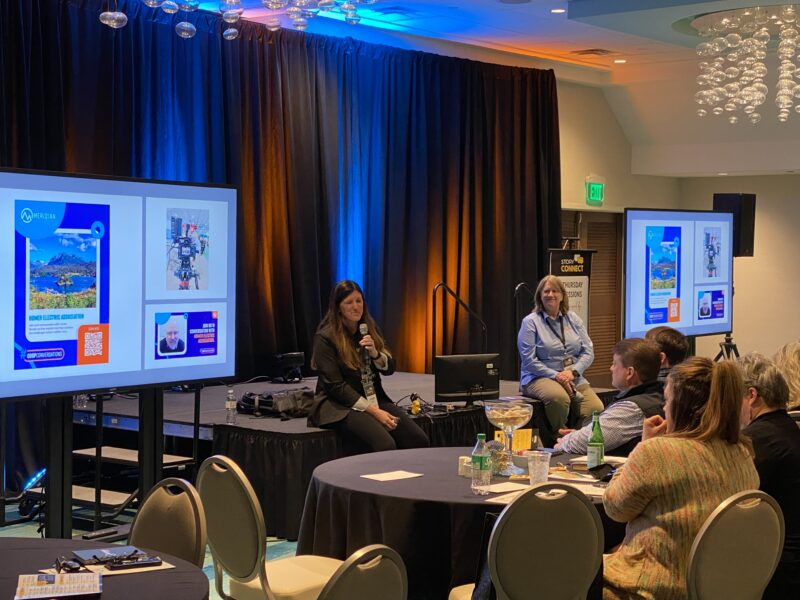
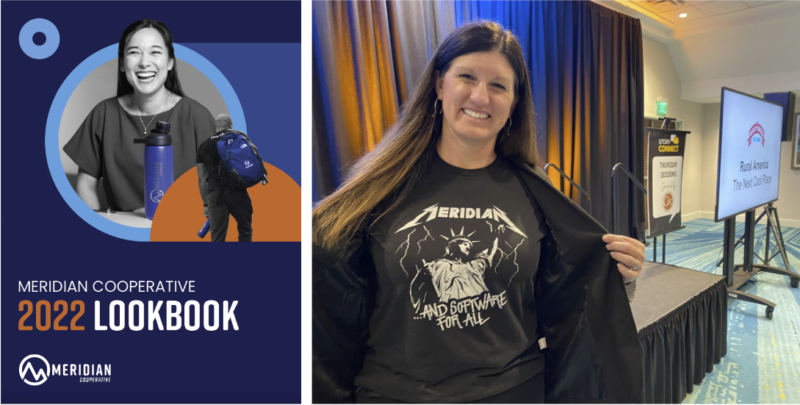
Your story — and how people feel about your brand — starts with staff. Meridian Cooperative Chief Marketing Officer Lindsay Tyson (rocking a Metallica-inspired staff shirt) and Director of Corporate Events Robin Vogt shared how the technology co-op reenergized its story.
Lindsay and Robin offered ideas to help turn staff into brand developers and ambassadors. Internal advertising, Meridian’s annual lookbook, limited (and high-value) swag and even baseball-style trading cards all work together to create brand loyalty.
You can hear a shorter version of Lindsay’s branding journey on episode 226 of The StoryConnect Podcast.
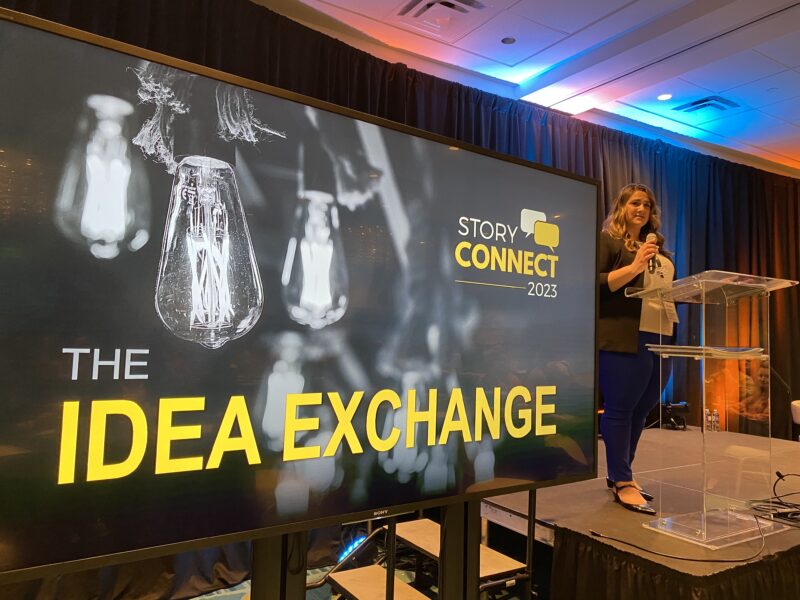
While we work hard to bring you solid storytellers from outside our industry, every year our Idea Exchange rates as one of the crowd’s favorite sessions. Nine communicators took the stage last week, each sharing a powerful storytelling tactic in three minutes. Last week we heard from:
We recorded the audio from each presentation, and will share their ideas on our blog later this year.
Have an idea you’d like to share in 2024? Tell us!
We’re already planning next year’s event, filled with a mix of co-op and outdoor enthusiast storytellers. While the dates have not been confirmed yet, we can tell you we’re heading west! StoryConnect will take the stage again in either Oregon or Idaho next spring. Can’t wait to see you there!